 3 citations
,
September 2022 in “Animal biotechnology”
3 citations
,
September 2022 in “Animal biotechnology” lncRNA MTC affects protein levels in goat skin cells, impacting hair growth.
April 2019 in “The journal of investigative dermatology/Journal of investigative dermatology” Disrupting the Tsc2 gene in certain cells leads to thicker skin, larger hair, and changes in hair growth signaling, which can be partly reversed with specific treatment.
 January 2017 in “International journal of science and research”
 Trichotillomania is a chronic hair-pulling disorder, more common in females, treated with therapy and sometimes medication.
 7 citations
,
July 2020 in “Pigment cell & melanoma research”
7 citations
,
July 2020 in “Pigment cell & melanoma research” RT1640 treatment reverses gray hair and promotes hair growth in mice.
 10 citations
,
January 2011 in “Case reports in dermatological medicine”
10 citations
,
January 2011 in “Case reports in dermatological medicine” Hair transplant surgery effectively treated a specific type of hair loss and is recommended as a primary treatment option.
January 1994 in “Toxicological Sciences” Lower dosages of 2-(difluoromethyl)-dl-ornithine might reduce side effects, supporting further research.
35 citations
,
March 2013 in “American Journal of Medical Genetics Part B Neuropsychiatric Genetics” SRD5A2 gene variations affect PTSD symptoms differently in males and females.
 March 2024 in “Cytologia”
 LncRNA MTC boosts growth of goat skin cells, improving cashmere quality.
69 citations
,
August 2006 in “Behavior Therapy” Group behavior therapy reduces hair-pulling symptoms more than supportive therapy but has limited long-term effectiveness.
144 citations
,
May 1990 in “Journal of the American Academy of Dermatology” 3 citations
,
November 1998 in “PubMed”  17 citations
,
August 2015 in “Journal of steroid biochemistry and molecular biology/The Journal of steroid biochemistry and molecular biology”
17 citations
,
August 2015 in “Journal of steroid biochemistry and molecular biology/The Journal of steroid biochemistry and molecular biology” The study found that urine metabolites M1b or M4 are the best indicators of ATD use in horses, with detection possible up to 77 hours in urine and 28 hours in blood.
 40 citations
,
June 2013 in “Scientific Reports”
40 citations
,
June 2013 in “Scientific Reports” A gene variant in KRT71 causes the curly fur in Selkirk Rex cats.
October 2015 in “Journal of the East Asian Society of Dietary Life” Curcuma longa L. may help reduce prostate inflammation.
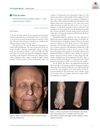 March 2019 in “Journal der Deutschen Dermatologischen Gesellschaft”
 Rothmund-Thomson syndrome type 2 can cause chronic, poorly healing wounds.
9 citations
,
January 2021 in “Mediators of Inflammation” 15d‐PGJ2 cream protects against UVB-induced skin damage in mice.
 November 2024 in “Rheumatology Advances in Practice”
 Monitor for early signs of azathioprine toxicity and check blood counts regularly.
2 citations
,
April 2020 in “PubMed” Otter rabbit, mink, and blue fox fur can be identified by their unique hair structures.
 April 2026 in “Communications Biology”
 The development of breeding tubercles in male zebrafish relies on a specific enzyme that processes hormones.
The 1298CC genotype in RA patients leads to higher methotrexate toxicity, while the 1298AA genotype results in better treatment response.
July 2022 in “British Journal of Dermatology” January 2004 in “Indian Journal of Nephrology” 
MLO proteins are crucial for root hair growth by regulating calcium and ROS levels.
13 citations
,
April 2024 in “JAAD Case Reports” Deucravacitinib may effectively treat discoid lupus erythematosus.
22 citations
,
March 2017 in “Transplant Infectious Disease” Leflunomide successfully treated a rare skin condition in a liver transplant patient.
July 2025 in “Materials Today Bio” TFC-loaded microneedles effectively promote hair regrowth in androgenetic alopecia.
August 2023 in “Zenodo (CERN European Organization for Nuclear Research)” 12 citations
,
February 2023 in “Applied and Environmental Microbiology” Mutants of CYP154C2 enzyme significantly improved steroid conversion efficiency.
 December 2025 in “Cureus”
 Avoiding friction and using topical treatments can significantly improve rough skin caused by repeated rubbing.