 January 2025 in “Indian Journal of Paediatric Dermatology”
 Biopsy is crucial to correctly diagnose granuloma annulare, which can mimic other conditions like alopecia mucinosa.
 July 2023 in “Journal of Clinical Medicine”
 The document concludes that understanding hair follicle histology and the hair cycle is crucial for diagnosing alopecia.
April 2021 in “Journal of Mind and Medical Sciences” A 13-year-old boy's appendicitis surgery revealed Crohn's disease, highlighting the need for careful examination to guide treatment.

Individualized treatments may help manage Dercum's disease symptoms.
14 citations
,
February 2007 in “Irish Veterinary Journal” A dog with a pituitary tumor developed tertiary hypothyroidism, improved with treatment, but was later euthanized due to neurological issues.
11 citations
,
September 2023 in “ACS Omega” 3D bioprinting is advancing rapidly, improving regenerative therapy and drug delivery.
 4 citations
,
November 2021 in “Biomedicines”
4 citations
,
November 2021 in “Biomedicines” New digital tools are improving the diagnosis and understanding of irreversible hair loss conditions.
43 citations
,
April 2011 in “AJP Endocrinology and Metabolism” Androgens increase muscle mass by promoting myoblast growth through ornithine decarboxylase.
13 citations
,
November 2021 in “Frontiers in Molecular Biosciences” Reducing reactive oxygen species can help treat nerve damage from platinum cancer drugs.
 January 2021 in “American journal of dermatological research and reviews”
 The muscle damage was caused by T-cell large granular lymphocytic leukemia, not dermatomyositis.
 January 2025 in “Dermatology Review”
 Giant keratoacanthoma can look like squamous cell carcinoma, requiring careful diagnosis and surgical removal.
 March 2026 in “Dermatopathology”
 A rare skin tumor with extra hair growth was found and safely removed from a 27-year-old woman.
12 citations
,
August 1988 in “Histopathology” The tumor likely shows dual neural crest differentiation.
 November 2025 in “Archiv für Pathologische Anatomie und Physiologie und für Klinische Medicin”
 Sporadic trichoblastic neoplasms generally don't recur or spread, with one case showing a specific genetic fusion.
29 citations
,
February 1989 in “Journal of Cutaneous Pathology” A unique hair tumor with a rippled pattern was identified, showing incomplete differentiation and unusual cell arrangements.
1 citations
,
April 2021 in “Annals of Otology Rhinology & Laryngology” Surgical removal is advised for large congenital blue nevi due to rare cancer risk.
 April 2020 in “Journal of the Endocrine Society”
 A patient with untreated congenital adrenal hyperplasia had large benign tumors in her adrenal glands removed, improving her symptoms.
1 citations
,
May 2007 in “Chinese Medical Journal” Complete removal of large scalp nevi is recommended to prevent complications.
1 citations
,
December 2023 in “JAAD International” Mast cells may significantly contribute to central centrifugal cicatricial alopecia.
 17 citations
,
November 2017 in “PLoS ONE”
17 citations
,
November 2017 in “PLoS ONE” Transplanted bone marrow cells actively move, form clusters, and grow after transplantation.
 April 2023 in “The journal of investigative dermatology/Journal of investigative dermatology”
 Folliculotropic mycosis fungoides has unique molecular features and cell interactions that could guide targeted therapy.
34 citations
,
June 1992 in “Journal of Cutaneous Pathology” Harlequin ichthyosis involves abnormal skin cell structures and giant mitochondria, affecting skin and hair.
September 2020 in “Advances in anatomic pathology” A woman's large nose growth was initially misdiagnosed, but later confirmed to be giant rhinophyma after full removal and examination.
 March 2024 in “IP Indian journal of clinical and experimental dermatology”
 Giant solitary trichoepithelioma is a rare, usually non-cancerous hair follicle tumor that can sometimes turn into skin cancer.
 9 citations
,
October 2008 in “British Journal of Dermatology”
9 citations
,
October 2008 in “British Journal of Dermatology” The growth of the Epstein-Barr virus in the patient's cells was linked to the worsening of her lymphoma.
 April 2017 in “Medicina Clínica (english Edition)”
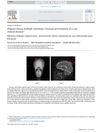
 A woman with a rare form of multiple myeloma had a headache and a skull mass, which led to her diagnosis after tests and a biopsy.
 October 2025 in “JOURNAL OF CLINICAL AND DIAGNOSTIC RESEARCH”
 Waldenstrom’s Macroglobulinaemia can mimic multiple myeloma, so accurate diagnosis is crucial.
 1 citations
,
November 1983 in “The Lancet”
1 citations
,
November 1983 in “The Lancet” Acute leukemias with the Philadelphia chromosome may be biphenotypic, and identifying this is important for proper treatment.
 April 2020 in “Rheumatology”
 Many patients with Giant Cell Arteritis did not follow their steroid treatment plans properly.
July 2019 in “Tumor Biology” Bone marrow-derived cells contribute to skin tumors, suggesting new treatment targets for non-melanoma skin cancers.