1 citations
,
May 2008 in “Journal of Experimental Biology” Different species have unique sensory adaptations to perceive their environments.
14 citations
,
May 2008 in “Journal of Visualized Experiments” Mouse epidermal neural crest stem cells can become various cell types and are easily obtained from hair follicles.
 April 2026 in “Frontiers in Cell and Developmental Biology”
 Hair follicles in mice help detect and respond to germs.
August 1989 in “Proceedings ... annual meeting, Electron Microscopy Society of America/Proceedings, annual meeting, Electron Microscopy Society of America” The research provided a detailed view of the non-keratinous parts of human hair fibers.
18 citations
,
February 2001 in “Der Hautarzt” A woman with myotonic dystrophy had multiple skin tumors on her scalp, suggesting a genetic link.
9 citations
,
January 2002 in “Dermatology” Reduced CD44 expression may cause abnormal hyaluronate buildup in cutaneous myxoma.
12 citations
,
September 1990 in “The Anatomical Record” Human anagen hair follicles have unique carbohydrate patterns during keratinization.
5 citations
,
March 1993 in “The Journal of Cell Biology” A soluble factor in developing mouse whisker pads boosts nerve growth factor mRNA production.
46 citations
,
January 1991 in “Tissue and Cell” The male silkmoth's antenna develops olfactory structures over 21 days, with full hair formation by day 15.
30 citations
,
January 1994 in “Micron” Mature hair surfaces are formed by keratinized cells with developed layers, not just modified plasma membranes.
5 citations
,
January 2024 in “Science Advances” Touch dome keratinocytes in adult skin have traits of different skin cell types.
 34 citations
,
August 1966 in “Experimental cell research”
34 citations
,
August 1966 in “Experimental cell research” Keratin fibrils in hair form and stop growing at specific points in the follicle.
Myeloid cells can turn into skin and hair cells to help heal wounds.
46 citations
,
August 1977 in “Journal of Morphology” The big-clawed shrew's sinus hair follicles are highly specialized for sensing vibrations.
Reducing nerve growth can help skin regenerate after birth.
 January 2012 in “Yearbook of Dermatology and Dermatologic Surgery”
 Electric current quickly reduces hand sweating but the effect doesn't last long.
80 citations
,
September 2007 in “Cell Cycle” Stem cells in hair follicles can become various cell types, including neurons.
 22 citations
,
June 2018 in “Journal of Neuroinflammation”
22 citations
,
June 2018 in “Journal of Neuroinflammation” Procyanidins from grape seeds reduce nerve pain by blocking specific proteins and inflammation.
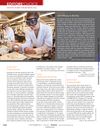 September 2013 in “Science”
 Transplanted human Olig2+ astroglia may help improve learning and memory after a stroke.
1 citations
,
September 2017 in “BMJ” The man has a disease causing skin patches, thickened nerves, and mild muscle weakness.
September 2025 in “Stem Cells Translational Medicine” Lithium chloride-treated stem cell exosomes boost hair growth by activating a specific pathway.
7 citations
,
October 2016 in “Cellular and Molecular Bioengineering” E-cadherin is important for cell movement in electric fields, and the new tracking method works well.
4 citations
,
September 2004 in “Experimental Dermatology” Connexin mutations can cause various diseases like hearing loss and skin disorders.
 3 citations
,
January 1998 in “ACTA HISTOCHEMICA ET CYTOCHEMICA”
3 citations
,
January 1998 in “ACTA HISTOCHEMICA ET CYTOCHEMICA” Hair keratins are mainly on macrofibrils in the cortex and in the endocuticle in the cuticle.
3 citations
,
May 2008 in “Journal of Visualized Experiments” Mouse Epidermal Neural Crest Stem Cells can become various cell types.
13 citations
,
January 2001 in “Pediatric dermatology” A dark-haired Chinese girl had hair that looked banded under certain light but was normal under a microscope.
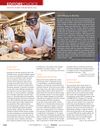 September 2013 in “Science”
 Certain astrocytes can protect the brain and improve recovery after a stroke, and a hair loss drug might reduce cancer spread.
2 citations
,
September 1996 in “Neuroscience letters” Adding fetal calf serum to the medium kept Merkel cells alive and changed their shape.
9 citations
,
April 1985 in “Canadian Journal of Zoology” Moose have unique interdigital glands with green hairs and larger glands during mating season.
 April 2019 in “Journal of Investigative Dermatology”
 Non-coding RNA boosts retinoic acid production and signaling, aiding regeneration.