 1 citations
,
February 2009 in “Journal of Investigative Dermatology”
1 citations
,
February 2009 in “Journal of Investigative Dermatology” Lipase H is important for hair follicle function and shaping hair fibers.
 7 citations
,
December 2011 in “Annals of anatomy”
7 citations
,
December 2011 in “Annals of anatomy” Involucrin helps strengthen the inner parts of human hair.
 396 citations
,
May 2011 in “Cell stem cell”
396 citations
,
May 2011 in “Cell stem cell” Nerve signals are crucial for hair follicle stem cells to become skin stem cells and help in wound healing.
30 citations
,
February 2010 in “The journal of investigative dermatology/Journal of investigative dermatology” Plet-1 protein helps hair follicle cells move and stick to tissues.
 21 citations
,
April 1990 in “Journal of comparative neurology”
21 citations
,
April 1990 in “Journal of comparative neurology” The study found that nerve signals are stronger when there are more connection points, but not necessarily denser, along the nerve's path in the spine.
169 citations
,
February 2018 in “Immunity” Inactive stem cells in hair follicles and muscles can avoid detection by the immune system.
 April 2018 in “Journal of Investigative Dermatology”
 The conclusion is that a new method combining magnetic tweezers and traction force microscopy may help understand skin cell interactions and diseases.
 January 2024 in “Authorea (Authorea)”
 Using laccase to add poly(tyrosine) to wool makes it less likely to shrink and stronger.
 January 2017 in “Elsevier eBooks”
 Antioxidants may help improve mitochondrial health and could be used to treat diseases related to cell damage.
2 citations
,
June 2013 in “Journal of Clinical Pathology” The LMNA mutation affects skin structure even in asymptomatic carriers.
26 citations
,
July 2023 in “International Journal of Nanomedicine” The microneedle system shows promise for non-invasive brain drug delivery.
19 citations
,
February 1998 in “Cellular Immunology” Hair growth phase in mice weakens certain immune responses.
7 citations
,
January 2017 in “Sub-cellular biochemistry/Subcellular biochemistry”  7 citations
,
May 2020 in “Trends in molecular medicine”
7 citations
,
May 2020 in “Trends in molecular medicine” The document concludes that the immune-inhibitory environment of the hair follicle may prevent melanoma development.
 4 citations
,
November 1968 in “Textile research journal”
4 citations
,
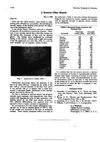
November 1968 in “Textile research journal” Hair fibers may have a unique, non-protein sheath not previously identified.
13 citations
,
November 2023 in “International Journal of Nanomedicine” Nanofiber scaffolds show promise for improving nerve healing.
53 citations
,
September 2013 in “Journal of Investigative Dermatology” Hair follicle cells help protect against immune attacks by regulating T-cell activity.
February 2026 in “Biomedicine & Pharmacotherapy” MLPH helps hair grow by activating IGF-1 signaling in hair cells.
53 citations
,
September 1999 in “Journal of Synchrotron Radiation” Keratinous tissues have multiple structural layers, including ordered keratin and lipid granules.
September 2025 in “Stem Cells Translational Medicine” Lithium chloride-treated stem cell exosomes boost hair growth by activating a specific pathway.
28 citations
,
July 2000 in “PubMed” Hair structure forms the same way inside and outside the body.
9 citations
,
October 2020 in “bioRxiv (Cold Spring Harbor Laboratory)” Microglia are essential for zebrafish brain repair by controlling inflammation.
 15 citations
,
July 2004 in “Journal of morphology”
15 citations
,
July 2004 in “Journal of morphology” Monotreme hair structure and protein distribution are similar to other mammals, but their inner root sheath cornifies differently, suggesting a unique evolution from reptile skin.
 January 2025 in “Cellular and Molecular Biology”
 The PIP5K1A gene helps cashmere growth in goats by promoting cell proliferation, and melatonin boosts its expression.
 July 2022 in “The journal of investigative dermatology/Journal of investigative dermatology”
 A patient with a PLEC mutation has epidermolysis bullosa, muscular dystrophy, and myasthenia gravis, which improved with steroid treatment.
 98 citations
,
August 2007 in “PLoS ONE”
98 citations
,
August 2007 in “PLoS ONE” Myc changes chromatin in stem cells, causing them to leave their niche.
1 citations
,
January 2025 in “Burns & Trauma” Targeting Midkine can help reduce pain and itching in keloids.
660 citations
,
December 2011 in “Cell” Different hair follicles in the skin are innervated by unique combinations of mechanosensory neurons, crucial for touch sensation.
 31 citations
,
November 2016 in “Cell Reports”
31 citations
,
November 2016 in “Cell Reports” Touch sensitivity in mouse skin decreases during hair growth due to changes in touch receptors.
1 citations
,
January 2025 in “Advances in Wound Care” Dermal sheath cells help heal wounds by showing both skin and connective tissue traits.