 3 citations
,
August 2012 in “Nature Cell Biology”
3 citations
,
August 2012 in “Nature Cell Biology” Certain proteins help nerve cells branch, and other findings relate to cancer, stem cell behavior, and cell division.
1 citations
,
July 1991 in “PubMed” MRI can show unusual brain changes in adrenomyeloneuropathy.
September 2016 in “Journal of Dermatological Science” Polarizing light microscopy can easily and reliably diagnose congenital keratinizing disorders like Netherton syndrome.
4 citations
,
January 2025 in “Annals of the New York Academy of Sciences” Spiny mice can regenerate tissues instead of forming scars.
9 citations
,
July 2008 in “Archives of Dermatological Research” 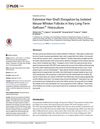 5 citations
,
September 2015 in “PLoS ONE”
5 citations
,
September 2015 in “PLoS ONE” Gelfoam® histoculture supports long-term hair and nerve growth in mouse whisker follicles.
 September 2013 in “Science”
 Human stem cells can aid stroke recovery, research experiences boost students' career aspirations, minoxidil may reduce cancer spread, a molecule can slow tumor growth, a protein affects water flow in cells, magnesium behaves differently at tiny scales, and a new method detects slow-moving objects.
46 citations
,
October 2018 in “Neuroscience Bulletin” May 2005 in “Zhonghua chuangshang guke zazhi” Human hair keratin can help nerve regeneration and is a promising material for nerve repair.
46 citations
,
April 1987 in “Brain Research” Hair-follicle nerves in cats' spinal cords can be inhibited by GABA-related connections.
November 2022 in “Journal of Investigative Dermatology” Deleting MPZL3 increases skin oil production and reduces body fat.
 September 2019 in “The journal of investigative dermatology/Journal of investigative dermatology”
 Mouse skin glands need healthy nerves to grow properly during hair growth phases.
April 2023 in “Journal of clinical and translational science” 64 citations
,
January 1995 in “Cells Tissues Organs” Merkel cells develop independently of nerves and are linked to specific hair follicles in mice.
29 citations
,
May 2023 in “Cell” 22 citations
,
September 1982 in “Journal of ultrastructure research” Wool follicle cells are more complex than previously thought.
64 citations
,
April 1992 in “Differentiation” Sciellin is a protein that helps form protective layers in skin, hair, and nails.
 September 2013 in “Science”
 Special astroglia cells improved stroke recovery in rats, a hair growth drug reduced cancer spread, and tiny magnesium structures were more easily shaped.
309 citations
,
October 2007 in “Biomaterials” Keratin from human hair helps nerves heal faster.
144 citations
,
June 2008 in “Cell Cycle” Hair follicle stem cells can help repair spinal cord injuries and improve walking.
31 citations
,
November 1991 in “Brain Research” Aδ-LTMRs have complex synapses with glycine, while Aβ-LTMRs have simpler ones.
1 citations
,
June 2009 in “WakeSpace (Wake Forest University)” Keratin biomaterials can effectively aid peripheral nerve regeneration and improve recovery.
January 2017 in “대한미용학회지” The cuticle layer in hair follicles thickens during keratinization due to incomplete cytosol loss.
Giant axonal neuropathy changes the structure of keratin in human hair, making it stiffer and stronger.
28 citations
,
November 2018 in “Journal of cellular physiology” miR-124 helps mouse hair follicle stem cells become nerve cells by blocking Ptbp1 and Sox9.
5 citations
,
August 2005 in “Anatomy and Embryology” Rat skin has a linear system of nerve fibers linked to hair follicles and muscles.

Meis2 is essential for touch sensation and proper nerve connection to touch receptors in certain skin areas of mice.
April 2023 in “Journal of Investigative Dermatology” PRP can improve hair growth in people with hair loss, but more research is needed.

Type II spiral ganglion neurites avoid high concentrations of laminin and fibronectin.
 March 2025 in “Frontiers in Cell and Developmental Biology”
 Improving nerve and immune interactions may help heal chronic wounds.