May 2024 in “International journal of medicine and psychology.” Monoclonal antibodies LT-1, LT-2, and LT-7 help diagnose certain blood cancers.
December 2023 in “Journal of clinical medicine” Some leukemia treatments can cause skin reactions similar to keratosis pilaris.
 16 citations
,
February 2014 in “Journal of Investigative Dermatology”
16 citations
,
February 2014 in “Journal of Investigative Dermatology” Researchers developed a mouse model that tracks hair growth using bioluminescence, improving accuracy in studying hair cycles.
 July 2026 in “International Journal of Stem Cells”
 Genetically engineered mouse models help identify key pathways and targets for melanoma treatment.
Cialis and Finasteride could be repurposed to treat aggressive melanoma.
8 citations
,
August 1987 in “The Journal of Dermatology” BKN-1 antibody targets specific keratin in basal cell epithelioma and normal skin basal cells.
78 citations
,
May 2012 in “Journal of Investigative Dermatology” A specific gene mutation causes woolly hair and hair loss.
 April 2018 in “Journal of Investigative Dermatology”
 The keratin network in mouse skin changes during cornification and affects the skin's protective barrier.
 1057 citations
,
November 2011 in “Annals of Biomedical Engineering”
1057 citations
,
November 2011 in “Annals of Biomedical Engineering” Low-level Laser Therapy may help reduce inflammation, pain, and aid healing, but more research is needed to confirm its effectiveness and establish standard treatment guidelines.
17 citations
,
August 2015 in “Journal of Animal Science” The MTR gene affects wool quality and production in Chinese Merino sheep.
 3 citations
,
February 2019 in “Animal biotechnology”
3 citations
,
February 2019 in “Animal biotechnology” The PLP2 gene affects cashmere fiber quality in goats and is linked to hair growth and loss.
12 citations
,
May 2021 in “The journal of investigative dermatology/Journal of investigative dermatology” Laminin 332 is essential for normal skin cell behavior and structure.
54 citations
,
October 2007 in “The FASEB Journal” Phospholipase C-δ1 is crucial for normal hair development.
5 citations
,
July 2014 in “Molecular Biology Reports”  August 2016 in “Journal of Investigative Dermatology”
 Researchers found a new genetic mutation linked to a hair condition in a Japanese boy.
222 citations
,
August 2014 in “Cell Metabolism” Mitochondrial Complex I reduces inflammation and increases bone breakdown by affecting certain immune cells.
 63 citations
,
September 1987 in “Journal of Biological Chemistry”
63 citations
,
September 1987 in “Journal of Biological Chemistry” Minoxidil slows fibroblast growth and collagen production, potentially treating keloids, hypertrophic scars, and connective tissue disorders.
 5 citations
,
January 1998 in “Clinical and experimental dermatology”
5 citations
,
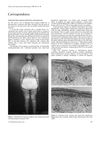
January 1998 in “Clinical and experimental dermatology” Myotonic dystrophy should be considered in patients with hair thinning, and genetic counseling is important.
45 citations
,
April 2001 in “The journal of investigative dermatology/Journal of investigative dermatology” Different Myc family proteins are located in various parts of the hair follicle and may affect stem cell behavior.
February 2019 in “American Journal of Dermatopathology” A rare case showed basal cell carcinoma and leiomyosarcoma coexisting, needing careful diagnosis and treatment.
 July 2026 in “Veterinary Sciences”
 AKT1 gene is crucial for better cashmere production in younger goats.
3 citations
,
September 2008 in “Current signal transduction therapy” Drugs that block GSK-3 show promise for treating various diseases.
11 citations
,
November 2019 in “The FASEB Journal” A mutation in the MAP2 gene causes reduced hair follicle density, leading to hairlessness.
372 citations
,
December 2004 in “Nature Genetics” 9 citations
,
September 2013 in “Journal of histochemistry and cytochemistry/The journal of histochemistry and cytochemistry” Matriptase is highly active in hair follicles and sebaceous glands, especially during hair growth phases.
3 citations
,
January 1984  July 2024 in “British journal of dermatology/British journal of dermatology, Supplement”
 A variant in the KRT31 gene causes a rare hereditary hair disorder called monilethrix.
35 citations
,
January 2006 in “Cancer Research” Mice with extra PKCδ resist chemical-induced skin cancer but not UV-induced.
6 citations
,
March 2017 in “Journal of the European Academy of Dermatology and Venereology” Identical twins with a rare KRT 86 gene mutation both have the hair disorder monilethrix.
323 citations
,
November 2017 in “Bioanalysis” Matrix effects in LC-MS can be managed but not completely avoided.