 January 2025 in “JCEM Case Reports”
 Enzyme replacement therapy may help alleviate symptoms in complex cases like this.
17 citations
,
September 2000 in “Journal of dermatology” A baby with a rare metabolic disorder developed a rash not cured by zinc alone, likely due to both zinc and amino acid deficiencies.
April 2023 in “The journal of investigative dermatology/Journal of investigative dermatology” MEF2C is crucial for normal hair cycle progression.
 January 2025 in “Dermatology Reports”
 Early and accurate diagnosis is crucial for managing rare genetic disorders like this localized variant of junctional epidermolysis bullosa.
 January 2022 in “Social Science Research Network”
 Pyruvate Kinase M2 helps hair grow by linking energy production and a key hair growth pathway.
 1 citations
,
June 2022 in “Chinese medical journal/Chinese Medical Journal”
1 citations
,
June 2022 in “Chinese medical journal/Chinese Medical Journal” Two new mutations in the CDH3 gene cause hair loss and vision problems in a young girl.
 January 2011 in “Journal of Human Genetics”
 A Japanese patient with a rare genetic disorder had a less severe case than others, suggesting other factors may affect symptoms.
49 citations
,
November 2012 in “Journal of neurology, neurosurgery and psychiatry” Non-motor symptoms in myasthenia gravis are common and need early diagnosis for better management.
 181 citations
,
January 2009 in “Nature Genetics”
181 citations
,
January 2009 in “Nature Genetics” Certain mutations in a hair growth-related gene cause a type of genetic hair loss.
28 citations
,
July 1980 in “British Journal of Dermatology” The hair disorder was caused by abnormal protein formation, making hair easily damaged.
 February 2009 in “Journal of The American Academy of Dermatology”
 Most patients with Tuberous sclerosis had neurological or skin issues, and over half had psychiatric problems.
 October 2022 in “Medičnì perspektivi”
 Darier-White disease causes skin and nail issues, starts around age 20, worsens until 40-50, and has poor treatment options.
2 citations
,
January 2022 in “The Application of Clinical Genetics” A young Russian girl with Meier-Gorlin syndrome has two new mutations in the CDC6 gene.
 August 2022 in “Journal of Comprehensive Pediatrics”
 A girl with a rare genetic disorder had a unique bone condition, highlighting the need for careful diagnosis and suggesting the disorder might be more common than thought.
10 citations
,
January 2003 in “Dermatology” The E413K mutation in the hHb6 gene causes monilethrix, a hair disorder, but doesn't show consistent symptoms.
8 citations
,
November 2009 in “The Neurologist/The neurologist” If someone has scaly skin, muscle stiffness, and intellectual disability, doctors should consider Sjogren-Larsson Syndrome, but other conditions if more symptoms are present.
March 2025 in “Laboratory Investigation” Mesothelioma of the tunica vaginalis testis is rare, often high-grade, and has a median survival of about 24 months.
23 citations
,
March 2017 in “JAAD case reports” The document suggests a possible link between FAM111B gene mutations and increased cancer risk, particularly pancreatic cancer.
3 citations
,
June 2002 in “PubMed” Two sisters with Netherton's syndrome had skin and hair issues, needing special diet and ointments.
26 citations
,
December 2003 in “Experimental Dermatology” Specific keratin gene mutations can cause monilethrix.
A new mutation in the TRPS1 gene caused Trichorhinophalangeal syndrome in a 17-year-old, highlighting the need for genetic testing.
Early diagnosis and treatment of myositis in SLE patients lead to positive outcomes.
 May 2015 in “Journal of Dermatological Science”
 Researchers found a new area on chromosome 2 linked to a genetic hair loss condition.
6 citations
,
February 2023 in “Lara D. Veeken” Satoyoshi syndrome is likely an autoimmune disease.
 8 citations
,
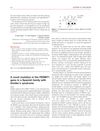
December 2009 in “Journal of The European Academy of Dermatology and Venereology”
8 citations
,
December 2009 in “Journal of The European Academy of Dermatology and Venereology” Researchers found a new mutation in the FERMT1 gene in a Spanish family with Kindler syndrome.
2 citations
,
January 2014 in “Indian Journal of Critical Care Medicine” Shock can be an early sign of Autoimmune Polyendocrine Syndrome Type II.
SMAD4 is crucial for muscle repair in young adults but not in aged mice.
 January 2024 in “Clinical, cosmetic and investigational dermatology”
 A child with a rare vitamin D-resistant condition improved with treatment.
15 citations
,
October 2012 in “Journal of child neurology” The same genetic mutation in Sjögren-Larsson syndrome can lead to different levels of severity, suggesting other factors influence the symptoms.
 5 citations
,
September 1986 in “Pediatric Dermatology”
5 citations
,
September 1986 in “Pediatric Dermatology” A family showed a new condition with inherited hair loss and skin changes, possibly due to one genetic disorder.