
Encapsulating hair loss drugs in cyclodextrins improves their solubility and reduces scalp irritation.

PlacMA hydrogels from human placenta are versatile and useful for cell culture and tissue engineering.

Human hair keratins can self-assemble and support cell growth, useful for biomedical applications.
 January 2020 in “Der Pharmacia Lettre”
 Nanoparticle-based herbal remedies could be promising for treating hair loss with fewer side effects and lower cost, but more research is needed.
 September 2019 in “University of Huddersfield Repository (University of Huddersfield)”
 Nanoemulsions can effectively deliver antiseptic agents deep into the skin.
 January 2019 in “Research Square (Research Square)”
 The trial will test if YH0618 granule prevents hair loss in breast cancer patients during chemotherapy.
Microneedle technology is effective for skin rejuvenation and enhancing cosmeceutical delivery, with ongoing innovation and increasing commercialization.

Proretinal nanoparticles are a safe and effective way to deliver retinal to the skin.
 January 2018 in “Clinical dermatology open access journal”
 Chitosan is useful in skin treatments because it helps with wound healing and cell growth.
 January 2018 in “Stem cells in clinical applications”
 Exosomes show promise for tissue repair and regeneration with advantages over traditional cell therapies.
 January 2017 in “Elsevier eBooks”
 Antioxidants may help improve mitochondrial health and could be used to treat diseases related to cell damage.
 June 2015 in “Biomedical and biopharmaceutical research”
 The congress showed advancements in skin hydration, barrier function, and safe, effective new cosmetic formulations.
 April 2026 in “Journal of Pharmaceutical Innovation”
 Curcumin nanocrystal gel improves skin absorption and is safe and effective for topical use.
 March 2026 in “Frontiers in Medicine”
 Different types of alopecia cause hair loss due to immune system issues, with some allowing regrowth and others causing permanent loss.
 March 2026 in “Frontiers in Immunology”
 Regulatory T cells help heal skin wounds by reducing inflammation and promoting tissue repair.
 April 2025 in “Indian Journal of Pharmaceutical Education and Research”
 Nanofibers improve skincare products by enhancing drug delivery and hydration.
 February 2024 in “Oriental Journal of Chemistry/Oriental journal of chemistry”
 Eclipta alba shows promise for treating various health issues and needs more research.
 39 citations
,
April 2011 in “Recent Patents on Drug Delivery & Formulation”
39 citations
,
April 2011 in “Recent Patents on Drug Delivery & Formulation” Nanoemulsion-based drug delivery systems are versatile and have potential for treating various medical conditions and improving vaccines.
 24 citations
,
December 2009 in “Future Medicinal Chemistry”
24 citations
,
December 2009 in “Future Medicinal Chemistry” Using computers to analyze drugs can find new uses for them, but actual experiments are needed to confirm these uses.
 10 citations
,
November 2018 in “Nature Biotechnology”
10 citations
,
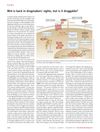
November 2018 in “Nature Biotechnology” Drugmakers are optimistic about targeting the Wnt pathway for new treatments despite past challenges.
10 citations
,
November 2018 in “bioRxiv (Cold Spring Harbor Laboratory)” New laser particles can track thousands of cells in 3D models, improving single-cell analysis.
 47 citations
,
July 2013 in “Pharmacological Reviews”
47 citations
,
July 2013 in “Pharmacological Reviews” Regenerative pharmacology, which combines drugs with regenerative medicine, shows promise for repairing damaged body parts and needs more interdisciplinary research.
110 citations
,
February 2024 in “Journal of Chemical Information and Modeling” PandaOmics uses AI to find new disease treatment targets and biomarkers.
 April 2024 in “Journal of biomedical and pharmaceutical research”
 Nanoparticles offer significant benefits over traditional chemotherapy for cancer treatment.
 5 citations
,
January 2008 in “Recent Patents on Drug Delivery & Formulation”
5 citations
,
January 2008 in “Recent Patents on Drug Delivery & Formulation” The document reviews patents on nanoparticle systems used to deliver drugs, discussing their creation, use in treatments, and commercial applications.
January 2018 in “Refubium (Universitätsbibliothek der Freien Universität Berlin)” Nanocarriers can improve skin treatments by effectively delivering drugs and enhancing skin hydration.
2 citations
,
November 2024 in “In Silico Pharmacology” 70 citations
,
August 2019 in “European Journal of Medicinal Chemistry”  September 2025 in “Cancer Innovation”
 Clinical trials should use innovative designs and biomarkers to improve precision therapy and patient outcomes.
 January 2025 in “RSC Pharmaceutics”
 Smart microneedles using advanced tech could improve psoriasis treatment.