95 citations
,
January 2009 in “Journal of Biomedical Optics” Nanoparticles penetrate hair follicles better when their size matches the cuticula thickness.
10 citations
,
September 2022 in “Journal of Composites Science” Cricket nanochitin is denser and stronger than crab nanochitin.
 October 2024 in “Journal of Advanced Pharmaceutical Technology amp Research”
 Trigonelline nanocrystal cream effectively promotes hair growth and may reduce side effects.
26 citations
,
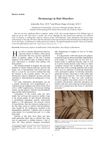
February 1991 in “PubMed” Trichotillomania can be identified by a "Friar Tuck sign" and nail-biting.
 4 citations
,
September 2012 in “Journal of Nanoscience and Nanotechnology”
4 citations
,
September 2012 in “Journal of Nanoscience and Nanotechnology” Dermoscopy helps dermatologists diagnose different types of hair loss accurately without always needing a biopsy.
January 2009 in “Chinese journal of Clinical Medicine” 47 citations
,
November 1966 in “Archives of Dermatology” Trichorrhexis nodosa is mainly caused by hair trauma, not a metabolic defect.
 August 2020 in “Textile research journal”
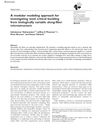
 The model helps understand how wool fiber structure affects its strength and flexibility.
4 citations
,
November 2016 in “The Journal of Dermatology” Pili torti hair is fragile due to loose keratin filaments and weak disulfide bonds.
 November 2024 in “Nanomaterials”
 The nanocrystalline suspension effectively delivers dutasteride over time with minimal inflammation.
 18 citations
,
January 2016 in “Elsevier eBooks”
18 citations
,
January 2016 in “Elsevier eBooks” Nanotechnology improves cosmetics' effectiveness and safety.
2 citations
,
December 2010 in “PubMed” The new stiffness test works well for gels but not for sprays.
 10 citations
,
November 1984 in “Journal of Colloid and Interface Science”
10 citations
,
November 1984 in “Journal of Colloid and Interface Science” The study found that the Marangoni effect causes the uneven wetting of surfactant-coated hair due to the surfactant moving into the water.
35 citations
,
September 2011 in “The Journal of Dermatology” Trichoscopy helps accurately diagnose temporal triangular alopecia.
 10 citations
,
February 2008 in “International Journal of Andrology”
10 citations
,
February 2008 in “International Journal of Andrology” A combination of nanomilled oral testosterone and dutasteride normalized testosterone levels in men with low testosterone and is safe for short-term use.
August 2019 in “RIUnB Institutional Repository (University of Brasília)” Polymeric nanoparticles with dutasteride may effectively treat hair loss by targeting hair follicles.
NaOH treatment improves hair strength and suitability for textiles.
 May 2024 in “Ultramicroscopy”
 Atomic Force Microscopy is a more accurate way to assess hair damage and the effect of cosmetic treatments.
Nanotechnology can improve alopecia treatments but faces stability challenges.
 June 2021 in “International journal of research in dermatology”
 Shaving and avoiding brushing improved the patient's beard hair condition.
7 citations
,
May 1979 in “Medical & biological engineering & computing” The trichometer accurately measures hair growth and is easy to use.

The new method can tell how hair fibers react to moisture after treatments.
 1 citations
,
January 1987 in “Journal of Society of Cosmetic Chemists of Japan”
1 citations
,
January 1987 in “Journal of Society of Cosmetic Chemists of Japan” The method accurately measures hair damage and strength, revealing effects of cosmetics and metal correlations.

Bubble microneedles effectively deliver drugs through the skin and mouth, improving treatment speed and efficiency.
 136 citations
,
January 2013 in “International Journal of Trichology”
136 citations
,
January 2013 in “International Journal of Trichology”  24 citations
,
July 2018 in “Drug Design Development and Therapy”
24 citations
,
July 2018 in “Drug Design Development and Therapy” NTF gel improves finasteride delivery for hair loss treatment, reducing side effects.
18 citations
,
October 2016 in “European Journal of Pharmaceutics and Biopharmaceutics” The drug was successfully released into hair follicles using nanocarriers.
 December 2013 in “Biomedical and biopharmaceutical research”
 Nanotechnology shows promise for better drug delivery and cancer treatment.
 13 citations
,
May 2016 in “International journal of biological macromolecules”
13 citations
,
May 2016 in “International journal of biological macromolecules” Keratin's mechanical properties are influenced by hydrogen bonds and secondary structure, and can be improved with the SPD-2 peptide.