 28 citations
,
November 2008 in “Facial Plastic Surgery”
28 citations
,
November 2008 in “Facial Plastic Surgery” Follicular Unit Transplantation (FUT) can give great results and patient satisfaction when done carefully and by a skilled surgeon.
 13 citations
,
May 2004 in “Dermatologic Surgery”
13 citations
,
May 2004 in “Dermatologic Surgery” The paper concludes that copying the natural direction and angle of hair in transplants is key for a natural look and doesn't harm hair survival.

New techniques make hair transplants look more natural.
 31 citations
,
October 2017 in “Dermatologic Surgery”
31 citations
,
October 2017 in “Dermatologic Surgery” Hair transplants look natural, but the best method is debated, and PRP shows promise for hair regrowth.
 11 citations
,
July 2008 in “Facial Plastic Surgery Clinics of North America”
11 citations
,
July 2008 in “Facial Plastic Surgery Clinics of North America” Hair restoration surgery redistributes existing hair to achieve a natural look, with visible regrowth in 3-4 months and rare complications, mostly aesthetic.
 8 citations
,
March 2006 in “Seminars in Cutaneous Medicine and Surgery”
8 citations
,
March 2006 in “Seminars in Cutaneous Medicine and Surgery” Hair transplantation has improved to look more natural, but managing patient expectations and using precise techniques are key for the best outcomes.
Facial hair transplants now look very natural due to improved techniques.
August 2004 in “CRC Press eBooks” New hair restoration techniques look more natural, increasing their popularity.
 9 citations
,
January 2005 in “Journal of Cosmetic and Laser Therapy”
9 citations
,
January 2005 in “Journal of Cosmetic and Laser Therapy” In 2005, hair transplants looked natural and worked best with realistic goals, medication to preserve hair, and depended on the amount of donor hair.
 4 citations
,
May 2005 in “Seminars in Plastic Surgery”
4 citations
,
May 2005 in “Seminars in Plastic Surgery” Carlos Oscar Uebel developed a hair transplant method that looks natural, has low risk, and shows full growth in 6-12 months.
 14 citations
,
September 2010 in “Annals of Plastic Surgery”
14 citations
,
September 2010 in “Annals of Plastic Surgery” Hair restoration has evolved from surgery to drugs to potential gene therapy, with improved results and ongoing research driven by high demand.
 33 citations
,
September 1998 in “Dermatologic Surgery”
33 citations
,
September 1998 in “Dermatologic Surgery” Surgeons suggested a standard system for hair transplant methods to improve communication and results.
November 2021 in “Journal of Asia Pacific Aesthetic Sciences” A hair transplant corrected an unnatural hairline from scalp micropigmentation, giving a natural look.
 August 1999 in “Current Opinion in Otolaryngology & Head and Neck Surgery”
 In 1999, surgical hair restoration improved a lot, making hair look more natural with fewer procedures, thanks to better scalp treatments and a new method called follicular-unit hair grafting.
 13 citations
,
September 2015 in “Aesthetic Surgery Journal”
13 citations
,
September 2015 in “Aesthetic Surgery Journal” Transplanting hair from the nape and around the ear to the hairline and temples generally satisfies patients and looks natural.
1 citations
,
June 1999 in “The American Journal of Cosmetic Surgery” The simplified eyebrow transplant technique is safe, effective, and looks natural.

Robotic-assisted hair transplant is effective and less painful, but needs more evaluation for long-term results.
 30 citations
,
October 2005 in “Journal of Investigative Dermatology Symposium Proceedings”
30 citations
,
October 2005 in “Journal of Investigative Dermatology Symposium Proceedings” The document concludes that hair transplantation is recommended for those not helped by medical treatments, but warns that high-density transplants may lower hair survival rates.
 11 citations
,
June 2005 in “Journal of Cosmetic Dermatology”
11 citations
,
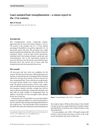
June 2005 in “Journal of Cosmetic Dermatology” Lasers in hair transplantation show promise but are not yet standard, with current methods causing some side effects and needles still being preferred for creating recipient sites.
3 citations
,
February 2024 in “Journal of Medicine and Life” FUE is an effective method for restoring hair and improving quality of life after burns.
May 2007 in “Hair transplant forum international” Improving hair restoration requires better techniques and ethical patient selection.
 3 citations
,
April 2020 in “Facial Plastic Surgery Clinics of North America”
3 citations
,
April 2020 in “Facial Plastic Surgery Clinics of North America” Beard hair transplantation is generally satisfying, requires 250-800 grafts, uses FUE to avoid scars, needs careful planning, has some risks, and hair regrowth starts after 4-6 months.
63 citations
,
February 2017 in “ACS biomaterials science & engineering” Polydopamine is a safe, effective, and permanent hair dye that turns gray hair black in one hour.
 25 citations
,
January 2009 in “Oral and Maxillofacial Surgery Clinics of North America”
25 citations
,
January 2009 in “Oral and Maxillofacial Surgery Clinics of North America” Successful hair transplant surgery depends on careful patient selection, proper surgical plan and technique, and attentive aftercare.
 January 2025 in “Humanities science current issues”
 Proper training is crucial for safe and effective hair extensions.
 January 2018 in “Journal of Cosmetics, Dermatological Sciences and Applications”
 Hair transplant surgery can successfully treat hair loss at the back of the neck.
 January 2017 in “SM dermatology journal”
 Eyebrow hair transplants have high patient satisfaction and require surgeons to have artistic and technical skills.
 December 2011 in “Journal of The American Academy of Dermatology”
 The book is a detailed and useful guide for doctors learning about hair transplantation.
 5 citations
,
April 2005 in “Clinics in Plastic Surgery”
5 citations
,
April 2005 in “Clinics in Plastic Surgery” Micrografts and minigrafts for hair restoration provide high patient satisfaction and can cover large areas of hair loss, including sideburns, eyebrows, and beards.
 10 citations
,
July 1981 in “Archives of Otolaryngology-head & Neck Surgery”
10 citations
,
July 1981 in “Archives of Otolaryngology-head & Neck Surgery” Short scalp flaps are easier but not good for severe baldness; Juri flaps are complex but better for density and coverage.