 1 citations
,
July 2023 in “Clinical case reports”
1 citations
,
July 2023 in “Clinical case reports” Tinea capitis should be considered for scalp infections in infants.
15 citations
,
June 2015 in “Journal of Craniofacial Surgery” Early surgical removal of scalp hemangiomas leads to good scarring and hair growth.
August 2006 in “Experimental dermatology” Human scalp hair follicles can produce and respond to several hormones, affecting hair growth and pigmentation.
Platelet-rich plasma improves skin and hair growth in newborn mice.
April 2021 in “Pediatric Practice and Research” Early diagnosis and treatment of hair and scalp diseases in children can improve their growth and mental health.
1 citations
,
January 2000 2 citations
,
October 1985 in “Pediatrics in review” Scalp diseases change with age and can be hard to tell apart from hair disorders.
 February 2009 in “Springer eBooks”
 Pregnancy can cause more body and scalp hair growth and make nails brittle, but these changes often revert after giving birth.
 29 citations
,
September 1989 in “Journal of The American Academy of Dermatology”
29 citations
,
September 1989 in “Journal of The American Academy of Dermatology” Abnormal scalp whorls can indicate brain development issues but may also be seen in neurologically normal people.
 May 2023 in “Stem cell research & therapy”
 New method efficiently isolates hair growth cells from newborn mouse skin.
May 2020 in “The Journal of Pediatrics” Tinea capitis can be quickly diagnosed and treated using dermoscopy to prevent hair damage.
33 citations
,
January 2000 in “Acta Oto-Laryngologica” Epidermal growth factor increases extra hair cells in newborn rat ears.
 April 2017 in “Plastic and reconstructive surgery. Global open”
 Baby and adult skin cells are different, with baby cells having more active pathways that could help grow new hair follicles.
2 citations
,
May 2015 in “International Journal of Scientific Reports” Neonatal mesenchymal stem cell therapy shows promise for treating hair loss but needs more research.
 6 citations
,
August 1991 in “Pediatric Clinics of North America”
6 citations
,
August 1991 in “Pediatric Clinics of North America” The document concludes that various hair and scalp disorders in children have specific treatments and proper diagnosis is essential.
 40 citations
,
February 1990 in “Journal of The American Academy of Dermatology”
40 citations
,
February 1990 in “Journal of The American Academy of Dermatology” A 17-year-old developed woolly hair nevus in adolescence, which is unusual, and over time the hair darkened and straightened slightly, but microscopic changes persisted.
 13 citations
,
November 1959 in “Annals of the New York Academy of Sciences”
13 citations
,
November 1959 in “Annals of the New York Academy of Sciences” Human hair follicles can grow back.
6 citations
,
January 2014 in “Pediatric annals” A 21-day-old baby had a skin rash that didn't improve with cream and wasn't caused by a fungus.
 2 citations
,
June 2012 in “Journal of Dermatological Science”
2 citations
,
June 2012 in “Journal of Dermatological Science” The gene HDC is important for the development of hair follicles in newborn mice.
February 2012 in “World Allergy Organization Journal” Alopecia can be a symptom of Neonatal Lupus.
 January 2019 in “Global Dermatology”
 Genetic hair shaft abnormalities can be seen with microscopes and often affect scalp hair.
 1 citations
,
January 2019 in “Paediatrics and Child Health”
1 citations
,
January 2019 in “Paediatrics and Child Health” The document concludes that understanding hair biology and recognizing hair conditions are crucial for managing and treating hair loss in children.

Iron supplements may reverse premature graying in iron-deficient individuals; ingrown nails are common in diabetics with certain risk factors; topical finasteride may reduce scalp DHT as effectively as oral finasteride; monilethrix treatment is challenging but some medications can help.
 20 citations
,
October 2021 in “PLoS ONE”
20 citations
,
October 2021 in “PLoS ONE” Newborn skin is uniquely prepared to adapt to new environments compared to adult skin.
10 citations
,
March 1973 in “Journal of Investigative Dermatology” December 2022 in “The Turkish Journal of Pediatrics” Hair examination helps diagnose rare neurological diseases in children.
May 2025 in “JAAD reviews.” Current treatments for neutrophilic alopecias in children are limited and often ineffective, especially for males and those of Afro-Caribbean descent.
 March 2026 in “Open MIND”
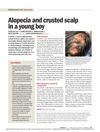
 Early treatment of scalp infections can prevent permanent hair loss.
 10 citations
,
February 2019 in “BMC pediatrics”
10 citations
,
February 2019 in “BMC pediatrics” An infant with scalp fungus was cured after extended treatment with antifungal medication.
 October 2020 in “The Egyptian Journal of Hospital Medicine”
 Hair and scalp disorders are common in children and require early treatment due to their effect on physical and mental development.