 3 citations
,
June 2023 in “MedComm”
3 citations
,
June 2023 in “MedComm” Stem cells and their exosomes show promise for repairing tissues and healing wounds when delivered effectively, but more research is needed on their tracking and optimal use.
 June 2026 in “International Journal of Bioprinting”
 3D bioprinting shows promise for skin regeneration but needs more development to fully replicate natural skin.
83 citations
,
September 2021 in “Advanced functional materials” The DNA hydrogel helps heal diabetic wounds by absorbing fluids, warming, sticking to tissue, killing bacteria, and aiding tissue and hair regrowth.
 November 2023 in “Advanced functional materials”
 Magnesium Silicate Sprays help heal burn wounds and regrow skin features better than commercial products.
 September 2011 in “Clinical Biochemistry”
 Sodium metasilicate improved spinal motoneuron recovery after sciatic nerve injury in rats.
 18 citations
,
April 2022 in “Frontiers in bioengineering and biotechnology”
18 citations
,
April 2022 in “Frontiers in bioengineering and biotechnology” Gelatin microspheres with stem cells speed up healing in diabetic wounds.
miR-214-3p helps nerve repair and recovery.
 May 2026 in “Mendeley Data”
 Hair follicle stem cells and their exosomes help repair nerve injuries.
 31 citations
,
August 2015 in “Stem Cells Translational Medicine”
31 citations
,
August 2015 in “Stem Cells Translational Medicine” Human skin can provide stem cells for tissue repair and regeneration, but there are challenges in obtaining and growing these cells safely.
 1 citations
,
January 2018 in “Elsevier eBooks”
1 citations
,
January 2018 in “Elsevier eBooks” The skin's dermal layer contains true stem cells with diverse functions and interactions that need more research to fully understand.
33 citations
,
September 2008 in “Biochemical and Biophysical Research Communications” Hair follicles can be used to easily create neurons and glial cells for potential nerve repair.
Transplanted hair follicles can restore function and connect with host tissues.
 March 2022 in “Research Square (Research Square)”
 4-aminopyridine, a FDA-approved drug, speeds up skin wound healing and tissue regeneration.
 31 citations
,
November 2016 in “Cell Reports”
31 citations
,
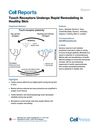
November 2016 in “Cell Reports” Touch sensitivity in mouse skin decreases during hair growth due to changes in touch receptors.
 8 citations
,
June 2022 in “Frontiers in bioengineering and biotechnology”
8 citations
,
June 2022 in “Frontiers in bioengineering and biotechnology” A patch made from human lung fibroblast material helps heal skin wounds effectively, including diabetic ulcers.
 June 2026 in “Scientific Reports”
 Nestin-expressing hair follicle cells may be useful for nerve repair and regeneration.
January 2025 in “Journal of Inorganic Materials” Bioactive inorganic materials show promise in repairing and regenerating soft tissues like skin and nerves.
 66 citations
,
May 2012 in “Scientific Reports”
66 citations
,
May 2012 in “Scientific Reports” Scientists successfully created and transplanted bioengineered hair follicles that function like natural ones, suggesting a new treatment for hair loss.
September 2016 in “Journal of dermatological science” HAP stem cells can repair nerves and spinal cords by becoming Schwann cells.
 January 2023 in “Burns & Trauma”
 The study concluded that the new wound model can be used to evaluate skin regeneration and nerve growth.
 3 citations
,
August 2012 in “Nature Cell Biology”
3 citations
,
August 2012 in “Nature Cell Biology” Certain proteins help nerve cells branch, and other findings relate to cancer, stem cell behavior, and cell division.
 426 citations
,
August 2014 in “Nature Medicine”
426 citations
,
August 2014 in “Nature Medicine” Skin stem cells interacting with their environment is crucial for maintaining and regenerating skin and hair, and understanding this can help develop new treatments for skin and hair disorders.
 57 citations
,
March 2019 in “Immunity”
57 citations
,
March 2019 in “Immunity” The document concludes that the skin's immune system is complex, involving interactions with hair follicles, nerves, and microbes, and can protect or cause disease, offering targets for new treatments.
36 citations
,
February 1998 in “Journal of Anatomy” Fibre optic confocal imaging can visualize skin layers, blood vessels, and nerves in live mice.
 37 citations
,
January 2009 in “The Journal of Dermatology”
37 citations
,
January 2009 in “The Journal of Dermatology” Hair follicle stem cells can turn into various cell types and help repair nerves.
 1 citations
,
January 2008 in “Springer eBooks”
1 citations
,
January 2008 in “Springer eBooks” Hair follicle stem cells can turn into many cell types and may help repair nerve damage and have other medical uses.
 50 citations
,
February 2007 in “Expert Opinion on Biological Therapy”
50 citations
,
February 2007 in “Expert Opinion on Biological Therapy” Hair follicle stem cells could help repair nerves and avoid ethical issues linked to embryonic stem cells.
106 citations
,
February 2014 in “eLife” Lanceolate complexes in mouse hair follicles are essential for touch and depend on specific cells for maintenance and regeneration.
 62 citations
,
April 2009 in “British Journal of Dermatology”
62 citations
,
April 2009 in “British Journal of Dermatology” Epidermal stem cells could lead to new treatments for skin and hair disorders.
 November 2021 in “bioRxiv (Cold Spring Harbor Laboratory)”
 4-aminopyridine helps skin wounds heal faster and better.