Moles may stop growing because of cell cooperation, not just because of aging cells.
April 2023 in “Journal of Investigative Dermatology” CD8+ T cells attack hair follicle stem cells, causing scarring and hair loss.
April 2017 in “The journal of investigative dermatology/Journal of investigative dermatology” Double stranded RNA helps skin wounds heal by coordinating specific proteins and signaling pathways.
 August 2013 in “Nature Reviews Drug Discovery”
 New cancer treatments show promise in reducing tumor growth and improving skin regeneration in mice.
 27 citations
,
June 2023 in “Nature”
27 citations
,
June 2023 in “Nature” Senescent melanocytes can boost hair growth by activating hair stem cells.
24 citations
,
January 1998 in “Dermatology” Merkel cell increase is specific to certain skin diseases, not general skin growth.
165 citations
,
January 2006 in “Molecular Medicine” Matriptase is crucial for skin, hair, and immune cell health, and its imbalance can lead to cancer.
Understanding wound healing and signaling pathways could lead to new alopecia treatments.
21 citations
,
July 2018 in “International Journal of Molecular Sciences” Foxn1 is crucial for skin development and healing, and altering its expression may aid regenerative medicine.
July 2024 in “Journal of Investigative Dermatology” ATR12-351 ointment safely delivers LEKTI protein to the skin, reducing enzyme activity in Netherton syndrome.
Recognizing bamboo hair helps diagnose Netherton’s syndrome.
 30 citations
,
February 1994 in “Journal of Cutaneous Pathology”
30 citations
,
February 1994 in “Journal of Cutaneous Pathology” A woman's hair loss was initially mistaken for a common hair loss condition but was later found to be caused by breast cancer cells in her scalp.
2 citations
,
November 2006 in “Pump Industry Analyst” Pilomatricomas don't follow the usual hair follicle cell differentiation process.
36 citations
,
December 2004 in “British Journal of Dermatology” The cyst had unusual keratin spherules and resembled bone marrow.
February 2024 in “Biomedicines” Pregnant women with PCOS have higher levels of Neurokinin B in the placenta, especially with female babies.
3 citations
,
August 2022 in “International Journal of Molecular Sciences” TSC2-/meth cells can cause skin lesions, hair growth, and lung issues, and may be treated with chromatin remodeling agents.
 February 2024 in “Journal of Cellular and Molecular Medicine”
 A hydrogel releasing pectolinarin speeds up wound healing and reduces scarring.
13 citations
,
April 1964 in “PubMed” Phosphatide distribution in mouse skin remains consistent in both normal and cancerous growths.
 27 citations
,
May 2018 in “Journal of Dermatological Science”
27 citations
,
May 2018 in “Journal of Dermatological Science” M2 macrophages, a type of immune cell, help in new hair growth on scars by producing growth factors.
October 2025 in “Cell Death and Disease” CD271 is crucial for maintaining healthy skin and preventing inflammation.
74 citations
,
January 2014 in “Journal of Investigative Dermatology” High kallistatin levels in diabetics worsen wound healing by blocking important cell signals.
 32 citations
,
December 2014 in “Cold Spring Harbor Perspectives in Medicine”
32 citations
,
December 2014 in “Cold Spring Harbor Perspectives in Medicine” Disruptions in epidermal polarity genes can lead to skin diseases.
 2 citations
,
August 2008 in “Journal of Liaquat University of Medical & Health Sciences”
2 citations
,
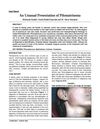
August 2008 in “Journal of Liaquat University of Medical & Health Sciences” A painless cheek lump was misdiagnosed but found to be a rare, benign skin lesion called pilomatrixoma, treatable by surgery.
1 citations
,
January 1985 in “Protides of the biological fluids” Injecting monocyto-angiotropin into hare skin increases hair growth by forming new blood vessels.
April 2026 in “Journal of Investigative Dermatology” Mechanotransduction aids healthy wound healing by promoting specific fibroblasts.
1 citations
,
July 2019 in “Small ruminant research” Nerve growth factor helps cashmere goat hair cells grow by activating a specific protein.
21 citations
,
February 2015 in “Clinical Cosmetic and Investigational Dermatology” Keloids may be influenced by stress and psychological factors.
 1 citations
,
November 2025 in “Clinical and Experimental Medicine”
1 citations
,
November 2025 in “Clinical and Experimental Medicine” lncRNAs are important for understanding and treating skin diseases.
January 2026 in “Indian Journal of Paediatric Dermatology” A rare case shows a possible link between Neurofibromatosis type 1 and Becker nevus due to genetic mutations.