3 citations
,
April 2019 in “Stem cells international” Markers CRABP1, Nestin, and Ephrin B2 are present in skin cancer environments and may influence their development.
 July 2024 in “Russian Journal of Child Neurology”
 Selumetinib effectively reduces tumor size in many children with neurofibromatosis type 1, but can cause skin and hair issues.
2 citations
,
January 1998 in “Neurourology and Urodynamics” AMN can cause bladder problems due to nerve damage.
8 citations
,
November 2009 in “The Neurologist/The neurologist” If someone has scaly skin, muscle stiffness, and intellectual disability, doctors should consider Sjogren-Larsson Syndrome, but other conditions if more symptoms are present.
 66 citations
,
March 2019 in “Cellular and Molecular Life Sciences”
66 citations
,
March 2019 in “Cellular and Molecular Life Sciences” Melanocyte development from neural crest cells is complex and influenced by many factors, and better understanding could help treat skin disorders.
 224 citations
,
March 2006 in “Seminars in Cutaneous Medicine and Surgery”
224 citations
,
March 2006 in “Seminars in Cutaneous Medicine and Surgery” The document concludes that understanding hair follicle biology can lead to better hair loss treatments.
January 2025 in “Indian Journal of Dermatopathology and Diagnostic Dermatology” Nevus sebaceous is identified by unique skin changes, including thickened skin, fewer hair follicles, and many sebaceous glands.
 14 citations
,
December 2007 in “Pediatric allergy and immunology”
14 citations
,
December 2007 in “Pediatric allergy and immunology” Newborns with the common rash Erythema Toxicum have many active mast cells in their skin, but these cells don't produce the LL-37 peptide.
 34 citations
,
August 2016 in “Scientific Reports”
34 citations
,
August 2016 in “Scientific Reports” Blocking TGFβ-RI signaling enhances surface ectoderm differentiation from human stem cells.
 5 citations
,
January 2012 in “International journal of trichology”
5 citations
,
January 2012 in “International journal of trichology” A 2-year-old boy had no hair and unusual organ placement, and it's unclear if it's genetic or coincidental.
 May 2022 in “Frontiers in Cell and Developmental Biology”
 miR-29a-5p prevents the formation of early hair structures by targeting a gene important for hair growth and is regulated by a complex network involving lncRNA627.1.

Proper niche formation in Drosophila requires Slit-Robo signaling for cell migration.
 February 2020 in “International Journal of Research in Dermatology”
 EPDS is a rare, chronic scalp condition that's hard to treat and needs better awareness for improved outcomes.
 September 2023 in “International journal of science and healthcare research”
 Genetic testing is crucial for diagnosing congenital atrichia, a rare condition causing irreversible hair loss.
32 citations
,
January 2014 in “Cells tissues organs” Hair follicle stem cells can help repair nerve and spinal cord injuries.
 1 citations
,
December 2018 in “Journal of genetic medicine”
1 citations
,
December 2018 in “Journal of genetic medicine” A small change in the TRPS1 gene leads to a less severe form of a syndrome affecting hair, nose, and finger development.
 3 citations
,
January 2019 in “Journal of Dermatology”
3 citations
,
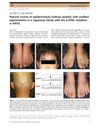
January 2019 in “Journal of Dermatology” The p.P25L mutation in the KRT5 gene causes a rare skin condition that worsens over time and may lead to hair loss starting in young adulthood.
2 citations
,
March 2016 in “Serbian Journal of Dermatology and Venerology” A six-year-old boy with excessive hair growth and other symptoms may have a genetic link on chromosome 17q, requiring regular medical follow-ups.
 September 2021 in “Research Square (Research Square)”
 Not having enough or having too much of the protein Grainyhead-like 3 leads to various developmental problems.
8 citations
,
January 2014 in “Indian Journal of Paediatric Dermatology” Congenital atrichia with papular lesions causes permanent hair loss and skin bumps from birth.
January 2024 in “Medicinska istrazivanja” Timely treatment of EPDS can reduce scarring.
November 2025 in “Journal of Investigative Dermatology” A new genetic mutation causing Xeroderma Pigmentosum was found in an 8-year-old girl, affecting her DNA repair.
 August 2018 in “Pediatric Dermatology”
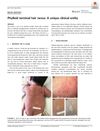
 A baby had a unique skin condition with a pale patch and surrounding dark hairs, not linked to other health issues.
83 citations
,
May 2011 in “European Journal of Dermatology” Corneodesmosin is crucial for skin and hair health, and its dysfunction can cause skin and hair disorders.
2 citations
,
August 2021 in “Animal Cells and Systems” Egfl6 is not needed for zebrafish face development.
 September 2021 in “bioRxiv (Cold Spring Harbor Laboratory)”
 Special gut cells help stem cells move to and fix injured areas by activating a specific signaling pathway.
7 citations
,
August 2008 in “Immunogenetics” A gene mutation in mice causes increased mast cells and disorganized hair follicles in their skin.
11 citations
,
January 2010 in “Current problems in dermatology” Ichthyoses are genetic skin disorders that affect the skin's barrier function.
47 citations
,
September 2012 in “Human molecular genetics online/Human molecular genetics” Folliculin deficiency causes problems with cell division and positioning due to disrupted RhoA signaling and interaction with p0071.
23 citations
,
January 1964 in “Archives of Dermatology” Treatment with vitamin A did not improve the child's skin condition.