104 citations
,
December 2004 in “Journal of Neurochemistry” Androgens help motor neurons grow by increasing neuritin.
 April 2017 in “Journal of Investigative Dermatology”
 Early and late matrix progenitors in hair follicles create different cell layers, with early ones forming the companion layer and later ones forming the inner root sheath and hair shaft.
 11 citations
,
December 2016 in “Journal of Molecular Neuroscience” 13 citations
,
July 2008 in “Biomedical Chromatography”
11 citations
,
December 2016 in “Journal of Molecular Neuroscience” 13 citations
,
July 2008 in “Biomedical Chromatography” The methods accurately measured brain androgens, showing most 5α-androstane-3α,17β-diol comes from outside the brain, while androsterone is both transported and made in the brain.
5 citations
,
February 2014 in “PloS one” Eyelid cells share signaling components but differ in pathway activity.
 66 citations
,
July 2007 in “Journal of Molecular Medicine”
66 citations
,
July 2007 in “Journal of Molecular Medicine” Stress increases certain chemicals in the skin and nerves, which might worsen skin conditions.
121 citations
,
December 2001 in “American Journal of Dermatopathology” TB and BCC tumors show similar follicular differentiation patterns.
July 2026 in “Journal of Investigative Dermatology” 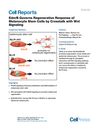 59 citations
,
April 2016 in “Cell Reports”
59 citations
,
April 2016 in “Cell Reports” EdnrB signaling helps melanocyte stem cells regenerate and could be targeted to treat pigmentation issues.
47 citations
,
January 1998 in “Molecular Carcinogenesis” ErbB2 signaling is crucial for skin cell growth and cancer development in mice.
34 citations
,
July 2006 in “The Journal of Comparative Neurology” Increasing neurotrophin 4 in skin boosts nerve endings but not sensory neuron count.
31 citations
,
October 2019 in “Genes & Diseases” Basal cell carcinomas and squamous cell carcinomas have different gene activity patterns, suggesting unique treatment approaches.
 June 1995 in “International Journal of Gynecology & Obstetrics”
 The new method showed that endometriotic tissue has lower estrogen receptor levels but similar progesterone levels compared to normal endometrium, with both following a similar cycle.
 14 citations
,
March 2017 in “Brain research”
14 citations
,
March 2017 in “Brain research” Progesterone and its byproducts control a specific receptor in the brain independently of progesterone receptors, affecting conditions related to the menstrual cycle.
13 citations
,
November 2003 in “Humana Press eBooks” ES cells can be turned into hair follicle cells in a lab setting.
21 citations
,
April 2016 in “International Journal of Oncology” GnRH treatment can reduce breast cancer cell invasion.
 4 citations
,
September 2024 in “Frontiers in Endocrinology”
4 citations
,
September 2024 in “Frontiers in Endocrinology” Serum steroid profiling, especially 11-deoxycortisol, helps distinguish between adrenocortical carcinoma and adenoma, considering sex and functional status.
 October 2021 in “Journal of Investigative Dermatology”
 The study concluded that the developed models are effective for studying hair growth mechanisms and testing new treatments.
26 citations
,
December 2013 in “Seminars in cell & developmental biology” Skin varies in thickness, color, and features due to complex genetic and cellular processes.
61 citations
,
February 1997 in “Differentiation” Hair differentiation starts earlier than thought, involving multiple type-II keratins.
90 citations
,
August 2004 in “Physiological Genomics” Dermal papilla cells help skin stem cells grow into hair.
 1 citations
,
January 2024 in “Advances in Engineering Technology Research”
1 citations
,
January 2024 in “Advances in Engineering Technology Research” Bone marrow stem cells from Guizhou miniature pigs can grow well and become different cell types, useful for tissue engineering.
Androgens increase norepinephrine release, promoting smooth muscle growth in male sex organs, which may contribute to benign prostatic hypertrophy.
DHEA inhibits growth in both mouse and human melanoma cells but works differently in each.
 199 citations
,
January 2004 in “The International Journal of Developmental Biology”
199 citations
,
January 2004 in “The International Journal of Developmental Biology” Hair follicle growth and development are controlled by specific genes and molecular signals.
 December 2025 in “Drug Discovery and Molecular Docking (DDMD)”
 Single-cell transcriptomics reveals detailed cellular diversity and key pathways in tissue regeneration.
24 citations
,
November 2013 in “Molecular Medicine Reports” Human hair follicle stem cells can become endothelial cells with certain growth factors, useful for vascular treatments.
 November 2022 in “Journal of Investigative Dermatology”
 Scientists found a new type of skin cell that could help with skin repair and these cells work better with a certain protein.
 25 citations
,
June 2019 in “Endocrine Related Cancer”
25 citations
,
June 2019 in “Endocrine Related Cancer” Mutations in certain receptors can cause diseases and offer new treatment options.
January 2006 in “Zhongguo bingli shengli zazhi” Murine epidermal stem cells can develop into skin structures without rejection when implanted.