
Understanding hair follicle signaling can improve hair disorder treatments.
 3 citations
,
October 2023 in “Military Medical Research/Military medical research”
3 citations
,
October 2023 in “Military Medical Research/Military medical research” Regulatory T cells help heal skin and grow hair, and their absence can lead to healing issues and hair loss.
8 citations
,
April 2024 in “The Journal of Dermatology” Neurogenic inflammation may play a role in hair loss in alopecia areata.
 February 2024 in “Frontiers in physiology”
 Modifying certain signals in the body can help wounds heal without scars and regrow hair.
 August 2008 in “European Neuropsychopharmacology”
 Some teenagers with anorexia nervosa have worse cognitive abilities, especially in visual and spatial tasks, and this is more common in those with a lower body weight.
 June 2020 in “Faculty Opinions – Post-Publication Peer Review of the Biomedical Literature”
 Stress causes hair graying by overactivating nerves that deplete color-giving stem cells.
Blocking 5α-reductase can reduce sleep deprivation-related behavioral issues in rats.
 33 citations
,
December 2015 in “Neuroendocrinology”
33 citations
,
December 2015 in “Neuroendocrinology” Finasteride treatment changes brain steroid levels and receptors, affecting brain function even after stopping treatment.
 10 citations
,
May 2019 in “Seminars in Cell & Developmental Biology”
10 citations
,
May 2019 in “Seminars in Cell & Developmental Biology” Understanding and manipulating epigenetic changes can potentially lead to human organ regeneration therapies, but more research is needed to improve these methods and minimize risks.
April 2023 in “Journal of Investigative Dermatology” PRP can improve hair growth in people with hair loss, but more research is needed.
 October 2024 in “World Journal of Psychiatry”
 Stress worsens hair loss in androgenetic alopecia.
 4 citations
,
November 2021 in “Frontiers in Cell and Developmental Biology”
4 citations
,
November 2021 in “Frontiers in Cell and Developmental Biology” Aging causes hair loss and graying due to stem cell decline and changes in cell behavior and communication.
 May 2026 in “International Journal of Molecular Sciences”
 The new human placental extract may help prevent hair graying and reduce nerve pain from chemotherapy.
 January 2023 in “Editora Enterprising eBooks”
 Neuropsychopedagogy positively impacts education quality.
 April 2018 in “Journal of Investigative Dermatology”
 NDRG1 protein helps infantile hemangioma, a common infant tumor, to grow, and its mismanagement by FOXO1 protein plays a big role in causing the tumor.
 293 citations
,
November 2005 in “Trends in Immunology”
293 citations
,
November 2005 in “Trends in Immunology” Stress can worsen skin conditions and stop hair growth by affecting the body's stress response system.
8 citations
,
October 2020 in “Stem cell research & therapy” DNMT1 helps turn hair follicle stem cells into fat cells by blocking a specific microRNA.
 1 citations
,
November 2015
1 citations
,
November 2015 Dental pulp stem cells might not reliably become neurons.
October 2020 in “Research Square (Research Square)” Aging-related changes in hair follicle stem cells can be partially reversed with a specific treatment.
191 citations
,
December 2013 in “Plastic & Reconstructive Surgery” Surgical deactivation can significantly reduce or eliminate migraine symptoms.
 3 citations
,
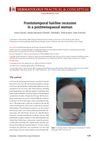
April 2015 in “Dermatology practical & conceptual”
3 citations
,
April 2015 in “Dermatology practical & conceptual” Postmenopausal women can experience hairline recession, affecting their quality of life, and more research is needed for treatments.
August 2022 in “International Journal of Molecular Sciences” DNA methylation controls lncRNA2919, which negatively affects hair growth.
47 citations
,
August 2012 in “Cell Cycle” Stem cells in hair follicles can become neurons and other cells, especially in the upper part, useful for nerve repair.
11 citations
,
February 2021 in “Frontiers in Bioengineering and Biotechnology” Small molecule treatments improve the ability of human amniotic fluid stem cells to become different cell types.
 35 citations
,
November 2019 in “Frontiers in Neuroendocrinology”
35 citations
,
November 2019 in “Frontiers in Neuroendocrinology” Men and women have different levels and production of brain steroids, which may affect their risk for certain brain disorders.
 8 citations
,
January 2017 in “Methods in molecular biology”
8 citations
,
January 2017 in “Methods in molecular biology” Stem cells rearrangement regenerates functional hair follicles, potentially treating hair loss.
3 citations
,
March 2023 in “bioRxiv (Cold Spring Harbor Laboratory)” Neurospectrum effectively analyzes neural signals to predict and identify brain activity patterns better than traditional methods.
Different rat and mouse strains respond differently to stress and alcohol, which may help us understand similar human mechanisms.
 12 citations
,
June 2019 in “Psychoneuroendocrinology”
12 citations
,
June 2019 in “Psychoneuroendocrinology” Allopregnanolone is needed for certain brain processing issues caused by D1 dopamine receptor activation.
Hair can naturally regain color after greying, and this change may be linked to stress levels.