 3 citations
,
March 2014 in “Veterinary dermatology”
3 citations
,
March 2014 in “Veterinary dermatology” Norwegian puffin dogs have a unique type of hair loss that often doesn't get better on its own and responds well to ciclosporin treatment.
 2 citations
,
January 2023 in “Pharmaceuticals”
2 citations
,
January 2023 in “Pharmaceuticals” Sex and sex hormones can affect brain inflammation in Parkinson's disease, with male mice being more affected and female mice showing a protective effect.
 1 citations
,
April 2024 in “Veterinary Science and Medicine Journal”
1 citations
,
April 2024 in “Veterinary Science and Medicine Journal” The dog's skin condition improved with treatment, and prevention includes keeping it dry, clean, and away from stray dogs.
Alopecia in dogs requires identifying the cause for effective treatment.
The naked mutation in mice causes hair loss and helps identify keratin genes.
21 citations
,
February 2003 in “Hormones and Behavior” Androgens boost certain nest-building behaviors and greatly reduce food intake in rabbits.
17 citations
,
October 2001 in “Veterinary dermatology” The skin issues in the two dogs might be caused by infection or self-injury, not genetics.
3 citations
,
March 2021 in “Indonesia Medicus Veterinus” The dog's health improved after treatment with antibiotics and other medications.
 14 citations
,
April 2019 in “Genes”
14 citations
,
April 2019 in “Genes” Researchers found a genetic region that influences the number of coat layers in dogs.
1 citations
,
February 2005 in “OakTrust (Texas A&M University Libraries)” Diet B improved dogs' skin and hair condition.
44 citations
,
August 2010 in “The veterinary clinics of North America. Exotic animal practice” Insulinomas and adrenocortical tumors are common in older ferrets, diagnosed with blood tests and ultrasounds, and treated with medications or surgery.
 November 2021 in “PARIPEX INDIAN JOURNAL OF RESEARCH”
 Trigona honey effectively treats dermatitis in dogs.
1 citations
,
October 2024 in “Veterinary Dermatology” A Cavalier King Charles Spaniel had both uveodermatological syndrome and alopecia areata, and treatment with ciclosporin helped regrow hair.
1 citations
,
December 2021 Cats likely have a reactive skin condition, while dogs may have a more complex, possibly cancerous one.
33 citations
,
March 1996 in “Veterinary Quarterly” Amitraz effectively treated ferrets with demodicosis without side effects.
January 2014 in “INTAS POLIVET” The dog's wound healed well with skin grafts, showing full skin and hair growth by day 60.
53 citations
,
January 1986 in “Endocrinology” Blocking a specific enzyme in male rat fetuses leads to the development of nipples and feminized genitalia.
 10 citations
,
April 2013 in “Veterinary dermatology”
10 citations
,
April 2013 in “Veterinary dermatology” A new skin disease in four Labrador retrievers responded well to immunosuppressive treatment.
 March 2021 in “Research Society and Development”
 A blue Staffordshire Bull Terrier had hair loss due to color dilution alopecia, confirmed by tests, but no treatment was pursued.
January 2024 in “Repositorio Digital de la Universidad Villanueva” December 2025 in “Biology” Male and female mice handle stress differently.
January 2023 in “Faculty of 1000 Research Ltd” Androgen loss may speed up hair greying.
January 2024 in “Veterinary Dermatology” A rare skin condition was found in a Labrador retriever outside North America.
 2 citations
,
September 2016 in “Symbiosis online journal of veterinary sciences”
2 citations
,
September 2016 in “Symbiosis online journal of veterinary sciences” A cat in Brazil was found with a severe skin condition linked to feline AIDS.
 April 2008 in “Companion Animal”
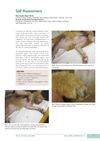
 The cat's skin condition was linked to cancer and did not improve with treatment, leading to a poor outcome.
30 citations
,
October 2009 in “Journal of Veterinary Internal Medicine” A Pomeranian dog had rickets due to a new gene mutation, leading to severe symptoms and euthanasia.
5 citations
,
November 2011 in “Journal of Cutaneous Medicine and Surgery” Hairless dogs can be used to study human hypertrophic scars.
2 citations
,
July 2013 in “Journal of Animal Physiology and Animal Nutrition” Shorthaired and hairless cat breeds excrete more felinine than longhaired breeds.
15 citations
,
January 1970 in “Journal of the Bangladesh Agricultural University” Mite infestation is common in street dogs, especially young, male, and unhealthy ones, causing skin issues.
12 citations
,
December 2011 in “Canadian Journal of Microbiology” Serotype 4 of Ureaplasma showed the highest pathogenicity in female mice.