2 citations
,
March 2011 in “Veterinary Dermatology” FGF18 is present in beagle dog hair follicles, mainly in the inner root sheath.
 February 2024 in “Buletin Veteriner Udayana”
 Using sulfur soap helped improve skin problems in a dog with demodecosis.
June 2026 in “Journal of Advances in Biology & Biotechnology” Canine demodicosis causes skin issues, anemia, and mineral deficiencies in dogs.
 March 2022 in “Osaka City University (Osaka City University)”
 Ovariectomy in mice affects hair growth and skin thickness, suggesting potential for obesity treatment research.
 8 citations
,
January 1987 in “Gynecological Endocrinology”
8 citations
,
January 1987 in “Gynecological Endocrinology” Flutamide, an antiandrogen, has minimal impact on female rat endocrine systems and does not significantly change their reproductive cycles.
3 citations
,
June 2001 in “Journal of Zoo and Wildlife Medicine” The lemur's testicular tumor was removed, improving its coat and behavior, with no signs of cancer spread.
 1 citations
,
January 2008 in “Elsevier eBooks”
1 citations
,
January 2008 in “Elsevier eBooks” The document concludes that various disorders can cause hair loss in dogs, each requiring different treatments, and some may heal on their own.
 January 2013 in “Juui rinshou hifuka”
 A Toy Poodle with hair loss regrew hair after being treated with melatonin and finasteride.
 March 2026 in “Buletin Veteriner Udayana”
 The dog's skin condition and worm infection improved with a combination of candlenut oil and other treatments.
 October 2012 in “Semina. Ciências Agrárias”
 A Shi Tzu dog with high cortisol levels improved after increasing the dose of trilostane.
 5 citations
,
December 2017 in “Tissue and cell/Tissue & cell”
5 citations
,
December 2017 in “Tissue and cell/Tissue & cell” Researchers found stem cells in dog hair follicles using specific markers.
January 2014 in “Ghent University Academic Bibliography (Ghent University)” FGF18 may influence hair loss in dogs.
January 2025 in “Veterinary Record Case Reports” The dog's skin condition improved quickly with treatment and did not return.
40 citations
,
October 2004 in “Veterinary Dermatology” Trilostane treatment led to full hair regrowth in most Pomeranians and all miniature poodles with alopecia X.
August 2024 in “NPI Journal of Science and Technology.” The Golden Retriever's skin condition improved after treatment.
 July 2023 in “Polish Journal of Veterinary Sciences”
 Commercial dog shampoos vary in quality and characteristics.
7 citations
,
October 2017 in “Journal of exotic pet medicine” A guinea pig with ovarian cysts had a uterine infection and abnormal uterus lining due to a piece of hay inside it.
 April 2023 in “Tropical Animal Health and Production”
 Giving melatonin to sheep before the non-breeding season can improve their chances of reproducing in northwest Mexico.
18 citations
,
March 2004 in “The Journal of Urology” Hypospadiac rats showed abnormal genital development, useful for studying human hypospadias.
July 2026 in “bioRxiv (Cold Spring Harbor Laboratory)” Males and females have different hair growth cycles and responses to hair regeneration treatments.
October 2025 in “International Journal of Advanced Multidisciplinary Research and Studies” Hairless dogs have unique skin adaptations to regulate temperature and protect against environmental factors.
 June 2018 in “Acta Scientiae Veterinariae”
 Tailored treatment plans are crucial for managing canine dermatomyositis-like disease.
 September 2010 in “Companion Animal”
 The guide explains how to diagnose and treat hair loss in dogs, covering causes and treatments, with some conditions lacking treatment options.
 July 2022 in “Research, Society and Development”
 The conclusion is that different treatments improved hair growth in dogs with Alopecia X, but results varied and not all dogs had complete hair regrowth.
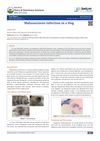 July 2018 in “Journal of Dairy & Veterinary Sciences”
 The dog recovered from a skin infection after treatment with medication.
 December 2023 in “Indian Journal of Canine Practice”
 A dog's MRSA skin infection was cured with linezolid and fungal treatment in 28 days.
 July 2026 in “Buletin Veteriner Udayana”
 A 28-day treatment successfully cured a dog's skin infection, restoring its hair and skin health.
January 2026 in “Animal Genetics” A genetic variant in the GJB6 gene likely caused the Labrador's paw pad condition.
7 citations
,
August 2012 in “The Journal of Urology” Women with congenital adrenal hyperplasia showed no prostatic growth.

Posaconazole successfully treated a resistant skin infection in a Spitz dog when other antifungals failed.