January 2026 in “ACS Applied Bio Materials” A new treatment using nanoliposomes can improve hair regrowth in androgenetic alopecia.
 February 2026 in “Clinical Drug Investigation”
 Baricitinib significantly improves nail and hair symptoms in severe alopecia areata.
Monocyclic aromatic compounds are important for developing various drugs and treatments.
December 2025 in “International Journal of Molecular Sciences” Bacopa procumbens extract may help protect the brain in Parkinson's disease.
 July 2025 in “ACS Pharmacology & Translational Science”
 Maslinic acid from olive extracts promotes hair growth like minoxidil.
The new delivery system makes retinol and niacinamide more stable and effective for anti-aging and skin-brightening.
 July 2024 in “Biological and Pharmaceutical Bulletin”
 Licorice extract helps hair growth and may treat hair loss.
20 citations
,
February 2017 in “European journal of pharmaceutical sciences” The MPA-ISO cocrystal improved solubility and dissolution rate, while the others did not.
 14 citations
,
May 2019 in “Human gene therapy”
14 citations
,
May 2019 in “Human gene therapy” MC-DNA vector-based gene therapy can temporarily treat CBS deficiency in mice.
 25 citations
,
November 1987 in “British Journal of Dermatology”
25 citations
,
November 1987 in “British Journal of Dermatology” Minoxidil didn't increase scalp blood flow for hair growth, but hexyl nicotinate did.
 June 2024 in “Research Square (Research Square)”
 Aminoacridine and Minoxidil together show promise for better hair and nail growth.
 April 2024 in “Skin research and technology”
 Minoxidil with triamcinolone acetonide is more effective for mild alopecia areata when injected with microneedles than when applied topically.
 20 citations
,
December 2011 in “Journal of inherited metabolic disease”
20 citations
,
December 2011 in “Journal of inherited metabolic disease” Valproic acid treatment increases a specific acid in urine by blocking an enzyme, possibly causing skin rash and hair loss.
 22 citations
,
August 2009 in “Evidence-based Complementary and Alternative Medicine”
22 citations
,
August 2009 in “Evidence-based Complementary and Alternative Medicine” The composition with carnitine, thioctic acid, and saw palmetto extract may effectively reduce inflammation in hair follicle cells.
 August 2023 in “Journal of Investigative Dermatology”
 Ganoderma lucidum extract and its component, ganoderic acid A, may effectively prevent hair loss.
 April 2019 in “International research journal of pharmacy”
 Adiantum capillus extract reduces pain and swelling in animals.
16 citations
,
November 2008 in “Journal of the American Academy of Dermatology” Consider necrolytic acral erythema in similar cases and treat with oral zinc sulfate.
 April 2024 in “Current research in nutrition and food science”
 Taking an amino acid supplement improved skin, hair, and nail health in women.

Avicennia marina extract may help treat hair loss naturally.
July 2026 in “Journal of the American Academy of Dermatology” 53 citations
,
October 2011 in “Psychoneuroendocrinology” Finasteride may help improve certain brain function issues linked to dopamine.
 5 citations
,
October 2024 in “International Journal of Molecular Sciences”
5 citations
,
October 2024 in “International Journal of Molecular Sciences” Piperonylic acid may help hair growth and treat hair loss.
 December 2022 in “Small methods”
 A new hair loss treatment using dissolving microneedles was found to speed up hair growth and was more effective than daily use of common hair growth drugs.
 14 citations
,
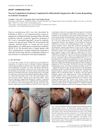
January 2015 in “Acta dermato-venereologica”
14 citations
,
January 2015 in “Acta dermato-venereologica” Acitretin significantly reduced inflammatory attacks in a woman with Naevus Comedonicus Syndrome but caused side effects.
 April 2019 in “The journal of investigative dermatology/Journal of investigative dermatology”
 HDAC inhibitors, like Vorinostat and Entinostat, can help regrow hair in alopecia areata.
 8 citations
,
January 2011 in “Organic and Biomolecular Chemistry”
8 citations
,
January 2011 in “Organic and Biomolecular Chemistry” Minoxidil reacts to nitrosation 7 times more than phenol, mainly due to its -NH₂ groups, leading to the creation of N-nitrosominoxidil.
 February 2025 in “Journal of Investigative Dermatology”
 DMG-Na may help reduce hair loss and improve hair growth, but more research is needed.
 December 2023 in “Research Square (Research Square)”
 12-Methoxy carnosic acid from rosemary might be a good natural treatment for hair loss.
July 2026 in “Journal of the American Academy of Dermatology”  December 2022 in “Acta Ophthalmologica”
 Dutasteride potentially improves cell survival and reduces retinal damage in retinitis pigmentosa.