 4 citations
,
November 2017 in “PubMed”
4 citations
,
November 2017 in “PubMed” Your genes, especially IL-1a, can predict how well a hair growth treatment with platelet rich plasma will work for you.
 January 1999 in “Journal of the European Academy of Dermatology and Venereology”
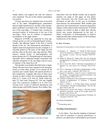
 RAPK is a rare skin disorder with pigmented spots, mainly on hands and feet, starting in youth.
2 citations
,
November 2023 in “Indian Dermatology Online Journal” A 4-year-old girl with a rare lupus condition was successfully treated with oral corticosteroids, leading to full recovery and hair regrowth.
 March 2021 in “Research Square (Research Square)”
 Strontium ranelate helps cartilage growth by blocking a specific cell pathway.
2 citations
,
May 2024 in “BMC Genomics” Certain genetic changes in the KRT82 gene may cause patchy skin in New Zealand rabbits.
 26 citations
,
June 2018 in “The journal of immunology/The Journal of immunology”
26 citations
,
June 2018 in “The journal of immunology/The Journal of immunology” AIRE-deficient rats developed severe autoimmune disease similar to APECED, useful for testing treatments.
19 citations
,
July 1997 in “British Journal of Dermatology” LHTric-1 is a specific antibody useful for studying hair and nail formation.
 December 2023 in “Sains Malaysiana”
 The enzyme Rand protease works well for leather dehairing and its stability is important, with Leu75 playing a key role.
109 citations
,
June 2011 in “Molecular and Cellular Endocrinology” Vitamin D receptor mutations can cause alopecia by affecting hair growth genes.
1 citations
,
March 2013 in “Journal of Dermatological Case Reports” A rare skin condition affected only the facial hair of a 46-year-old man.
June 2026 in “British Journal of Dermatology” Hairline-lowering surgery may trigger lichen planopilaris in some people.
November 2024 in “Journal of Investigative Dermatology” Understanding snoRNA regulation may help slow skin aging.

A genetic variant in the KRT71 gene may cause loose anagen hair and wooly hair, and symptoms might improve with age.
13 citations
,
August 2000 in “Blood” Measuring minimal residual disease on day 15 helps identify high-risk leukemia patients.
1 citations
,
November 2023 in “SKIN The Journal of Cutaneous Medicine” 
L-PGDS has specific binding sites for its functions and could help in drug delivery system design.
92 citations
,
April 2009 in “Journal of Investigative Dermatology” The Celsr1 gene is crucial for normal hair patterning in mice.
18 citations
,
October 2009 in “Endocrinology” Different Hairless isoforms affect Vitamin D receptor activity in hair regulation, with one repressing and the other stimulating it.
12 citations
,
September 2014 in “Bone” A vitamin D receptor mutation causes rickets and affects immune responses.
 3 citations
,
October 2024 in “Advances in Therapy”
3 citations
,
October 2024 in “Advances in Therapy” Triptorelin effectively treats central precocious puberty in Chinese children with minimal side effects.
 48 citations
,
February 2016 in “Scientific Reports”
48 citations
,
February 2016 in “Scientific Reports” Researchers created rat liver stem cells that could help repair liver failure in rats and may be useful for studying human liver diseases.
 21 citations
,
April 2014 in “PLoS ONE”
21 citations
,
April 2014 in “PLoS ONE” A rare gene variant causes hair and nail issues in a family.

Proretinal nanoparticles are a safe and effective way to deliver retinal to the skin.
 6 citations
,
August 2020 in “JCRPE”
6 citations
,
August 2020 in “JCRPE” A boy with a rare form of early puberty caused by a new gene mutation responded well to treatment aimed at reducing testosterone and preserving adult height.
 April 2017 in “Journal of Investigative Dermatology”
 PRC1 influences skin stem cell development by both turning genes on and off, affecting hair growth and skin cell types.
36 citations
,
July 1996 in “The journal of investigative dermatology/Journal of investigative dermatology” Mice with the 'lanceolate hair' mutation have abnormal hair and skin similar to human Netherton's syndrome.
1 citations
,
January 2004 in “Adelaide Research & Scholarship (AR&S) (University of Adelaide)” SPARC likely aids in tissue remodeling during the hair cycle, not in starting new hair growth phases.
 28 citations
,
February 2012 in “PLoS ONE”
28 citations
,
February 2012 in “PLoS ONE” A PKP1 gene mutation causes skin fragility and hair loss in Chesapeake Bay retriever puppies.
37 citations
,
June 2004 in “Human molecular genetics online/Human molecular genetics” The HCR gene contributes to psoriasis risk.
 1 citations
,
March 2022 in “bioRxiv (Cold Spring Harbor Laboratory)”
1 citations
,
March 2022 in “bioRxiv (Cold Spring Harbor Laboratory)” Low-coverage sequencing is a cost-effective way to identify genes related to wool traits in rabbits.