 13 citations
,
April 2001 in “International Journal of Dermatology”
13 citations
,
April 2001 in “International Journal of Dermatology” Different types of scarring alopecia may be stages of one disease, and accurate diagnosis is crucial to prevent permanent hair loss.
 13 citations
,
February 2017 in “Science”
13 citations
,
February 2017 in “Science” Turning scar-forming cells into fat cells can reduce scarring.
 5 citations
,
February 2017 in “Australasian Journal of Dermatology”
5 citations
,
February 2017 in “Australasian Journal of Dermatology” Scarring hair loss found in female pattern; biopsy needed for diagnosis.
 4 citations
,
January 2023 in “Frontiers in Immunology”
4 citations
,
January 2023 in “Frontiers in Immunology” Shorter telomeres in white blood cells may increase the risk of a common type of hair loss.
4 citations
,
March 2022 in “Pharmaceutics” Regenerative cellular therapies show promise for treating non-scarring hair loss but need more research.
4 citations
,
March 2019 in “IP Indian Journal of Clinical and Experimental Dermatology” Low iron levels may be linked to hair loss in non-menopausal women.
 3 citations
,
October 2024 in “Archives of Dermatological Research”
3 citations
,
October 2024 in “Archives of Dermatological Research” Salivary vitamin D and IL-6 could help diagnose and manage non-scarring alopecia.
3 citations
,
August 2023 in “Archives of Dermatological Research” Wearing a hijab may lead to earlier hair loss due to vitamin D deficiency and seborrheic dermatitis.
3 citations
,
December 2022 in “Rheumatology Advances in Practice” Patchy hair loss can be an early sign of lupus.
 3 citations
,
June 2020 in “Dermatologic Surgery”
3 citations
,
June 2020 in “Dermatologic Surgery” Dense-packing follicular unit extraction is a safe and effective way to treat extensive scarring alopecia.
 3 citations
,
January 2017 in “Journal of Pakistan Association of Dermatology”
3 citations
,
January 2017 in “Journal of Pakistan Association of Dermatology” Women with certain types of hair loss may have low iron levels, and iron supplements could help.
 3 citations
,
April 2010 in “The American Journal of Dermatopathology”
3 citations
,
April 2010 in “The American Journal of Dermatopathology” Most people with scarring and nonscarring hair loss show similar D2-40 levels, but some with scarring hair loss have higher levels.
 2 citations
,
June 2020 in “Dermatologic Surgery”
2 citations
,
June 2020 in “Dermatologic Surgery” Fat grafting before hair transplant may improve hair growth in scarring alopecia.
 2 citations
,
January 2020
2 citations
,
January 2020 Tailored scar treatments are needed for different body areas to improve appearance and function.
 2 citations
,
March 2019 in “Journal of Dermatology”
2 citations
,
March 2019 in “Journal of Dermatology” Trichoscopy helped diagnose and treat a woman with two different types of hair loss.
 2 citations
,
January 2018 in “DOAJ (DOAJ: Directory of Open Access Journals)”
2 citations
,
January 2018 in “DOAJ (DOAJ: Directory of Open Access Journals)” The most effective way to diagnose non-scarring hair loss is by transverse sectioning, and some cases, particularly in males with inflammation around hair follicles, might be curable.
 1 citations
,
November 2025 in “Clinical Cosmetic and Investigational Dermatology”
1 citations
,
November 2025 in “Clinical Cosmetic and Investigational Dermatology” Sleep patterns might be linked to hair loss, but more research is needed.
 1 citations
,
March 2022 in “PubMed”
1 citations
,
March 2022 in “PubMed” Platelet-rich plasma can help treat scarring hair loss caused by Discoid Lupus Erythematosus.
 1 citations
,
January 2021 in “Arthritis Research & Therapy”
1 citations
,
January 2021 in “Arthritis Research & Therapy” About 8% of people with systemic lupus erythematosus have chronic scarring alopecia, with certain symptoms and positive antibodies increasing the risk, while immunosuppressants may lower it.
 1 citations
,
February 2019 in “PubMed”
1 citations
,
February 2019 in “PubMed” Minoxidil is effective in treating various types of hair loss and can improve quality of life, with combination therapies showing increased effectiveness.
1 citations
,
January 2019 in “Via Medica Journals” Graham-Little syndrome causes hair loss and skin bumps, with difficult treatment options.
1 citations
,
October 2017 JAK inhibitors are effective for hair regrowth in severe alopecia areata.
1 citations
,
December 2016 in “Rossijskij žurnal kožnyh i veneričeskih boleznej” A new treatment using unactivated platelet leukocyte autoplasma cured 80% of non-scarring alopecia patients.
 1 citations
,
March 2013 in “International Society of Hair Restoration Surgery”
1 citations
,
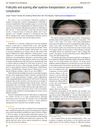
March 2013 in “International Society of Hair Restoration Surgery” Eyebrow transplants can rarely cause scarring due to folliculitis.
1 citations
,
December 2012 in “Journal of dermatological science” Combining ficlatuzumab and gefitinib can cause severe scarring hair loss.
July 2026 in “Frontiers in Immunology” New hair follicles can form in wounds through immune and skin cell interactions, offering potential treatments for hair loss and scarless healing.
 July 2026 in “Journal of the American Academy of Dermatology”
 GLP-1 and GLP-1/GIP agonists may increase the risk of hair loss.
 June 2026 in “Research Square”
 Vitamin D may help with certain types of hair loss in women.
June 2026 in “Journal of Cutaneous Pathology” Polarized light microscopy is better at distinguishing scarring from non-scarring alopecia than diffractive microscopy.
 April 2026 in “Biomedical Research and Therapy”
 CYB5R1 and IL1A genes may be linked to different types of acne scars.