23 citations
,
December 2008 in “Current medicinal chemistry” Stimulating sensory neurons can increase IGF-I production, which may help treat various diseases and improve tissue health.
27 citations
,
June 2015 in “Journal of Investigative Dermatology” TRPV3 gene mutations cause Olmsted syndrome symptoms, but severity varies.
September 2004 in “Experimental Dermatology” The model effectively studies how sensory nerves interact with skin components, aiding research on wound healing and hair growth.
150 citations
,
May 1993 in “The journal of cell biology/The Journal of cell biology” Mouse Notch is important for determining cell roles in hair follicles.
31 citations
,
June 2022 in “Scientific Reports” A new imaging method accurately measures burn severity by assessing collagen damage.
1 citations
,
January 2010 in “Acta Chirurgica Latviensis” Inflammation in psoriasis may trigger antimicrobial peptides and cell death.
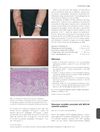 28 citations
,
February 2010 in “British journal of dermatology/British journal of dermatology, Supplement”
28 citations
,
February 2010 in “British journal of dermatology/British journal of dermatology, Supplement” WNT10A mutations cause varied symptoms in patients with odonto-onycho-dermal dysplasia.
January 2026 in “Indian Journal of Paediatric Dermatology” A rare case shows a possible link between Neurofibromatosis type 1 and Becker nevus due to genetic mutations.
49 citations
,
July 2000 in “Journal of Histochemistry & Cytochemistry” POMC-derived peptides are important for skin functions like immune response and stress management.
352 citations
,
August 2003 in “Proceedings of the National Academy of Sciences” Nestin is found in hair follicle progenitor cells, linking them to neural stem cells.
 7 citations
,
January 1998 in “PubMed”
7 citations
,
January 1998 in “PubMed” Hair loss can cause scalp discomfort.
2 citations
,
September 2024 in “Pharmaceuticals” Human placenta hydrolysate reduces inflammatory pain and nerve damage in mice.
September 2024 in “Journal of Cosmetic Dermatology” Cold gel compresses are the best for pain relief during scalp microneedling.
 April 2023 in “Journal of Investigative Dermatology”
 Covering a wound can stop hair growth by promoting scarring, but boosting a process called Wnt signaling can help hair grow back even when the wound is covered.
44 citations
,
June 2023 in “Cell Reports” IL-1 promotes fat cell growth in skin, while WNT inhibits it and encourages scar formation.
1 citations
,
June 2024 in “Skin Research and Technology” Human dermal fibroblast proteins help restore nerves during healing.
70 citations
,
December 2004 in “Proceedings of the National Academy of Sciences” BMP signaling affects hair color by interacting with the MC-1R pathway.
46 citations
,
October 2018 in “Neuroscience Bulletin” November 2024 in “Journal of Investigative Dermatology” Nerve fibers may worsen mast cell activity, leading to abnormal elastic fiber buildup from sun exposure.
 April 2017 in “Journal of Investigative Dermatology”
 Cholecystokinin may help reduce skin inflammation in psoriasis.
 January 2018 in “Computational Toxicology”
 Pharmacophore models can predict liver toxicity and central nervous system toxicity, but they have limitations and specific requirements.
 5 citations
,
July 2021 in “Basic & Clinical Pharmacology & Toxicology”
5 citations
,
July 2021 in “Basic & Clinical Pharmacology & Toxicology” Melatonin may protect ear cells from damage caused by nicotine.
15 citations
,
December 2020 in “The Journal of General Physiology” Acid can block TRPV3 from outside the cell but boost its function from inside.
1 citations
,
July 2025 in “Advanced Science” The microneedles effectively kill MRSA and improve wound healing.
Natural α-hydroxyl acids cause skin exfoliation by activating TRPV3 channels.
RNase L hinders hair follicle regeneration by altering immune signals.

A new microneedle patch helps repair spinal cord injuries by reducing scarring and promoting nerve growth.
 January 2021 in “Journal of clinical and cosmetic dermatology”
 Human skin responds to light with protective mechanisms, but more research is needed to understand these processes and their implications for health and therapy.
 April 2016 in “Journal of Investigative Dermatology”
 Sonic hedgehog signaling is needed for the development of touch-receptor cells in the skin, and the loss of Polycomb repressive complex 2 can lead to more of these cells.
22 citations
,
November 2023 in “Molecules” Smart microneedles can deliver drugs painlessly and accurately for diseases like diabetes and tumors.