 18 citations
,
May 2013 in “Journal of Dermatological Treatment”
18 citations
,
May 2013 in “Journal of Dermatological Treatment” Non-ablative fractional laser treatments have a low risk of side effects in Asian patients.
 July 2025 in “Lasers in Surgery and Medicine”
 Non-ablative fractional laser treatment safely improves hair growth and scalp appearance.
 July 2021 in “Aesthetic Surgery Journal”
 Using lasers and fat grafting before hair transplant improves hair growth on scarred skin.
 January 2019 in “Chulalongkorn Medical Journal”
 Using a special laser and platelet-rich plasma together is safe and improves hair growth in men with hair loss.
 January 2019 in “Clinical Dermatology Open Access Journal”
 Combining corticosteroids and non-ablative fractional laser therapy may effectively treat extensive alopecia areata.
 24 citations
,
January 2016 in “Lasers in Medical Science”
24 citations
,
January 2016 in “Lasers in Medical Science” Erbium glass laser treatment may help with skin remodeling, reduce inflammation, and improve skin cell maturation.
 16 citations
,
April 2015 in “Lasers in Surgery and Medicine”
16 citations
,
April 2015 in “Lasers in Surgery and Medicine” Using a fractional laser can stimulate hair growth, but the intensity and duration of inflammation are crucial. Too much can cause ulcers and scarring. Lower beam energy and fewer treatments are recommended to avoid damage.
 March 2020 in “Faculty Opinions – Post-Publication Peer Review of the Biomedical Literature”
 Combining nonablative fractional laser with minoxidil was effective for alopecia areata with only one patient relapsing after a year.
 15 citations
,
January 2017 in “Lasers in Surgery and Medicine”
15 citations
,
January 2017 in “Lasers in Surgery and Medicine” Laser treatment improved scalp skin condition with no side effects.
 8 citations
,
June 2019 in “Journal of Cosmetic Dermatology”
8 citations
,
June 2019 in “Journal of Cosmetic Dermatology” Using a nonablative fractional laser with topical minoxidil can effectively and safely promote hair regrowth in alopecia areata patients.

Using a specific laser and platelet-rich plasma together can effectively improve hair thickness and density in men with hair loss, without serious side effects.
 15 citations
,
February 2018 in “Journal of Cosmetic and Laser Therapy”
15 citations
,
February 2018 in “Journal of Cosmetic and Laser Therapy” Laser-assisted drug delivery improves hair loss.
 4 citations
,
August 2022 in “Lasers in medical science”
4 citations
,
August 2022 in “Lasers in medical science” Both 1565-nm laser and 1064-nm laser safely and effectively reduce enlarged facial pores, with the 1064-nm laser causing fewer side effects.
May 2018 in “Dermatologic Surgery” Laser skin treatments can lead to viral infections like molluscum contagiosum, so precautions are important.
 January 2024 in “Journal of Cosmetic Dermatology”
 The 1565 nm non-ablative fractional laser is more effective and satisfying than 5% minoxidil for treating hair loss.
June 2018 in “Dermatologic Surgery”  25 citations
,
August 2017 in “Lasers in Medical Science”
25 citations
,
August 2017 in “Lasers in Medical Science” Fractional lasers seem effective and safe for treating hair loss, but more research is needed to find the best treatment methods.
22 citations
,
September 2022 in “Medicina” Using two types of lasers together improves skin tone and collagen remodeling.
 June 2025 in “Medical alphabet”
 Fractional lasers, combined with topical therapy, are a promising and safe treatment for hair loss.
May 2026 in “Journal of Cosmetic Dermatology” Fractional laser therapy effectively and safely improves hair density in androgenetic alopecia.
 33 citations
,
September 2016 in “Lasers in Surgery and Medicine”
33 citations
,
September 2016 in “Lasers in Surgery and Medicine” Fractional resurfacing is safe and effective for certain skin conditions in Asian patients, but care must be taken to avoid skin pigmentation issues.
 February 2024 in “Lasers in Medical Science”
 Lasers and energy-assisted methods show promise for treating hair loss, but more research is needed.
27 citations
,
November 2010 in “JDDG Journal der Deutschen Dermatologischen Gesellschaft” New laser therapies are effective for skin damage, hair removal, and fat reduction.
 1 citations
,
March 2019 in “Lasers in Surgery and Medicine”
1 citations
,
March 2019 in “Lasers in Surgery and Medicine” The conference reported improvements in muscle volume, skin cancer diagnosis, facial and vaginal rejuvenation, and hair growth using various laser treatments.
 April 2024 in “Lasers in medical science”
 Lasers and light therapies are effective in promoting hair regrowth for different types of hair loss.
 26 citations
,
May 2015 in “Lasers in Surgery and Medicine”
26 citations
,
May 2015 in “Lasers in Surgery and Medicine” Laser treatment helped regrow hair in mice by activating a key growth pathway.
 1 citations
,
October 2017 in “Dermatologic Clinics”
1 citations
,
October 2017 in “Dermatologic Clinics” Men are increasingly using energy-based skin treatments for workplace success, with lasers and other devices effectively improving skin and body appearance.
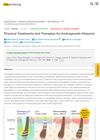
Low-level laser therapy is the most effective for hair loss, but other treatments also show promise.
 1 citations
,
January 2015 in “Journal of Pigmentary Disorders”
1 citations
,
January 2015 in “Journal of Pigmentary Disorders” Treating melasma in men is difficult, especially for the deeper skin layers, and may need more than just topical treatments.
August 2024 in “Journal of Clinical Medicine” Low-level laser therapy is the most supported treatment for hair loss, but other methods show promise.