 4 citations
,
May 2021 in “Molecules”
4 citations
,
May 2021 in “Molecules” The hair test for vitamin D could be a useful alternative to blood tests, providing a longer-term vitamin D status, but more research is needed.
 33 citations
,
January 2017 in “Conservation physiology”
33 citations
,
January 2017 in “Conservation physiology” Measuring reproductive hormones in brown bear hair could help identify their sex and reproductive state, but better collection methods or lab techniques are needed.
199 citations
,
July 2007 in “General and Comparative Endocrinology” Hair cortisol can reliably indicate chronic stress in cats and dogs.
 June 2024 in “Acta dermato-venereologica”
 Topical minoxidil effectively stimulates hair growth in men with hair loss.
 March 2025 in “bioRxiv (Cold Spring Harbor Laboratory)”
 HairTime can predict and adjust human sleep patterns using a hair sample.
 May 2026 in “The Knowledge Bank (The Ohio State University)”
 Mare and foal hair cortisol levels are strongly linked, indicating potential for assessing fetal health and stress.
 1 citations
,
December 2004 in “Hepatology”
1 citations
,
December 2004 in “Hepatology” Tenofovir is more effective than adefovir for resistant hepatitis B, Fibroscan is good for assessing liver damage, regulatory T cells may help hepatitis C persist, and other insights into liver health and disease were found.
 2 citations
,
March 2018 in “The Journal of Dermatology”
2 citations
,
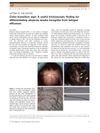
March 2018 in “The Journal of Dermatology” The "color-transition sign" helps tell apart alopecia areata incognita from telogen effluvium by looking at hair color changes.
 17 citations
,
August 2019 in “Frontiers in Immunology”
17 citations
,
August 2019 in “Frontiers in Immunology” Non-invasive methods show promise for diagnosing skin diseases like psoriasis and lupus but need more research for regular use.
 10 citations
,
March 2022 in “Communications biology”
10 citations
,
March 2022 in “Communications biology” A new non-invasive method can analyze skin mRNA to understand skin diseases better.
 2 citations
,
April 2021 in “bioRxiv (Cold Spring Harbor Laboratory)”
2 citations
,
April 2021 in “bioRxiv (Cold Spring Harbor Laboratory)” The conclusion is that analyzing RNA from skin oils is a promising way to understand skin diseases.
 1 citations
,
September 2024 in “Scientific Reports”
1 citations
,
September 2024 in “Scientific Reports” Non-invasive swabbing is as effective as cutting hair for collecting scalp hair bacteria.
 January 2026 in “Nature Communications”
 A wearable device using NIR light may help treat hair loss non-invasively.
 166 citations
,
August 2010 in “Proceedings of the National Academy of Sciences of the United States of America”
166 citations
,
August 2010 in “Proceedings of the National Academy of Sciences of the United States of America” Scientists found a new, less invasive way to study body clocks using hair cells, which shows shift workers' body clocks don't match their lifestyles.
 15 citations
,
October 2012 in “Journal of circadian rhythms”
15 citations
,
October 2012 in “Journal of circadian rhythms” RNA from horse hair follicles can track circadian rhythms non-invasively.
 March 2011 in “European Urology Supplements”
 Blood tests for tumor cells could improve prostate cancer diagnosis and treatment; hair loss severity linked to a gene affecting prostate conditions.
 12 citations
,
December 2021 in “Aging”
12 citations
,
December 2021 in “Aging” A new painless method to collect hair follicles helps study DNA damage and aging.
 April 2026 in “International Journal of Clinical Case Reports and Reviews”
 A new non-invasive laser system improves chronic disease management and metabolic health.
 22 citations
,
August 2013 in “PLOS ONE”
22 citations
,
August 2013 in “PLOS ONE” The method safely and efficiently delivers genes to the skin but may not work for conditions needing high levels of gene products.
 6 citations
,
June 2024 in “Scientific Reports”
6 citations
,
June 2024 in “Scientific Reports” RoPod helps study plant root cell changes and autophagy with minimal stress.
 51 citations
,
November 2005 in “Journal of Medical Primatology”
51 citations
,
November 2005 in “Journal of Medical Primatology” Alopecia in captive rhesus macaques is affected by season, sex, age, housing, and stress, with complex links between stress hormones and hair loss.
September 2022 in “bioRxiv (Cold Spring Harbor Laboratory)” Hair follicles and urine cell pellets are promising for transcriptome studies due to consistent quality and useful expression profiles.
February 2025 in “Skin Research and Technology” New non-invasive techniques can improve diagnosis and treatment of scalp and hair diseases.
17 citations
,
January 2012 in “European Journal of Pharmaceutics and Biopharmaceutics” Isoconazole nitrate stays effective in skin and hair follicles for up to two weeks after use.
 9 citations
,
January 2021 in “RSC Advances”
9 citations
,
January 2021 in “RSC Advances” Non-thermal plasma helps hair grow by improving the area around hair follicles.
9 citations
,
December 2023 in “BMC Genomics” Hair follicles and urine cell pellets are promising for transcriptome studies.
 September 2022 in “Biomedicines”
 Lipid Accumulation Product and Free Androgens Index are effective for assessing fatty liver disease risk in women with Polycystic Ovary Syndrome.
12 citations
,
August 2001 in “PubMed” CE-PTG is a better method for analyzing hair growth in androgenetic alopecia.
1 citations
,
November 2021 in “IntechOpen eBooks” Red light therapy may help prevent memory loss as we age.
 28 citations
,
July 2007 in “Development”
28 citations
,
July 2007 in “Development” TAF4 is important for skin cell growth and helps prevent skin cancer in mice.