283 citations
,
February 2011 in “Cell stem cell” COL17A1 is crucial for preventing hair graying and loss by supporting hair and pigment stem cells.
26 citations
,
February 2022 in “Journal of pineal research” Melatonin affects skin and hair color and protects skin cells, with potential benefits for hair growth and skin health.
 5 citations
,
January 2023 in “Journal of the European Academy of Dermatology and Venereology”
5 citations
,
January 2023 in “Journal of the European Academy of Dermatology and Venereology” Experts advise using sunscreen and proper skin care before, during, and after procedures to speed healing, prevent complications, and reduce scarring.
 June 2025 in “Animal Bioscience”
 miRNA-24 affects goat coat color by controlling proteins involved in pigment production.
 22 citations
,
March 2021 in “Journal of Cutaneous Medicine and Surgery”
22 citations
,
March 2021 in “Journal of Cutaneous Medicine and Surgery” Ultrasound is a useful, non-invasive tool in dermatology for diagnosing skin conditions and guiding treatments, but it has some limitations.
9 citations
,
February 2023 in “Genes” lncRNAs influence cashmere fiber traits like diameter and color in goats.
January 2026 in “Aging and Disease” DKK proteins could help diagnose and treat various non-cancerous diseases.
 April 2003 in “Journal of Cutaneous Medicine and Surgery”
 Lasers are effective for some skin conditions but can cause side effects like scarring and pigment changes; careful selection is important, and botulinum toxin type A is successful in reducing sweat in palmar hyperhidrosis.
 March 2021 in “Revista Medicina Cutánea Ibero-Latino-Americana”
 Trichoscopy helps diagnose scarring alopecia early and non-invasively.
 22 citations
,
February 2008 in “Journal of Dermatological Science”
22 citations
,
February 2008 in “Journal of Dermatological Science” EPR spectroscopy showed that spontaneous hair growth results in thicker skin and less pigmented hair than depilation-induced growth.
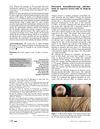 8 citations
,
January 2018 in “European journal of dermatology/EJD. European journal of dermatology”
8 citations
,
January 2018 in “European journal of dermatology/EJD. European journal of dermatology” The girl's regrown brown hair had less of certain pigments than her original black hair.
 3 citations
,
December 2022 in “Cells”
3 citations
,
December 2022 in “Cells” Cannabinoids like CBD and THC may help treat non-cancer skin diseases, but more research is needed.
 134 citations
,
September 2008 in “Lasers in surgery and medicine”
134 citations
,
September 2008 in “Lasers in surgery and medicine” Low fluence photoepilation temporarily removes hair by targeting the hair follicle's pigmented area without severe damage.
 March 2024 in “IP Indian journal of clinical and experimental dermatology”
 Giant solitary trichoepithelioma is a rare, usually non-cancerous hair follicle tumor that can sometimes turn into skin cancer.
July 2025 in “Carbohydrate Polymers” The green alga Parachlorella sp. has potential for use in cosmetics and health products due to its antioxidant, anti-hypertensive, and hair growth properties.
 January 2011 in “Side effects of drugs annual”
 Tretinoin gel is safe for sun exposure, but tacalcitol doesn't significantly improve non-segmental vitiligo.
 7 citations
,
June 2020 in “Experimental dermatology”
7 citations
,
June 2020 in “Experimental dermatology” Researchers found that certain lipids, especially vitamin D3, are lower in prematurely grey hair than in pigmented hair.
 48 citations
,
April 2010 in “Journal of the European Academy of Dermatology and Venereology”
48 citations
,
April 2010 in “Journal of the European Academy of Dermatology and Venereology” Men are more likely to get infectious skin diseases, while women are more prone to autoimmune and pigment-related skin conditions, influenced by biological and environmental factors.
14 citations
,
July 2019 in “Journal of Investigative Dermatology” Integrin-linked kinase is crucial for melanoblasts to properly colonize the skin.
Keratinocytes can reduce the survival of certain melanoma cells, suggesting new therapy paths.
3 citations
,
October 2023 in “Journal of Investigative Dermatology” Aged skin cells can help hair growth by stimulating stem cells.

Alopecia Areata causes hair loss and needs treatments that address both physical and emotional health.
27 citations
,
July 2013 in “The journal of investigative dermatology/Journal of investigative dermatology” Lasers have become precise tools in skin treatment and diagnosis, with ongoing advancements improving their effectiveness.
June 2004 in “Journal of Investigative Dermatology” Increased pigmentation may protect skin from UVB, new targets for skin disease treatments were identified, sunscreen ingredients don't affect hormones, TNF-α inhibitors may help diabetic wounds, and certain treatments could prevent chemotherapy-induced hair loss.
September 2012 in “British Small Animal Veterinary Association eBooks” The document concludes that pigmentation disorders in animals involve complex interactions between melanocytes and keratinocytes.
75 citations
,
March 1998 in “Journal of Investigative Dermatology” The transgene likely activated an oncogene or interrupted a tumor suppressor gene, causing melanoma in mice.
 7 citations
,
August 2022 in “Experimental dermatology”
7 citations
,
August 2022 in “Experimental dermatology” Blocking YAP/TAZ could be a new way to treat skin cancer.
 March 2026 in “Preprints.org”
 Plerixafor may help treat pigmentation disorders by promoting skin repigmentation.
September 2024 in “Preprints.org” Hair protects the scalp from skin cancer by aiding immune defense.
450 citations
,
January 2005 in “The journal of investigative dermatology/Journal of investigative dermatology” Hair color is determined by melanin produced and transferred in hair follicles.