 June 2024 in “International journal of molecular sciences”
 Adenosine complex helps increase hair thickness and density in hair loss.
 8 citations
,
October 2020 in “Lasers in Medical Science”
8 citations
,
October 2020 in “Lasers in Medical Science” LLLT helps treat hair loss by increasing blood flow, reducing inflammation, and stimulating growth factors.
 May 2026 in “Dove Medical Press (Taylor and Francis Group)”
 Buffy coat PRP is more effective for hair growth in androgenetic alopecia than apheresis PRP.
 May 2026 in “Clinical Cosmetic and Investigational Dermatology”
 The buffy coat method slightly outperformed apheresis in patient-reported hair improvement for treating hair loss.
 February 2024 in “Plastic and Reconstructive Surgery – Global Open”
 Stem cell therapies show promise for hair regrowth in androgenetic alopecia.
March 2023 in “Clinical, Cosmetic and Investigational Dermatology” Spironolactone can effectively treat hair loss with manageable side effects.
January 2023 in “Indian Journal of Dermatology, Venereology and Leprology” Higher platelet counts and activators in PRP improve hair density and thickness in treating hair loss.
December 2022 in “Scientia Pharmaceutica” PRP is more effective than minoxidil and placebo for treating hair loss.
October 2022 in “Journal of Drugs in Dermatology” Combining PRP and laser treatments improves hair density best for androgenetic alopecia.
March 2021 in “Türk plastik cerrahi dergisi” Activated platelet-rich plasma is a safe and effective treatment for hair loss.
 2 citations
,
January 2023 in “BioMed Research International”
2 citations
,
January 2023 in “BioMed Research International” Beetroot extract nanogel may help treat hair loss caused by testosterone.
July 2025 in “Skin Health and Disease” PRP is a good alternative or addition to minoxidil for treating hair loss.
 January 2025 in “Clinical Dermatology Review”
 Finasteride 5 mg and topical minoxidil 5% effectively increase hair density in women, with finasteride 5 mg having the highest satisfaction.
 3 citations
,
August 2020 in “PubMed”
3 citations
,
August 2020 in “PubMed” Platelet-rich plasma (PRP) is effective in treating various skin conditions and improving hair density, thickness, and patient satisfaction, with lower relapse rates for Alopecia Areata.
 1 citations
,
July 2017 in “Journal der Deutschen Dermatologischen Gesellschaft”
1 citations
,
July 2017 in “Journal der Deutschen Dermatologischen Gesellschaft” Topical caffeine improves hair loss intensity, speed, and shedding, and works better with minoxidil/azelaic acid.
January 2026 in “Dermatologic Therapy” 0.5% minoxidil mesotherapy is more effective and safe for hair growth in women with androgenetic alopecia than topical 2% minoxidil.
 August 2024 in “PLoS ONE”
 Combining PRP with Minoxidil improves hair density and thickness more than Minoxidil alone.
 September 2023 in “Cureus”
 Topical finasteride might be a good alternative for hair loss treatment with fewer side effects, but more research is needed.
November 2022 in “Journal of Cosmetic Dermatology” The combined therapy significantly increased hair density and was safe for treating hair loss.
September 2025 in “Aesthetic Surgery Journal” Exosome therapies improve skin and hair rejuvenation effectively.
 February 2025 in “Animals”
 Hair mineral content can non-invasively monitor yak health and nutrition.
 July 2024 in “Skin Appendage Disorders”
 The supplement significantly improves hair density and appearance in people with hair loss.
 June 2024 in “Stem cell research & therapy”
 Regenerative medicine shows promise for treating skin disorders like hair loss and vitiligo.
 42 citations
,
October 2012 in “Dermatologic Clinics”
42 citations
,
October 2012 in “Dermatologic Clinics” Trichoscopy is a useful tool for diagnosing different hair and scalp diseases without surgery.
 57 citations
,
October 2018 in “Journal of The American Academy of Dermatology”
57 citations
,
October 2018 in “Journal of The American Academy of Dermatology” Platelet-rich plasma treatment can significantly increase hair count and density in men with pattern baldness, and these improvements can last up to 3 months.
 19 citations
,
September 2011 in “Clinical and Experimental Dermatology”
19 citations
,
September 2011 in “Clinical and Experimental Dermatology” Transverse scalp sections are better for diagnosing non-scarring hair loss, while vertical sections are better for a specific scarring hair loss called lichen planopilaris.
 29 citations
,
January 2017 in “Skin appendage disorders”
29 citations
,
January 2017 in “Skin appendage disorders” Hair loss due to syphilis can be identified using trichoscopy and is treatable with antibiotics.
 124 citations
,
August 1990 in “British Journal of Dermatology”
124 citations
,
August 1990 in “British Journal of Dermatology” Diffuse alopecia in women may be related to androgens and iron deficiency, and basic hormone and nutrient screening is useful.
 July 2025 in “International Journal of Dermatology Venereology and Leprosy Sciences”
 Microneedling can effectively promote hair regrowth in alopecia areata.
 19 citations
,
January 2011 in “Clinics”
19 citations
,
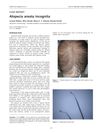
January 2011 in “Clinics” A young woman with a rare hair loss condition improved with steroid and biotin treatment.