 April 2026 in “International Journal of Drug Delivery Technology”
 Alopecia can often be managed effectively with various treatments, but early diagnosis is crucial for preventing permanent hair loss.

A high neutrophil-to-lymphocyte ratio may predict poor response to hair loss treatment.

Vogt–Koyanagi–Harada disease can cause rare hair growth on normally hairless thumb skin.
 March 2026 in “Clinical Cosmetic and Investigational Dermatology”
 Rituximab can cause skin issues, but baricitinib may help improve them.
 September 2025 in “IP Indian Journal of Clinical and Experimental Dermatology”
 Minoxidil effectively treats patterned hair loss in both males and females.
 September 2025 in “Dermatology and Therapy”
 Activated PRP effectively increases hair density and reduces hair loss in alopecia.
 August 2025 in “Journal of Investigative Dermatology”
 Elevated luteinizing hormone contributes to female-pattern hair loss, and blocking certain channels may help prevent it.
 March 2025 in “Journal of Cutaneous and Aesthetic Surgery”
 Non-laser devices show promise in treating hair issues, but more research is needed.
February 2025 in “Skin Research and Technology” New non-invasive techniques can improve diagnosis and treatment of scalp and hair diseases.
 January 2025 in “Journal of Skin and Stem Cell”
 Gout can cause hair loss, but treatment can lead to hair regrowth.
 September 2024 in “Archiv Euromedica”
 Trichoscopy is a quick, accurate, and non-invasive method to diagnose and treat non-scarring hair loss.
 August 2024 in “EMJ Dermatology”
 Non-scarring alopecia in females affects emotional well-being and requires accurate diagnosis and personalized treatment.
 July 2024 in “Plastic and Aesthetic Research”
 Careful planning and accurate diagnosis are crucial for successful hair restoration surgery.
 June 2024 in “Al- Anbar Medical Journal”
 Acute telogen effluvium can be resolved by addressing causes, but chronic telogen effluvium is harder to treat.
 December 2023 in “EPRA international journal of multidisciplinary research”
 Alopecia areata causes sudden hair loss, has genetic links, and can be managed but not cured.
 November 2023 in “International journal of biology, pharmacy and allied sciences”
 Herbal treatments can help with hair problems, but more research is needed.
 June 2023 in “Dermatology and therapy”
 The Middle East and Africa need better data, treatment consensus, and support for Alopecia Areata.
 November 2022 in “Skin health and disease”
 People with hair loss conditions often have more mental health issues like depression and anxiety compared to those without hair loss.
 January 2021 in “Our Dermatology Online”
 A young man's hair loss was the only sign of syphilis, which improved after treatment.
 January 2021 in “Skin appendage disorders”
 The report concludes that atypical Brauer nevus is more common in males, present at birth, and often misdiagnosed due to its unusual scalp locations.
 November 2019 in “Journal of Aesthetic Nursing”
 The article concludes that a thorough diagnosis and treatment plan, including medications, non-invasive methods, or surgery, is important for managing hair loss, with a combination of minoxidil and finasteride being particularly effective.
 April 2017 in “Journal of Investigative Dermatology”
 SIG-1451 could be a promising new treatment for atopic dermatitis.
 April 2016 in “Journal of The American Academy of Dermatology”
 Different treatments are effective for hair loss conditions, but results vary by individual factors.
 March 2004 in “Journal of The American Academy of Dermatology”
 Women with lupus experienced non-scarring hair loss with fewer hair follicles, and the test for lupus in hair was not helpful.
 March 2004 in “Journal of The American Academy of Dermatology”
 Patients with systemic lupus erythematosus and hair loss had fewer hair follicles and non-scarring alopecia; direct immunofluorescence was not helpful in diagnosing lupus in these cases.
 March 2004 in “Journal of The American Academy of Dermatology”
 Patients with SLE experienced non-scarring hair loss with fewer hair follicles, and DIF did not help identify lupus.
 July 2020 in “Journal of Cosmetic and Laser Therapy”
 Using your own platelet-rich plasma (PRP) can effectively treat hair loss, increasing hair density and width with no side effects.
 February 2026 in “Brazilian Journal of Implantology and Health Sciences”
 Chronic stress and high cortisol levels can cause hair loss by disrupting hair growth.
 July 2023 in “Indian Journal of Animal Health”
 FGF-5 promotes Cashmere goat hair growth by increasing keratin genes and reducing certain LncRNA and target genes.
 June 2021 in “Scholars journal of applied medical sciences”
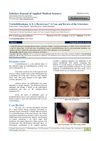
 Trichofolliculoma, a rare benign hair follicle tumor, can potentially recur.