 June 2022 in “International Journal of Biomedicine”
 Erbium YAG laser treatment, combined with conventional therapy, can effectively reduce hair loss and promote hair growth in men with androgenetic alopecia.
82 citations
,
May 2005 in “Dermatologic therapy” Laser hair removal has advanced to effectively reduce hair for various skin types and hair colors.
January 2017 in “Surgical and Cosmetic Dermatology” Combining laser therapy with drug injections effectively treats androgenetic alopecia.
Ablative CO2 laser resurfacing tightens skin by promoting collagen and new cell growth.
 May 2017 in “Journal of The American Academy of Dermatology”
 595 nm pulsed dye laser is a cost-effective treatment for nonmelanoma skin cancer with a low recurrence rate.
 May 2018 in “Journal of Cosmetic and Laser Therapy”
 The editorial discusses the effectiveness and safety of various laser and energy-based cosmetic treatments.
4 citations
,
June 2025 in “Journal of Cosmetic Dermatology” The triple-wavelength diode laser effectively and safely reduces hair and improves skin appearance in people with darker skin.
 April 2024 in “European Journal of Dermatology”
 The 2940-nm Er: YAG fractional laser may help treat receding frontal hairlines in men with androgenetic alopecia.
1 citations
,
November 2016 in “Experimental and Therapeutic Medicine” Low-dose 800 nm laser effectively treats blackheads and coarse pores without harming cell growth.
 2 citations
,
January 2021 in “JAAD Case Reports”
2 citations
,
January 2021 in “JAAD Case Reports” Using a special laser and skin medication together successfully cleared a skin condition in a pregnant woman.
7 citations
,
August 2024 in “Skin Research and Technology” The study's findings are unreliable due to retraction.
11 citations
,
January 2015 in “PubMed” A specific laser treatment can promote hair growth in mice by increasing certain protein levels.
 1 citations
,
November 2023 in “Clinical, cosmetic and investigational dermatology”
1 citations
,
November 2023 in “Clinical, cosmetic and investigational dermatology” The long-pulse alexandrite laser is good for removing hair and treating skin problems like spots and veins.
69 citations
,
August 1995 in “Annals of Plastic Surgery” The ultrapulse carbon dioxide laser can effectively resurface skin without scarring.
 31 citations
,
April 1999 in “Dermatologic Clinics”
31 citations
,
April 1999 in “Dermatologic Clinics” Nd:YAG laser can reduce hair with multiple treatments, but permanent removal isn't guaranteed.
53 citations
,
October 2012 in “Journal of dermatological treatment” The laser treatment effectively and safely improved melasma in Asian patients.
February 2020 in “Journal of Physics Conference Series” 755 nm laser at 10-15 J/cm² is best for light skin, 4.5-10 J/cm² at 755-1064 nm for dark skin.
 10 citations
,
January 2010 in “Indian journal of dermatology, venereology, and leprology”
10 citations
,
January 2010 in “Indian journal of dermatology, venereology, and leprology” Long pulsed Nd: YAG laser is safe and effective for long-term hair reduction in darker skin types.
 April 2019 in “Archives of aesthetic plastic surgery”
 Higher fluences in 808-nm diode laser treatments are more effective for axillary hair removal.
Low-level laser therapy is a safe, painless method that effectively treats acne and improves skin without post-treatment care.
 August 2025 in “Photodermatology Photoimmunology & Photomedicine”
 LED therapy is a promising, non-invasive skin treatment, but needs standardization and personalization.
 1 citations
,
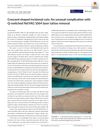
November 2020 in “Journal of Cosmetic Dermatology”
1 citations
,
November 2020 in “Journal of Cosmetic Dermatology” A man got unusual crescent-shaped cuts from a laser tattoo removal due to a laser technical issue, but healed without scars.
 February 2026 in “Cureus”
 The Q-switched ruby laser effectively lightened eyebrow tattoos but may reduce eyebrow hair density.
8 citations
,
May 2004 in “Facial plastic surgery clinics of North America” Laser hair removal is now more effective, but the best treatment schedule is still uncertain.
15 citations
,
August 2011 in “Lasers in medical science” The 755-nm alexandrite laser effectively and quickly treats trichostasis spinulosa with minimal pain and no side effects.
January 2014 in “Belarusian State Pedagogical University repository (Belarusian State Pedagogical University)” Laser treatment can improve the delivery of hair loss drugs into the skin and hair follicles.
April 2026 in “Frontiers in Medicine” The 675-nm diode laser may safely help treat telogen effluvium.
3 citations
,
September 2001 in “Dermatologic Surgery” Adding a 5 W CO2 laser to the Er:YAG laser improved bleeding control without harming hair growth or causing damage.
 4 citations
,
April 1999 in “Dermatologic Clinics”
4 citations
,
April 1999 in “Dermatologic Clinics” Long-pulsed ruby lasers effectively reduce hair for up to 2 years with minimal pain.
2 citations
,
December 2024 in “Microscopy Research and Technique” A new laser-based microscope can clearly image biological structures without labels.