 37 citations
,
August 2013 in “Facial Plastic Surgery Clinics of North America”
37 citations
,
August 2013 in “Facial Plastic Surgery Clinics of North America” Facial hair restoration is generally successful and satisfying for patients when done with quality techniques and realistic expectations.
 November 2023 in “Facial Plastic Surgery”
 Follicular Unit Excision (FUE) is a popular, less invasive hair restoration method with high patient satisfaction when done correctly, despite some complications from untrained practitioners.
January 2021 in “Przegla̧d dermatologiczny” Higher self-esteem in men with androgenic alopecia leads to less shame and more openness.
48 citations
,
April 1995 in “PubMed” Testosterone helps beard and axillary hair cells grow by releasing growth factors from dermal papilla cells.
 April 2024 in “Journal of endocrinological investigation”
 Topical minoxidil helps transgender individuals assigned female at birth grow more facial hair.
1 citations
,
December 1965 in “PubMed” June 2025 in “British Journal of Dermatology” Frontal fibrosing alopecia can occur in men and may be linked to immune triggers like vaccines.
 153 citations
,
August 2002 in “Dermatologic Surgery”
153 citations
,
August 2002 in “Dermatologic Surgery” Follicular Unit Extraction (FUE) is a less invasive hair transplant method with minimal scarring, suitable for about 60% of patients, especially those needing fewer grafts and quicker recovery.
2 citations
,
September 1997 in “Archives of Dermatology”  February 2026 in “Frontiers in Medicine”
 Fibrosing alopecia starts earlier in Latin American men and often looks like common male pattern baldness.
 January 2021 in “Journal of Cutaneous and Aesthetic Surgery”
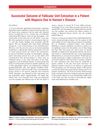
 Follicular unit extraction successfully restored hair growth in a leprosy patient without disease relapse.
November 2015 in “Springer eBooks” Laser hair removal can be effective for people with darker skin tones.
29 citations
,
September 2019 in “Experimental Psychology (formerly Zeitschrift für Experimentelle Psychologie)” Bald men are seen as less attractive without personal information, but this bias is automatic.
2 citations
,
February 1945 in “Archives of Dermatology and Syphilology” Alopecia in the woman was likely caused by vitamin A deficiency, not a fungal infection.
 4 citations
,
January 2002 in “Journal of Cosmetic Dermatology”
4 citations
,
January 2002 in “Journal of Cosmetic Dermatology” Long-pulsed ruby laser effectively reduces hair in male-to-female transsexuals.
37 citations
,
June 2000 in “Experimental dermatology” The Lanceolate hair-J mutation in mice mimics human hair disorders like Netherton's syndrome.
 November 2005 in “Reactions Weekly”
 A man treated with gefitinib for lung cancer grew new hair on his bald scalp.
 3 citations
,
January 2015 in “Indian journal of burns”
3 citations
,
January 2015 in “Indian journal of burns” The document discusses how to restore hair in areas like eyebrows, eyelashes, moustache, beard and scalp after burns.
May 2008 in “10th European Congress of Endocrinology” 10 citations
,
April 2009 in “Oncology Reports” Bald-headed individuals may need early non-invasive detection for skin changes linked to cancer risk.
 1 citations
,
November 2009 in “Cambridge University Press eBooks”
1 citations
,
November 2009 in “Cambridge University Press eBooks” FUE is a less invasive hair restoration method with potential to become standard, offering benefits like reduced scarring and pain, but requires experience to minimize risks.
1 citations
,
June 2004 in “Sexuality, reproduction & menopause” Eflornithine cream effectively reduces facial hair in women with hirsutism.
 3 citations
,
July 2014 in “QJM”
3 citations
,
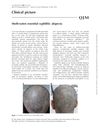
July 2014 in “QJM” A 35-year-old man had patchy hair loss that was actually due to syphilis, not alopecia areata.
4 citations
,
July 2024 in “Animals” A new depilation method using cold wax reduces injury and improves hair growth studies in mice.
33 citations
,
September 1987 in “American Journal of Medical Genetics” Uncombable hair is inherited dominantly with complete penetrance.
 14 citations
,
May 2019 in “Journal of Maxillofacial and Oral Surgery”
14 citations
,
May 2019 in “Journal of Maxillofacial and Oral Surgery” FUE hair transplant is a promising method with benefits like less scarring, but requires a skilled surgeon and can damage hair follicles.

Wearing a toupee makes men seem more attractive and slightly healthier, but doesn't change how confident they appear.
Hair transplantation can restore underarm hair after surgery, despite challenges.
 4 citations
,
August 2019 in “Actas Dermo-Sifiliográficas”
4 citations
,
August 2019 in “Actas Dermo-Sifiliográficas” The Spanish HSS-29 scale effectively measures changes in life quality due to female-pattern hair loss.