 April 2026 in “Frontiers in Medicine”
 Syphilis can cause hair loss even without penetrative sex, but treatment can fully restore hair.
14 citations
,
May 2022 in “Cell Reports” Basal cell carcinomas need extra mutations to grow from small to large tumors.
71 citations
,
December 2010 in “Preventive Veterinary Medicine” Young dogs and cats in Western Turkey often have skin infections caused by fungi, especially Microsporum canis.
4 citations
,
August 2013 in “Pediatric dermatology” Hair casts can be treated with physical removal and special shampoos.
 3 citations
,
January 2021 in “Skin appendage disorders”
3 citations
,
January 2021 in “Skin appendage disorders” Hair loss due to scalp metastasis from breast cancer, known as Neoplastic Alopecia, has a better survival rate than other scalp metastases and requires a biopsy for diagnosis.
 3 citations
,
June 2023 in “Cureus”
3 citations
,
June 2023 in “Cureus” Pilomatricomas should be considered to avoid misdiagnosis in children with unusual skin tumors.
 June 2023 in “medRxiv (Cold Spring Harbor Laboratory)”
 Nociplastic type pain, common in Chronic Overlapping Pain Conditions, is a complex, heritable trait linked to 24 unique genetic factors and 127 genes, with potential shared mechanisms in cognitive, personality, and metabolic traits.
1 citations
,
July 2020 in “The Egyptian Journal of Hospital Medicine” The MDR1 C3435T polymorphism does not significantly affect methotrexate response in rheumatoid arthritis patients.
87 citations
,
January 1999 in “British Journal of Dermatology” Trichoblastic fibroma and basal cell carcinoma are similar but different from trichoepithelioma.
 176 citations
,
June 2016 in “PLoS ONE”
176 citations
,
June 2016 in “PLoS ONE” Nucleic acid polymers can enhance antiviral responses and improve treatment outcomes for chronic hepatitis B.
May 2018 in “The journal of immunology/The Journal of immunology” Mutations in the FOXN1 gene cause severe immune issues but don't affect hair and nails.
9 citations
,
April 1985 in “Archives of Dermatology” Recognizing the "bamboo hair defect" is crucial for diagnosing Netherton's syndrome.
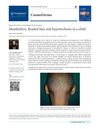 January 2026 in “Cosmoderma”
 A 9-year-old girl has a rare hair disorder causing beaded, sparse hair.
June 2025 in “British Journal of Dermatology” A rare skin condition in a boy is likely due to a specific genetic mutation pattern.
The combination therapy effectively improved acne keloidalis nuchae.
11 citations
,
June 1974 in “Journal of Cutaneous Pathology” Follicular mucinosis causes significant damage to hair follicle cells.
 7 citations
,
January 2017 in “Annals of Dermatology”
7 citations
,
January 2017 in “Annals of Dermatology” Oral cyclosporine combined with Pantogar® effectively treats twenty-nail dystrophy.
November 2025 in “Journal of Investigative Dermatology” PCFCL may have unrecognized subtypes and needs more research.
 23 citations
,
December 2015 in “Anais Brasileiros de Dermatologia”
23 citations
,
December 2015 in “Anais Brasileiros de Dermatologia” Permanent hair loss after bone marrow transplant can be caused by chemotherapy or chronic graft-versus-host disease.
 July 2022 in “The journal of investigative dermatology/Journal of investigative dermatology”
 The early genes of a specific virus can cause abnormal skin cell growth and hair follicle changes.
 December 2023 in “American journal of medical genetics. Part A”
 A new syndrome was linked to two new genetic changes in the MBTPS1 gene in a 14-year-old girl.
 December 2023 in “Indian Journal of Canine Practice”
 A dog's MRSA skin infection was cured with linezolid and fungal treatment in 28 days.
 August 2018 in “Pediatric Dermatology”
 A baby had a unique skin condition with a pale patch and surrounding dark hairs, not linked to other health issues.
 October 2025 in “JOURNAL OF CLINICAL AND DIAGNOSTIC RESEARCH”
 Waldenstrom’s Macroglobulinaemia can mimic multiple myeloma, so accurate diagnosis is crucial.
 17 citations
,
June 2020 in “British Journal of Dermatology”
17 citations
,
June 2020 in “British Journal of Dermatology” Oral mTOR inhibitors often cause skin and hair side effects but usually don't require stopping treatment.
9 citations
,
September 1977 in “Journal of Small Animal Practice” Mange in guinea pigs can be cured with gamma benzene hexachloride washes.
 41 citations
,
October 2008 in “The American journal of pathology”
41 citations
,
October 2008 in “The American journal of pathology” Blocking a specific protein signal can make hair grow on mouse nipples.
September 2020 in “Advances in anatomic pathology” A woman's large nose growth was initially misdiagnosed, but later confirmed to be giant rhinophyma after full removal and examination.
October 2025 in “Journal of the Endocrine Society” Combining medication and minimally invasive techniques can effectively manage Marine-Lenhart syndrome.
 May 2014 in “Journal of The American Academy of Dermatology”
 The number of new cases of cutaneous B-cell lymphoma has leveled off since the early 2000s, and survival rates have improved since 1973.