 9 citations
,
August 2018 in “Journal der Deutschen Dermatologischen Gesellschaft”
9 citations
,
August 2018 in “Journal der Deutschen Dermatologischen Gesellschaft” Most patients with frontal fibrosing alopecia are middle-aged women, often have thyroid disease, and some treatments can help stabilize the condition.
 666 citations
,
September 1977 in “British Journal of Dermatology”
666 citations
,
September 1977 in “British Journal of Dermatology” Common baldness, also known as Androgenetic Alopecia, is caused by a combination of genetic factors and hormones called androgens.
December 2023 in “International Journal of Dermatology” Accurate diagnosis of alopecia areata incognito requires trichoscopy and histopathology.
5 citations
,
May 1994 in “Facial plastic surgery clinics of North America” Minoxidil was promising for treating male and female pattern baldness in 1994, but more research on genetics and other treatments was needed.
 4 citations
,
January 2011 in “Journal of UOEH”
4 citations
,
January 2011 in “Journal of UOEH” Autoimmune hair loss may be linked to increased Th1 and Th17 cells and decreased Th2 cells.
 June 2024 in “Skin Research and Technology”
 Severe male pattern hair loss is linked to lower hair density in the back of the head.
 1 citations
,
April 2019 in “Journal of Investigative Dermatology”
1 citations
,
April 2019 in “Journal of Investigative Dermatology” Oral minoxidil can potentially increase hair growth in people suffering from Central Centrifugal Cicatricial Alopecia.
 January 2022 in “Clinical dermatology open access journal”
 Early-stage Alopecia Areata was effectively treated in less than six months.
 October 2023 in “Acta dermato-venereologica”
 Minoxidil and platelet-rich plasma can help turn thin hair into thicker hair in male pattern baldness.
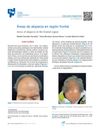 January 2025 in “Revista del Centro Dermatológico Pascua”
 Early diagnosis and treatment can help manage fibrosing alopecia in older women.
 1 citations
,
May 2023 in “Indian Journal of Dermatology Venereology and Leprology”
1 citations
,
May 2023 in “Indian Journal of Dermatology Venereology and Leprology” Alopecia areata may lead to hearing loss.
1 citations
,
April 1990 in “PubMed” Alopecia areata causes unpredictable hair loss and is hard to treat.
 March 2025 in “Cosmetics”
 Combining treatments works best for early hair loss, while transplants are best for severe cases.
January 2023 in “Australasian Journal of Dermatology” Sublingual minoxidil helped regrow hair in a person with congenital triangular alopecia.
 14 citations
,
January 2006 in “Australasian journal of dermatology”
14 citations
,
January 2006 in “Australasian journal of dermatology” Alopecia areata can look like frontal fibrosing alopecia, making diagnosis hard.

Alopecia areata often starts around age 23, can be permanent in 30% of cases, and treatments are usually temporary.
 22 citations
,
July 2012 in “International Journal of Trichology”
22 citations
,
July 2012 in “International Journal of Trichology” Miniaturized hairs stay connected to muscle in alopecia areata, allowing possible regrowth, but not in androgenetic alopecia.
 1 citations
,
January 1996 in “Springer eBooks”
1 citations
,
January 1996 in “Springer eBooks” Androgenetic alopecia is a condition causing noticeable hair loss, especially in middle age, which is more severe than normal balding.
 1 citations
,
April 2020 in “Baylor University Medical Center Proceedings”
1 citations
,
April 2020 in “Baylor University Medical Center Proceedings” Microneedling with triamcinolone helps hair regrowth in ophiasis alopecia areata.
May 2025 in “International Journal of Trichology” Partially bald areas in Indian AGA patients still have hair growth cells, suggesting early treatment is best.
 2 citations
,
January 2013 in “International Journal of Dermatology”
2 citations
,
January 2013 in “International Journal of Dermatology” ALDOA levels drop in hair cells during hair loss.
2 citations
,
December 2023 in “International Journal of Dermatology” A unique type of hair loss mimics another condition but has minimal inflammation and specific immune cells present.
 April 2012 in “Informa Healthcare eBooks”
 Alopecia areata is a common autoimmune condition causing varying hair loss, diagnosed by specific patterns of inflammation around hair follicles, with several treatment options available.
2 citations
,
May 2002 in “PubMed” Micro-graft hair transplantation is an effective, simple, and painless method for permanent hair restoration in men and women.
 November 2012 in “South African Family Practice”
 The article concludes that early treatment of alopecia is crucial to prevent permanent hair loss.
 November 2009 in “Actas dermo-sifiliográficas/Actas dermo-sifiliográficas”
 Hair transplantation effectively treated a bald patch in an 18-year-old woman with Temporal Triangular Alopecia.
January 2022 in “Clinical Cases in Dermatology” A 47-year-old man was diagnosed with a specific type of hair loss and advised to use certain medications and avoid hair transplants.