July 2026 in “Journal of College of Physicians And Surgeons Pakistan” The 2.5 mg dose of oral minoxidil is more effective for hair growth in androgenetic alopecia.
February 2026 in “JEADV Clinical Practice” Lichen planopilaris can cause hair loss on limbs, not just the scalp.
December 2025 in “International Journal of Cosmetic Science” A new tool helps better assess and treat hair loss in Chinese men.
Homeopathy may help treat hair loss and improve quality of life.
December 2024 in “Aesthetic Plastic Surgery” Combining PEMF with PBST is more effective for hair regrowth than PBST alone.
 October 2024 in “Aesthetic Plastic Surgery”
 Micrografts are a safe and effective treatment for hair loss in both men and women.
September 2022 in “Applied sciences” Combining micro-needling, LED therapy, and growth factors with Finasteride® significantly improves hair growth.
December 2018 in “Вестник Российской Военно-медицинской академии” PRP therapy significantly improves hair growth and density in men with androgenic alopecia.

Combined oral minoxidil and finasteride significantly improve hair density in men with male pattern baldness.
May 2025 in “UNESP Institutional Repository (São Paulo State University)” The 5 mg dose of oral minoxidil is not more effective than the 2.5 mg dose for treating male hair loss.
 42 citations
,
August 2013 in “International Journal of Women's Health”
42 citations
,
August 2013 in “International Journal of Women's Health” Female pattern hair loss is caused by multiple factors and while treatments like topical minoxidil, hormone therapy, and low-level light therapy can help, none can fully cure it.
 6 citations
,
January 2019 in “Journal of Cutaneous and Aesthetic Surgery”
6 citations
,
January 2019 in “Journal of Cutaneous and Aesthetic Surgery” Follicular unit extraction is an effective hair transplant method for advanced baldness with high patient satisfaction, but some experienced decreased density over time.
2 citations
,
December 2021 in “Cureus” Low vitamin D levels are linked to hair loss, and vitamin D might help treat it.
 1 citations
,
August 2023 in “Clinical, Cosmetic and Investigational Dermatology”
1 citations
,
August 2023 in “Clinical, Cosmetic and Investigational Dermatology” A condition with certain scalp changes may come before acne keloidalis nuchae and other similar hair loss disorders.
1 citations
,
March 2022 in “Irish Journal of Medical Science” Men with androgenetic alopecia and hypertension may experience more severe COVID-19.
1 citations
,
December 2019 in “Journal of skin and stem cell” PRP shows promise for short-term hair growth, especially in young men.
 June 2025 in “Indian Dermatology Online Journal”
 Severe hair loss may worsen with skin condition, suggesting treating the skin might help.
 April 2025 in “Journal of Cosmetic Dermatology”
 Social media doesn't significantly influence treatment choices for hair loss, but better education on options is needed.
 December 2024 in “Journal of Skin and Stem Cell”
 Trichoscopy helps diagnose and manage different types of hair loss in the Indian population.
 May 2023 in “Photobiomodulation, photomedicine, and laser surgery”
 The 675 nm laser treatment significantly increased hair density and reduced symptoms of androgenetic alopecia in both men and women, with no side effects.

Hair loss treatment using stem cells from baby teeth was effective for 75% of men tested, with mild side effects. A scoring system may predict how well this treatment works.
October 2021 in “Case Reports in Dermatology” Patients and doctors often differ in assessing hair loss severity, so treatment should be personalized.
September 2002 in “Hair transplant forum international” July 2026 in “Journal of the American Academy of Dermatology” The occipital scalp is affected in advanced hair loss, so it shouldn't be used as a control.
January 2026 in “Journal of Cosmetic Dermatology” Topical 4-aminopyridine 5% does not improve hair growth in male pattern baldness.
 January 2026 in “DOAJ (DOAJ: Directory of Open Access Journals)”
 Early biopsy and targeting inflammation can improve treatment for hair loss in androgenetic alopecia.
November 2025 in “Journal of Cosmetic Dermatology” Exosome therapy can safely and effectively restore color to gray hair.
 July 2025 in “Journal of Dermatological Treatment”
 PRP improves hair growth in androgenic alopecia, especially when combined with minoxidil.

Topical minoxidil and oral finasteride and dutasteride are the most effective treatments for male and female pattern hair loss, but study quality varies.
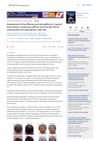 November 2023 in “Journal of Cosmetic Dermatology”
 The topical treatment with caffeine and Procapil 3% improved male pattern hair loss and was well tolerated after 12 weeks.