 30 citations
,
June 2021 in “British Journal of Dermatology”
30 citations
,
June 2021 in “British Journal of Dermatology” Mutations in the WNT10A gene can cause skin, hair, teeth, and other disorders, and may also affect other areas like kidney and cancer, with potential for targeted treatments.
KRTAP6 genes affect wool quality in sheep.
4 citations
,
June 2020 in “DOAJ (DOAJ: Directory of Open Access Journals)” A woman with Rhupus and Rowell syndrome was treated successfully with medication adjustments.
4 citations
,
November 2023 in “Journal of Cosmetic Dermatology” Negative pressure fractional microneedle radiofrequency effectively and safely reduces periorbital aging signs.
 32 citations
,
December 2013 in “Biological & Pharmaceutical Bulletin”
32 citations
,
December 2013 in “Biological & Pharmaceutical Bulletin” Rice bran extract can potentially treat hair loss by promoting hair growth and increasing the number of hair follicles.
3 citations
,
December 2023 in “Pain Medicine” Peripheral nerve stimulation greatly reduced pain and improved skin symptoms in a CRPS patient.
 March 2014 in “Journal of The American Academy of Dermatology”
 Reflectance confocal microscopy can noninvasively diagnose onychomatricoma by showing unique features different from healthy nails or nail fungus.
January 2015 in “프로그램북(구 초록집)” Two patients with stubborn hair loss grew hair after PDRN injections.
7 citations
,
April 2000 in “Mammalian Genome” A new mutation in mice causes crooked whiskers and messy hair.
 October 2021 in “Journal of Investigative Dermatology”
 The study concluded that the developed models are effective for studying hair growth mechanisms and testing new treatments.
5 citations
,
March 2020 in “Thoracic Cancer” CT-707 is effective and safe for treating certain Chinese lung cancer patients.
109 citations
,
November 2011 in “Nature Neuroscience” 8 citations
,
December 2022 in “Journal of Translational Medicine” WNMFDDA effectively predicts drug-disease associations.
 11 citations
,
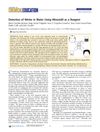
June 2013 in “Journal of Chemical Education”
11 citations
,
June 2013 in “Journal of Chemical Education” Minoxidil detects nitrite in water, creating a simple, cheap test.
April 2025 in “Cosmetics” RCDP NCs are promising anti-aging cosmetic ingredients that improve skin health by reducing oxidative stress and enhancing cell function.
 April 2019 in “Journal of Investigative Dermatology”
 BRG1 is essential for skin cells to move and heal wounds properly.
 28 citations
,
October 2019 in “Seminars in Cell & Developmental Biology”
28 citations
,
October 2019 in “Seminars in Cell & Developmental Biology” Hair can regrow in large wounds through a process similar to how hair forms in embryos, and understanding this could lead to new treatments for hair loss or scarring.
 June 2026 in “Zenodo (CERN European Organization for Nuclear Research)”
 The system aims to extend human lifespan to 130-150 years by improving cellular health and reducing stress.
 June 2026 in “Zenodo (CERN European Organization for Nuclear Research)”
 The system aims to extend human lifespan to 130-150 years by improving cellular health and reducing stress.
2 citations
,
May 2024 in “BMC Genomics” Certain genetic changes in the KRT82 gene may cause patchy skin in New Zealand rabbits.
January 2016 in “Munich Personal RePEc Archive (Ludwig Maximilian University of Munich)” A new method using gold nanoshells and infrared light effectively delivers siRNA to cancer and stem cells with precision and minimal damage.
2 citations
,
January 2022 in “The Application of Clinical Genetics” A young Russian girl with Meier-Gorlin syndrome has two new mutations in the CDC6 gene.
May 2010 in “Faculty Opinions – Post-Publication Peer Review of the Biomedical Literature” A mutation in the KRT74 gene causes woolly hair by affecting hair texture.
 January 2023 in “Pesquisa Veterinária Brasileira”
 A KRT71 mutation in Hereford cattle in Uruguay causes thin, curly hair and scaly skin.
A natural compound called VB-1 can help promote hair growth by boosting a specific cell signal in human skin cells.
February 2026 in “Advanced Science” TTNPB helps turn stem cells into neural stem cells, improving depression-like behaviors in rats.
 1 citations
,
June 2021 in “bioRxiv (Cold Spring Harbor Laboratory)”
1 citations
,
June 2021 in “bioRxiv (Cold Spring Harbor Laboratory)” GTL1 is needed to control root hair growth and prevent problems when there are too many nutrients.
April 2023 in “Journal of Investigative Dermatology” AL136131.3 slows hair growth by affecting energy processes in hair loss.
2 citations
,
May 2022 in “International journal of molecular sciences” Changes in KRT17 gene activity linked to wool production in Angora rabbits.
 June 2019 in “Reactions Weekly”