 15 citations
,
March 2021 in “Rheumatology and Immunology Research”
15 citations
,
March 2021 in “Rheumatology and Immunology Research” Chinese patients with systemic lupus erythematosus commonly experience oral ulcers, arthritis, alopecia, skin rash, and nephritis.
11 citations
,
November 2015 in “Carcinogenesis” Deleting TNFα gene reduces skin cancer risk in certain mice.
33 citations
,
June 2009 in “Journal of Cutaneous Pathology” Erlotinib can cause nonscarring hair loss and itchy skin.
September 2002 in “Oncology Times” Promising cancer treatments were found, but the manufacturer closed.
28 citations
,
January 2005 in “Photochemistry and Photobiology” Protein kinase C epsilon may increase skin cancer risk by affecting nearby cells.
 March 2026 in “Scientific Journal”
 Early recognition and evaluation of nevus sebaceus are crucial to detect and manage potential cancerous changes.
 December 2025 in “Clinical Cosmetic and Investigational Dermatology”
 A rare lupus case on the chin was successfully treated with steroids and immunomodulators after accurate diagnosis using advanced imaging techniques.
294 citations
,
March 2016 in “European journal of cancer” Neoadjuvant chemotherapy followed by surgery leads to fewer severe complications and better quality of life than immediate surgery in advanced ovarian cancer patients with high tumor load.
3 citations
,
November 2024 in “Egyptian Journal of Medical Human Genetics” SGK1 is important in cancer growth and treatment resistance, and targeting it could improve therapies.
 January 2011 in “Journal of The American Academy of Dermatology”
 Two patients had a rare combination of red skin spots and white scaly skin lesions not on the genitals.
July 2024 in “Journal of Investigative Dermatology” Scalp cooling may be less effective for women of color on certain chemotherapy treatments.
April 2026 in “UNC Libraries” Pulsed electric field treatment may help shrink untreated liver tumors.
April 2025 in “The Journal of Dermatology” Janus kinase inhibitors may help treat cutaneous T-cell lymphoma, but more research is needed.
 5 citations
,
July 2022 in “Orphanet journal of rare diseases”
5 citations
,
July 2022 in “Orphanet journal of rare diseases” RSPO1 mutations in certain patients lead to skin cells that don't develop properly and are more likely to become invasive, increasing the risk of skin cancer.
6 citations
,
December 2021 in “Journal of Cancer Research and Therapeutics” The treatment improved survival and controlled cancer spread but required managing side effects like rashes.
 October 2021 in “Acta Scientific Medical Sciences”
 A woman was diagnosed with a rare adrenal gland cancer that did not show usual hormone-related symptoms.
 1 citations
,
August 2023 in “bioRxiv (Cold Spring Harbor Laboratory)”
1 citations
,
August 2023 in “bioRxiv (Cold Spring Harbor Laboratory)” The research created a detailed map of skin cells, showing that certain cells in basal cell carcinoma may come from hair follicles and could help the cancer grow.
June 2025 in “British Journal of Dermatology” The new AI software predicts melanoma outcomes more accurately than traditional methods.
16 citations
,
January 1998 in “PubMed” Sun exposure and genetics increase skin cancer risk from precancerous lesions.
 18 citations
,
April 2014 in “Stem cells”
18 citations
,
April 2014 in “Stem cells” The study found stem cells in minor salivary glands that can differentiate and are involved in tumor formation when exposed to tobacco.
May 2015 in “European Journal of Paediatric Neurology” ECCL should be considered in patients with specific skin and eye lesions.
3 citations
,
March 1998 in “PubMed” A woman's skin and hair conditions improved after her cancerous tumor was removed.
1 citations
,
October 2024 in “BMJ Case Reports” Fertility-preserving surgery can help women with early-stage Sertoli-Leydig cell tumors conceive naturally.
7 citations
,
May 2022 in “Cancers” UC.145 may be a new biomarker for predicting gastric cancer.
17 citations
,
January 2014 in “Journal of Oral and Maxillofacial Pathology” Seborrheic keratosis is a common, harmless skin growth that can look like cancer, so it may need a biopsy.
 5 citations
,
May 2013 in “The American Journal of Dermatopathology”
5 citations
,
May 2013 in “The American Journal of Dermatopathology” The author now believes tricholemmal carcinoma is a rare type of infundibular squamous cell carcinoma and more research is needed on these tumors.
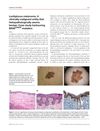 1 citations
,
March 2015 in “Journal of the European Academy of Dermatology and Venereology”
1 citations
,
March 2015 in “Journal of the European Academy of Dermatology and Venereology” A clinically suspected melanoma appeared benign under the microscope but was confirmed by specific tests and a rare mutation.
 November 2023 in “International surgery journal”
 A man's neck lump was a trichilemmal cyst, not cancer, and should be fully removed due to rare risk of becoming malignant.
 3 citations
,
March 2019 in “Case Reports”
3 citations
,
March 2019 in “Case Reports” A man with myotonic dystrophy type 1 had 28 skin cancers, suggesting a link between the disease and skin cancer, emphasizing the need for sun protection and regular skin checks.
10 citations
,
August 2002 in “British Journal of Ophthalmology” Surgical excision is the best treatment for SCC, but intralesional cidofovir might be a good alternative.