13 citations
,
August 2015 in “Oncology Reports” Stem cells slowed lung tumor growth but increased colon tumor growth in mice.
 September 2018 in “Journal of Investigative Dermatology”
 Non-white organ transplant patients have worse skin cancer outcomes due to later diagnosis and treatment.
 3 citations
,
May 2019 in “BMJ case reports”
3 citations
,
May 2019 in “BMJ case reports” A boy with severe immune deficiency and Epstein-Barr virus died from high-grade B-cell lymphoma.
January 2019 in “Dermatologic Surgery”  March 2024 in “Cancer Research”
 Eliminating senescent cells can prevent and reverse chemotherapy-induced peripheral neuropathy.
 July 2023 in “British journal of dermatology/British journal of dermatology, Supplement”
 HPV8 E6 gene causes growth of certain skin stem cells.
May 2014 in “Nursing Made Incredibly Easy!” Pancreatic cancer had a very low survival rate and was hard to treat effectively.
 April 2023 in “Journal of Investigative Dermatology”
 Mutations in the SHH pathway in certain skin cells can cause skin tumors and abnormal hair growth.
 21 citations
,
January 2018 in “Anticancer Research”
21 citations
,
January 2018 in “Anticancer Research” NBCCS and BFHS might be the same syndrome, helping better identify and manage cases.
 4 citations
,
August 2017 in “Journal of cutaneous pathology”
4 citations
,
August 2017 in “Journal of cutaneous pathology” An 8-year-old girl had a rare, benign skin tumor on her forehead.
2 citations
,
December 2016 in “PubMed” Adrenocortical carcinoma is a rare, aggressive adrenal gland cancer with a poor outlook.

Lifestyle factors like BMI at young adulthood can increase cancer risk in women with Lynch Syndrome, but diet and height don't seem to affect this risk.
19 citations
,
October 2016 in “Journal of oncology pharmacy practice” A cancer patient's hair became permanently curly after treatment with nivolumab.
 351 citations
,
February 2010 in “Nature Cell Biology”
351 citations
,
February 2010 in “Nature Cell Biology” Basal cell carcinoma mostly starts from cells in the upper skin layers, not hair follicle stem cells.
3 citations
,
January 2005 in “Photochemistry and Photobiology” Protein kinase C epsilon may promote skin cancer development after UV exposure by affecting nearby cells.
12 citations
,
April 2004 in “PubMed” A rare skin condition in a baby showed unusual fat and hair follicle changes.
April 2019 in “Journal of the Endocrine Society” A chest X-ray can effectively diagnose ectopic ACTH secretion from lung tumors.
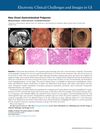 August 2013 in “Gastroenterology”
 A 60-year-old man with Cronkhite-Canada syndrome improved with treatment, but the condition has a high mortality rate and a risk of colorectal cancer.
 April 2020 in “Journal of the Endocrine Society”
 An 87-year-old man showed unusual signs of Hodgkin lymphoma, primarily high calcium levels, which improved after treatment and revealed the disease.
 January 2011 in “Yearbook of Dermatology and Dermatologic Surgery”
 Thicker melanomas and nodular types are more likely to spread to sentinel lymph nodes.
 November 2022 in “The journal of investigative dermatology/Journal of investigative dermatology”
 Skin organoids with NCSTN mutation show changes in hair follicle development and higher inflammation, key features of Hidradenitis Suppurativa.
January 2009 in “Epsilon: Revista de la Sociedad Andaluza de Educación Matemática "Thales"” A CCS patient with severe complications was successfully treated using combined therapies.
1 citations
,
September 2023 in “Journal of the American Academy of Dermatology” 82 citations
,
July 2012 in “Brain pathology” High LGR5 levels in glioblastoma indicate poor prognosis and are essential for cancer stem cell survival.
 October 2024 in “Journal of the Endocrine Society”
 Metastatic cervical cancer can cause rare, severe Cushing's syndrome with high risk of death.
September 2017 in “Pure and Applied Biology” Chemotherapy and radiotherapy improved quality of life and reduced symptoms in lung cancer patients.
822 citations
,
January 2021 in “Genome biology” scMC effectively separates biological signals from technical noise in single-cell genomics data.
2 citations
,
July 2001 in “Dermatologic Surgery” Trichoblastic carcinoma may be a distinct type of skin cancer different from basal cell carcinoma.

A neck lesion misdiagnosed as benign was later treated successfully with Mohs Micrographic Surgery.
4 citations
,
July 2024 in “Radiotherapy and Oncology” A standardized scoring system is needed to improve model reliability for predicting hair loss in brain tumor patients treated with proton therapy.