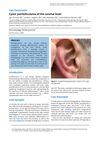
 March 2026 in “Dermatology Online Journal”
 Cystic panfolliculoma is a rare, harmless tumor that can be confused with other skin tumors.
1 citations
,
April 2025 in “Clinical Cosmetic and Investigational Dermatology” A rare skin lesion in a 64-year-old woman was successfully treated with a laser, showing minimal redness and no return after one month.
 15 citations
,
January 2011 in “Annals of Dermatology”
15 citations
,
January 2011 in “Annals of Dermatology” The study concluded that neonatal occipital alopecia is common, not caused by physical friction, and usually resolves on its own without treatment.
5 citations
,
February 2005 in “Journal of the American Academy of Dermatology” Focal palmoplantar callosities may help diagnose non-Herlitz junctional epidermolysis bullosa.
13 citations
,
February 2012 in “International Journal of Dermatology” A new genetic mutation in the CDH3 gene causes hair loss and eye problems in young people.
January 2024 in “Skin Appendage Disorders” Eyelash loss can temporarily occur from chemotherapy for retinoblastoma.
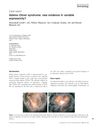 December 2013 in “International Journal of Dermatology”
 The clinical signs of Adams-Oliver syndrome can vary greatly, even among family members.
June 2026 in “Indian Dermatology Online Journal” A supernumerary nipple was correctly identified using dermoscopy, avoiding misdiagnosis.
29 citations
,
September 1942 in “Archives of ophthalmology” Vogt-Koyanagi syndrome often leads to partial or complete blindness and responds poorly to treatment.
 1 citations
,
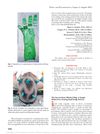
May 2015 in “Plastic and Reconstructive Surgery”
1 citations
,
May 2015 in “Plastic and Reconstructive Surgery” The Sacred Heart Bilobed Flap is a surgical method for repairing small scalp defects with local flaps, relying on scalp elasticity and hair regrowth to hide any imperfections.
82 citations
,
November 1985 in “Archives of Dermatology” The newborn's skin condition improved over time, leaving only lighter skin patches.
1 citations
,
August 2010 in “Optometry and Vision Science” A 4-year-old boy's vision and hair loss were likely caused by inflammation.
 February 2010 in “Journal of The American Academy of Dermatology”
 Babies born after 38 weeks to mothers under 36 years old and not delivered by C-section have a higher risk of neonatal occipital alopecia.
55 citations
,
July 2016 in “Eye”  18 citations
,
March 2011 in “Archives of ophthalmology”
18 citations
,
March 2011 in “Archives of ophthalmology” Ringworm around the eyes often gets misdiagnosed, leading to eyelash loss, but antifungal treatment can improve the condition.
14 citations
,
October 2001 in “British Journal of Ophthalmology” Corneal issues in pemphigus vulgaris may require surgery if medication is not followed.
1 citations
,
January 2019 in “Dermatology Online Journal” A rare skin condition appeared on a 19-year-old woman's scalp.
 June 2007 in “Journal of The Royal Society for The Promotion of Health”
 Smoking doubles the risk of blindness, and physical exercise helps dyslexic children read better.
34 citations
,
September 2010 in “Clinical and Experimental Dermatology” A new gene mutation linked to KID syndrome was found, expanding genetic knowledge.
February 2022 in “Authorea (Authorea)” PAON shows skin patterns due to genetic mosaicism.
 2 citations
,
September 2021 in “JCPSP. Journal of the College of Physicians & Surgeons Pakistan”
2 citations
,
September 2021 in “JCPSP. Journal of the College of Physicians & Surgeons Pakistan” Women with PCOS have thicker parafoveal areas in their retinas, but their macular blood vessel density is normal.
January 2022 in “International journal of dermatology and venereology” A Chinese man with KID syndrome had a new mutation in the GJB2 gene.
4 citations
,
January 1992 in “American Journal of Ophthalmology” 33 citations
,
August 2013 in “Current Opinion in Ophthalmology” Frontalis suspension surgery using autologous fascia lata is effective for treating unilateral congenital ptosis with poor levator function.
1 citations
,
January 2015 in “The Journal of Dermatology” Genetic testing is crucial for diagnosing and managing non-Herlitz junctional epidermolysis bullosa.
Trichoscopic examination is crucial for diagnosing congenital triangular alopecia.
8 citations
,
May 2003 in “Clinical and Experimental Dermatology” A 14-year-old girl's black hair showed unique color changes, suggesting early greying.
 1 citations
,
November 2023 in “Cureus”
1 citations
,
November 2023 in “Cureus” Early diagnosis of Bloch-Sulzberger Syndrome is crucial to prevent severe complications.
 1 citations
,
June 2022 in “Chinese medical journal/Chinese Medical Journal”
1 citations
,
June 2022 in “Chinese medical journal/Chinese Medical Journal” Two new mutations in the CDH3 gene cause hair loss and vision problems in a young girl.
August 2016 in “Journal of the American Academy of Dermatology” The infant likely has Hay-Wells syndrome and needs genetic testing and heart screening.