 3 citations
,
May 2022 in “Clinical and experimental dermatology”
3 citations
,
May 2022 in “Clinical and experimental dermatology” Drugs targeting EMT molecules show promise for treating lichen planopilaris.
 May 2023 in “Elsevier eBooks”
 Platelet-rich plasma may help heal injuries.
2 citations
,
May 2023 in “Indian Journal of Dermatology Venereology and Leprology” A new genetic mutation in the CAST gene may link PLACK syndrome to alopecia areata.
February 2025 in “Drug Delivery and Translational Research”  August 2022 in “IntechOpen eBooks”
 The best treatment for Frontal Fibrosing Alopecia and Lichen Planopilaris combines oral and topical medications to reduce symptoms and stop hair loss.
 5 citations
,
January 1990 in “Journal of Society of Cosmetic Chemists of Japan”
5 citations
,
January 1990 in “Journal of Society of Cosmetic Chemists of Japan” Permanent wave lotion can extract proteins from hair, especially when pH is higher, and repeated treatments or bleaching can damage hair.
 13 citations
,
April 2022 in “Anais brasileiros de dermatologia/Anais Brasileiros de Dermatologia”
13 citations
,
April 2022 in “Anais brasileiros de dermatologia/Anais Brasileiros de Dermatologia” The document concludes that more research is needed to find effective treatments for Lichen planopilaris and Frontal fibrosing alopecia.
 May 2026 in “Bioactive Materials”
 The microneedle patch helps regrow hair by restoring enzyme function in hair follicles.
 April 2018 in “Journal of Investigative Dermatology”
  March 2025 in “Research Square (Research Square)”
 Lactiplantibacillus plantarum lysate from green tea may help treat scalp seborrheic dermatitis.
8 citations
,
July 2018 in “The Journal of Dermatology” Current corticosteroid pulse therapy is not very effective for severe rapidly progressive alopecia areata.
 2 citations
,
March 2023 in “Biomedicine & pharmacotherapy”
2 citations
,
March 2023 in “Biomedicine & pharmacotherapy” Platelet lysate effectively promotes hair growth and improves hair thickness in people with androgenetic alopecia.
 19 citations
,
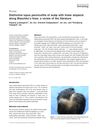
August 2018 in “International Journal of Dermatology”
19 citations
,
August 2018 in “International Journal of Dermatology” Lupus panniculitis of the scalp causes linear hair loss and needs ongoing treatment to prevent recurrence and lupus.
 September 2022 in “Intisasi sains media”
 A young child with complete hair loss improved significantly with a combination of hair growth treatments and laser therapy.
 40 citations
,
January 2010 in “International Journal of Trichology”
40 citations
,
January 2010 in “International Journal of Trichology” Loose Anagen Syndrome is a hair condition where hairs can be easily pulled out, mainly affecting young girls, and may improve on its own or with treatment.
January 2009 in “Journal watch” The treatment helped some patients with severe hair loss regrow hair.
February 2013 in “Journal of the American Academy of Dermatology” January 2020 in “한국공업화학회 연구논문 초록집” Encapsulated hair cells in a special gel can help regenerate hair follicles, potentially treating hair loss.
 9 citations
,
October 2011 in “Journal of proteomics”
9 citations
,
October 2011 in “Journal of proteomics” Taxol damages hair growth cells, causing hair loss.
2 citations
,
August 2025 in “Pharmaceutics” PN hydrates skin; PDRN heals and regenerates skin and hair.
October 2021 in “Experimental Dermatology” Certain genes and proteins may help diagnose and treat primary cicatricial alopecia.
March 2026 in “Drug Testing and Analysis” PTeCA is a reliable marker for detecting oxidative hair treatments.
 6 citations
,
May 2022 in “Colloids and Surfaces B: Biointerfaces”
6 citations
,
May 2022 in “Colloids and Surfaces B: Biointerfaces” Eating peptides from certain shellfish may help wounds heal faster by reducing inflammation.
32 citations
,
August 1982 in “Journal of the American Academy of Dermatology” GLPLS and LPP are variants of lichen planus.
 January 2023 in “Springer eBooks”
 Using one's own blood platelets and fat can improve facial and hair appearance without surgery.
11 citations
,
August 2022 in “Journal of Investigative Dermatology” 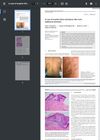 1 citations
,
December 2022 in “Pediatric dermatology”
1 citations
,
December 2022 in “Pediatric dermatology” A boy developed a rare skin condition after recovering from a severe skin reaction, and it improved with lotion treatment.
Redensyl, saw palmetto, and biotin with platelet-rich plasma is a better treatment for hair loss than Procapil with platelet-rich plasma.
 April 2019 in “The journal of investigative dermatology/Journal of investigative dermatology”
 Machine learning can predict how well patients with alopecia areata will respond to certain treatments.
1 citations
,
December 2015 in “TURKDERM” Lichen planopilaris can be accurately diagnosed and effectively treated.