 28 citations
,
February 2010 in “British journal of dermatology/British journal of dermatology, Supplement”
28 citations
,
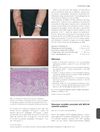
February 2010 in “British journal of dermatology/British journal of dermatology, Supplement” WNT10A mutations cause varied symptoms in patients with odonto-onycho-dermal dysplasia.
 1 citations
,
June 2021 in “Biomolecules & Therapeutics”
1 citations
,
June 2021 in “Biomolecules & Therapeutics” Activating δ-opioid receptors can help hair grow.
 25 citations
,
November 2013 in “PLoS ONE”
25 citations
,
November 2013 in “PLoS ONE” Estrogen and androgen signals control synaptic changes in rat brains.
 68 citations
,
December 1991 in “Annals of the New York Academy of Sciences”
68 citations
,
December 1991 in “Annals of the New York Academy of Sciences” Hair growth can be induced by certain cells found at the base of hair follicles, and these cells may also influence hair development and regeneration.
 December 2022 in “Research Square (Research Square)”
 The ethyl acetate fraction of Ophioglossum vulgatum Linn. may promote hair growth and could be a new herbal treatment for hair loss.
 14 citations
,
January 1996 in “Journal of Forensic Sciences”
14 citations
,
January 1996 in “Journal of Forensic Sciences” Hair can absorb and transfer opiates when soaked in water, with damaged hair absorbing more.
23 citations
,
December 2008 in “Current medicinal chemistry” Stimulating sensory neurons can increase IGF-I production, which may help treat various diseases and improve tissue health.
Nod factor can trigger changes in legume root hairs with just one molecule.
 20 citations
,
February 2016 in “American Journal of Pathology”
20 citations
,
February 2016 in “American Journal of Pathology” The genes OVOL1 and OVOL2 are important for hair growth and may be involved in a type of skin tumor.
July 2025 in “Journal of Investigative Dermatology” Wnt and SHH pathways help form hair follicles by coordinating cell processes.
9 citations
,
April 1985 in “Canadian Journal of Zoology” Moose have unique interdigital glands with green hairs and larger glands during mating season.
9 citations
,
July 2014 in “PubMed” Different S100 proteins have specific roles in various parts of the hair follicle.
 January 2021 in “Journal of clinical and cosmetic dermatology”
 Human skin responds to light with protective mechanisms, but more research is needed to understand these processes and their implications for health and therapy.
 December 2024 in “International Journal of experimental research and review”
 Ultrasonic vibrations create a superior fir and cedar oil emulsion, enhancing antibacterial and other beneficial properties for food, cosmetics, and pharmaceuticals.
612 citations
,
February 2004 in “Nature” OXI1 kinase is essential for plant defense and root hair growth in Arabidopsis.
The sympathetic nervous system is linked to scalp hair loss.
56 citations
,
March 2017 in “Plant and Cell Physiology” Light sheet fluorescence microscopy effectively measures calcium changes in Arabidopsis root hairs.
21 citations
,
June 2011 in “Investigative Ophthalmology & Visual Science” Hair follicles could help develop eye treatments by studying immune responses.
May 2025 in “OPAL (Open@LaTrobe) (La Trobe University)” Linoleic acid and magnesium are key in alopecia areata progression, and tofacitinib can help by affecting their pathway.
 December 2022 in “Otorhinolaryngology, Head and Neck Pathology.”
 Using PBMT and Respiro Mirtol forte after septoplasty reduces pain and inflammation.
20 citations
,
January 2015 in “Biochimica and biophysica acta. Molecular and cell biology of lipids” Lysophosphatidic acid affects sensory neurons and may cause neuropathic pain and itch.
December 2011 in “URMIA MEDICAL JOURNAL” Glycoconjugate sugars are important for hair follicle development.
 April 2026 in “Frontiers in Cell and Developmental Biology”
 Hair cell loss usually happens after hearing loss starts.
1 citations
,
February 2005 in “The Journal of Laryngology & Otology” A fungal infection in the neck caused severe breathing issues, treated successfully with antibiotics and antifungal medication.
 October 2025 in “Folia Morphologica”
 Lymph vessels in airways vary by location, with the most in the upper pharynx and changes after birth.
 5 citations
,
June 2024 in “Developmental Cell”
5 citations
,
June 2024 in “Developmental Cell” Activating TRPV1 can boost hair growth by involving neurons, macrophages, and fibroblasts.
 March 2026 in “Journal of Pharmacy & Pharmacognosy Research”
 Clove and rosemary oils together promote hair regrowth better than minoxidil.
July 2024 in “Journal of Investigative Dermatology”  April 2023 in “The journal of investigative dermatology/Journal of investigative dermatology”
 The TRPV3 channel structure changes linked to severe itch and hyperkeratosis were identified using cryo-EM.
99 citations
,
August 1998 in “Pain” Blocking GABA(A) receptors increases neuron sensitivity, showing GABA and glycine have different roles in pain.