 8 citations
,
June 2012 in “Australasian Journal of Dermatology”
8 citations
,
June 2012 in “Australasian Journal of Dermatology” A rare form of alopecia causes hair thinning without bald spots and may be more common than thought, responding well to steroid treatment.
1 citations
,
August 2005 in “Springer eBooks” Alopecia areata is an autoimmune disease with genetic links, treatable with certain medications, and can affect mental health.
 185 citations
,
August 2005 in “Autoimmunity Reviews”
185 citations
,
August 2005 in “Autoimmunity Reviews” Alopecia areata is an autoimmune condition causing hair loss due to the immune system attacking hair follicles, often influenced by genetics and stress.
5 citations
,
October 2019 in “JAAD Case Reports” These hair loss conditions might be part of a spectrum, not separate issues.
38 citations
,
July 2009 in “Current opinion in pediatrics, with evaluated MEDLINE/Current opinion in pediatrics” Alopecia areata is a common autoimmune disease affecting hair follicles, with unclear causes and a need for better treatments.
 3 citations
,
July 2013 in “Journal of Cutaneous Pathology”
3 citations
,
July 2013 in “Journal of Cutaneous Pathology” A woman's hair loss, resembling an autoimmune condition, improved after treatment, but requires ongoing checks due to potential serious associations.
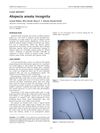 December 2007 in “CRC Press eBooks”
 Alopecia areata incognita causes widespread hair loss without patches and needs a scalp biopsy for diagnosis.
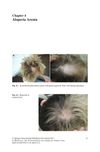 December 2016 in “Springer eBooks”
 A 45-year-old woman with autoimmune diseases experienced patchy hair loss due to alopecia areata, which has no cure but can be treated, with varying success.
35 citations
,
August 2009 in “Journal of the American Academy of Dermatology” Melanocytes might be targeted by the immune system in people with alopecia areata, but more research is needed.
 9 citations
,
January 2010 in “International Journal of Trichology”
9 citations
,
January 2010 in “International Journal of Trichology” The study found that the cause of alopecia areata can be identified through tissue analysis, and vertical sections are enough for diagnosis.
December 2025 in “Zenodo (CERN European Organization for Nuclear Research)” Alopecia areata causes sudden, patchy hair loss due to immune system attacks on hair follicles.
 January 1953 in “The Lancet”
 Alopecia areata's causes are unclear, treatments exist but relapses are common.
 13 citations
,
January 2014 in “Postępy Dermatologii i Alergologii”
13 citations
,
January 2014 in “Postępy Dermatologii i Alergologii” Patchy alopecia areata can affect only pigmented hairs, leaving gray hairs untouched.
 February 2021 in “Cureus”
 A woman's hair loss was initially misdiagnosed as scarring hair loss but was actually a treatable autoimmune hair loss.
 May 2023 in “Clinical and Experimental Dermatology”
 Alopecia areata has a high chance of persisting and relapsing, with a significant risk of total hair loss, especially if it starts in childhood.
December 2025 in “Zenodo (CERN European Organization for Nuclear Research)” Alopecia areata causes sudden, patchy hair loss due to immune system attacks on hair follicles.
10 citations
,
September 2014 in “Australasian Journal of Dermatology” Understanding alopecia areata's patterns can improve future research and treatments.
 1 citations
,
May 2023 in “Indian Journal of Dermatology Venereology and Leprology”
1 citations
,
May 2023 in “Indian Journal of Dermatology Venereology and Leprology” Alopecia areata may lead to hearing loss.
December 2025 in “Zenodo (CERN European Organization for Nuclear Research)” Alopecia areata causes sudden, patchy hair loss due to immune system attacks on hair follicles.
148 citations
,
September 2003 in “Journal of Investigative Dermatology Symposium Proceedings” Alopecia areata is an autoimmune disorder causing hair loss, linked to specific hair follicle antigens and genetic factors.
 11 citations
,
August 2012 in “Canadian journal of ophthalmology”
11 citations
,
August 2012 in “Canadian journal of ophthalmology” Eyelash alopecia areata often goes undiagnosed and can lead to complete eyelash regrowth, especially in younger patients.
 December 2020 in “Skin appendage disorders”
 A young man with an unusual type of scarring hair loss suggests a possible new variant of a known scalp condition.
 March 2026 in “Frontiers in Medicine”
 Different types of alopecia cause hair loss due to immune system issues, with some allowing regrowth and others causing permanent loss.
 16 citations
,
January 2015 in “Current problems in dermatology”
16 citations
,
January 2015 in “Current problems in dermatology” Alopecia Areata is an autoimmune hair loss condition that needs more research for better treatments.
August 2025 in “Medical Journal of Armed Police Force Nepal” Alopecia areata is more common in males, mostly affects the scalp, and often appears as patchy hair loss.
November 2025 in “Zenodo (CERN European Organization for Nuclear Research)” Alopecia areata causes sudden, patchy hair loss due to an immune attack on hair follicles.
December 2025 in “Zenodo (CERN European Organization for Nuclear Research)” Alopecia areata causes sudden, patchy hair loss due to an immune attack on hair follicles.
 July 2018 in “Nasza Dermatologia Online”
 Frontal fibrosing alopecia and ulerythema ophryogenes may be related and can evolve from one to the other.
161 citations
,
March 1992 in “International Journal of Dermatology” Alopecia areata often starts before age 20, is more common in women, and may have a genetic link with other autoimmune diseases.
April 2021 in “Aktuelle Dermatologie” Frontal Fibrosing Alopecia is a type of hair loss that mainly affects postmenopausal women, has unclear causes, and lacks evidence-based treatments.