December 2023 in “Modern engineering and innovative technologies” ChromaLens offers more precise and stable hair coloring than traditional methods.
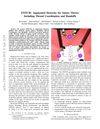 April 2024 in “arXiv (Cornell University)”
 STITCH improves suture accuracy and efficiency, especially with human help.

A coordinated approach combining medical, trichological, and visual support is needed to better manage hair loss.
 September 2024 in “Archiv Euromedica”
 Trichoscopy is a quick, accurate, and non-invasive method to diagnose and treat non-scarring hair loss.
16 citations
,
July 2017 in “Journal of American Association for Pediatric Ophthalmology and Strabismus” The modified Crawford technique resulted in less lagophthalmos and better cosmetic outcomes for patients with lateral droop.
 33 citations
,
January 2005 in “Dermatology”
33 citations
,
January 2005 in “Dermatology” Trichoscan is a reliable method for measuring hair growth and monitoring treatment effectiveness in hair loss.
5 citations
,
March 2023 in “Journal of the European Academy of Dermatology and Venereology” Trichoscopy can help identify systemic diseases, not just hair and scalp issues.
 April 2017 in “Journal of Investigative Dermatology”
 Triptolide effectively and safely reduces actinic keratosis lesions in mice.
March 2026 in “Frontiers in Medicine” A hybrid model using traditional methods, trichoscopy, and AI improves hair loss assessment.

An automated system can accurately classify hair disorders using image analysis.
 April 2026 in “International Journal of Drug Delivery Technology”
 Trichoscopy is a reliable, non-invasive tool for diagnosing scalp alopecias.
5 citations
,
February 2025 in “Journal of Clinical Medicine” A new method improves alopecia diagnosis using non-invasive steps.

The treatment improved facial structure and corrected bite issues in patients.
Trichoscopy is a useful tool for monitoring hair and scalp diseases.
7 citations
,
February 2023 in “Journal of Dermatological Treatment” The Scalp Photographic Index (SPI) is a reliable tool for assessing scalp conditions.
1 citations
,
January 2016 in “Klinicheskaya dermatologiya i venerologiya”  April 2026 in “Cosmetics”
 Robotic systems in cosmetic surgery show promise but face challenges like high costs and need more research and training.
 2 citations
,
July 2015 in “The Open Dermatology Journal”
2 citations
,
July 2015 in “The Open Dermatology Journal” Trichoscopy is a tool for detailed examination of hair and scalp diseases.
 1 citations
,
March 2014 in “Hair transplant forum international”
1 citations
,
March 2014 in “Hair transplant forum international” Dr. Steve Gabel developed a method for consistent before and after photos in hair transplant surgery using specific camera settings and patient positioning.
4 citations
,
April 2014 in “Lasers in Surgery and Medicine” TRASER effectively targets blood vessels and hair follicles for potential use in vascular and hair removal treatments.
29 citations
,
October 2001 in “British Journal of Ophthalmology”  January 2024 in “Wiadomości Lekarskie”
 Uveal melanoma is hard to treat when it spreads, but a new drug, tebentafusp, helps patients live longer.
 January 2023 in “Skin appendage disorders”
 Hair restoration surgery can change the appearance of hair when examined with a special magnifying tool.
 September 2002 in “Dermatologic Surgery”
 The evaluation system improves patient selection for hair loss surgery, leading to fewer but more successful surgeries.
October 2025 in “Journal of Cosmetic Dermatology” AOPT-MTL effectively and safely treats nasal blackheads in Asians.
 October 2023 in “Indian journal of ophthalmology. Case reports”
 A woman lost vision in one eye after a forehead injection, but prompt treatment led to partial vision recovery.
 December 2019 in “Дерматологія та венерологія”
 Trichoscopy is a useful tool for diagnosing hair and scalp disorders.
May 2013 in “Optometry and vision science” The document discusses challenges in eye care, including treating melanoma before macular hole repair, bloody tears resolved by blood pressure control, eyelash regrowth in hair-pulling disorder with medication, a non-invasive method to detect eyelash mites, and the psychological factors affecting contact lens comfort.
1 citations
,
October 2025 in “Ophthalmology Science” Lower doses of topotecan are safe for eyes, but higher doses may harm the retina.
 January 2024 in “Wiadomości Lekarskie”
 AI can improve early diagnosis and treatment of diabetic foot complications but requires addressing training and ethical challenges.