 May 2022 in “Голова и шея.”
 Orthorexia nervosa is not common among people.
 February 2010 in “Journal of The American Academy of Dermatology”
 Posaconazole is a promising new treatment for toenail fungus.
January 2023 in “Journal of Clinical and Diagnostic Research” Trichoscopic patterns often overlap in scalp disorders, so dermatologists need to stay updated.
September 2011 in “European journal of cancer”  November 2024 in “International Journal of Dermatology”
 LC-OCT is a useful noninvasive tool for diagnosing and monitoring alopecia areata.
 July 2021 in “Indian journal of dermatopathology and diagnostic dermatology”
 Trichoscopy is a reliable method for diagnosing hair and scalp disorders quickly and non-invasively.

The treatment improved facial structure and corrected bite issues in patients.
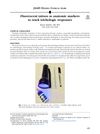 July 2018 in “Journal of The American Academy of Dermatology”
 Fluorescent tattoos are a good way to mark the scalp for hair treatments because they're accurate, invisible in normal light, and have low risk.
 73 citations
,
January 1997 in “British Journal of Ophthalmology”
73 citations
,
January 1997 in “British Journal of Ophthalmology” The coronal approach is effective and safe for reducing eye bulging in Graves' eye disease.
 January 2015 in “Hair therapy & transplantation”
 New hair and scalp disease diagnosis methods are important for correct treatment.
 January 2024 in “Wiadomości Lekarskie”
 AI can improve early diagnosis and treatment of diabetic foot complications but requires addressing training and ethical challenges.
December 2021 in “IP Indian journal of clinical and experimental dermatology” Trichoscopy is a useful tool for diagnosing female pattern hair loss.
 1 citations
,
February 2025 in “Notulae Scientia Biologicae”
1 citations
,
February 2025 in “Notulae Scientia Biologicae” Optimized emulgels with Levofloxacin effectively treat eye infections with prolonged drug release and safety.
4 citations
,
April 2014 in “Lasers in Surgery and Medicine” TRASER effectively targets blood vessels and hair follicles for potential use in vascular and hair removal treatments.
16 citations
,
July 2017 in “Journal of American Association for Pediatric Ophthalmology and Strabismus” The modified Crawford technique resulted in less lagophthalmos and better cosmetic outcomes for patients with lateral droop.
March 2023 in “Reactions Weekly”  January 2022 in “Journal of Dermatology and Dermatologic Surgery”
 Trichoscopy is useful for quickly diagnosing different types of hair loss without needing biopsies.
27 citations
,
January 2016 in “Indian Dermatology Online Journal” Dermoscopy is better than a magnifying lens for examining skin because it shows deeper details.
January 2022 in “Optometric clinical practice” A woman had a non-cancerous skin tumor on her eyelid removed successfully.
 1 citations
,
October 2023 in “Skin research and technology”
1 citations
,
October 2023 in “Skin research and technology” LC-OCT is an effective new method for diagnosing classic lichen planopilaris.
 4 citations
,
November 2003 in “Hair transplant forum international”
4 citations
,
November 2003 in “Hair transplant forum international” Using an LCD monitor with video magnification is a cheap and comfortable method to enlarge the view of hair for transplant surgery.
April 2023 in “Al-Azhar International Medical Journal /Al-Azhar International Medical Journal” Trichoscopy is easier and quicker than folliscopy for diagnosing telogen effluvium.
1 citations
,
October 2010 in “Proceedings of SPIE, the International Society for Optical Engineering/Proceedings of SPIE” The skin fully recovered after using the optical clearing agent, showing no long-term harm.
 20 citations
,
August 2019 in “Journal of Telemedicine and Telecare”
20 citations
,
August 2019 in “Journal of Telemedicine and Telecare” Dermatologists found teledermatology useful and confidence-boosting for diagnosing skin conditions, but faced limitations like technical issues and prescription restrictions. Despite this, they saw its potential to improve access to skin care, especially in remote areas.
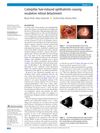 July 2022 in “BMJ Case Reports”
 Early treatment is crucial to prevent severe eye complications from caterpillar hair.
 2 citations
,
July 2018 in “Elsevier eBooks”
2 citations
,
July 2018 in “Elsevier eBooks” Trichoscopy is a useful tool for diagnosing and managing hair and scalp conditions, often better than traditional methods.

New imaging tools help doctors better examine hair and scalp health without surgery.
 January 2024 in “Wiadomości Lekarskie”
 AI improves vascular surgery by enhancing precision and safety, but doctors make final decisions.
 10 citations
,
January 2015 in “Skin appendage disorders”
10 citations
,
January 2015 in “Skin appendage disorders” Low-cost videomicroscopes are not as reliable as standard videodermatoscopes for scalp examination due to lower image quality.
 January 2025 in “Advances in Dermatology and Allergology”
 Hair disorders in organ transplant patients are often underestimated and need more attention and research.