 8 citations
,
April 2019 in “Australasian Journal of Dermatology”
8 citations
,
April 2019 in “Australasian Journal of Dermatology” The article suggests a treatment plan for a stubborn scalp condition common in elderly Australians to help improve their lives.
 4 citations
,
January 2010 in “Journal of Veterinary Medical Science”
4 citations
,
January 2010 in “Journal of Veterinary Medical Science” The analyses helped identify different skin diseases in the two dogs.
 July 2022 in “The journal of investigative dermatology/Journal of investigative dermatology”
 A patient with a PLEC mutation has epidermolysis bullosa, muscular dystrophy, and myasthenia gravis, which improved with steroid treatment.
January 2016 in “mediaTUM – the media and publications repository of the Technical University Munich (Technical University Munich)” A new test using NOS2 and CCL27 genes can better diagnose and treat psoriasis and eczema.
 5 citations
,
November 2017 in “Asian journal of pharmaceutical and clinical research”
5 citations
,
November 2017 in “Asian journal of pharmaceutical and clinical research” Pakis Gajah (Angiopteris evecta) water extract may promote hair growth in rabbits, but more research is needed for human use.
118 citations
,
January 1992 in “Experientia” 
Ostrich antibodies can help restore hair growth in people with a specific type of hair loss, increasing hair count by 71% on average.
January 2023 in “Odisha Journal of Psychiatry” Thorough patient interviews are crucial to identify self-inflicted hair loss.
Zinc levels in hair and blood are linked to enzyme activity in people with certain skin conditions.
 28 citations
,
February 2012 in “PLoS ONE”
28 citations
,
February 2012 in “PLoS ONE” A PKP1 gene mutation causes skin fragility and hair loss in Chesapeake Bay retriever puppies.
10 citations
,
May 2020 in “Dermatologic therapy” Tildrakizumab significantly improved recalcitrant lichen planopilaris and frontal fibrosing alopecia.
 2 citations
,
August 2021 in “Skin appendage disorders”
2 citations
,
August 2021 in “Skin appendage disorders” White piedra is a rare hair infection treated with oral and topical antifungals.
September 2025 in “Al-Nahrain Journal of Science” Aloe vera-based zinc oxide nanoparticles can kill bacteria but may harm human cells at high doses.
11 citations
,
June 2017 in “Asian-Australasian journal of animal sciences” Fox genes are important for hair growth and development in cashmere goats.
14 citations
,
September 2021 in “International journal of molecular sciences” Zinc pyrithione needs targeted delivery to the scalp for effective dandruff treatment.
December 2021 in “Faculty Opinions – Post-Publication Peer Review of the Biomedical Literature” July 2024 in “Journal of Investigative Dermatology” 14 citations
,
November 2024 in “International Journal of Molecular Sciences” YAP and TAZ proteins control skin cell growth and repair.
 February 2024 in “Acta dermato-venereologica”
 This type of hair loss is probably often missed and treatments reducing inflammation might work well.
April 2016 in “Apollo (University of Cambridge)” Trichotillomania is a hair-pulling disorder needing different treatments than OCD.
 January 2018 in “Springer eBooks”
 PDE inhibitors, especially PDE4 inhibitors like apremilast, are effective for certain inflammatory skin conditions but have side effects and can be costly.
 42 citations
,
November 2018 in “Archives of dermatological research”
42 citations
,
November 2018 in “Archives of dermatological research” Apremilast was not effective in treating moderate-to-severe alopecia areata.
September 2017 in “Zenodo (CERN European Organization for Nuclear Research)” Liquorice extract may help treat acne by reducing sebum production.
 September 2023 in “Journal of The American Academy of Dermatology”
 The document's conclusion cannot be provided because the content is not available.
December 2024 in “JAAD International” 1 citations
,
October 2025 in “Journal of Dermatological Treatment” Dupilumab improves eczema in Netherton Syndrome but not ichthyosis linearis circumflexa.
 1 citations
,
May 2022 in “Revista Contemporânea”
1 citations
,
May 2022 in “Revista Contemporânea” Combining two treatments for hair loss works better than using just one.
 March 2016 in “Journal of evolution of medical and dental sciences”
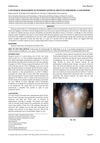
 Combining OMP with cyclosporine can effectively treat severe alopecia areata in children.
43 citations
,
November 2009 in “Archives of dermatology” Alefacept does not effectively treat severe alopecia areata.
 December 2024 in “Indian Journal of Dermatology”
 Dermoscopy is useful for diagnosing Atrichia with Papular Lesions in children without needing a biopsy.