 139 citations
,
February 2010 in “The journal of allergy and clinical immunology/Journal of allergy and clinical immunology/The journal of allergy and clinical immunology”
139 citations
,
February 2010 in “The journal of allergy and clinical immunology/Journal of allergy and clinical immunology/The journal of allergy and clinical immunology” Transplant success has improved with better immunosuppressive drugs and donor matching.
 77 citations
,
April 2016 in “Science Advances”
77 citations
,
April 2016 in “Science Advances” Researchers created a fully functional, bioengineered skin system with hair from stem cells that successfully integrated when transplanted into mice.
May 2026 in “Case Reports in Dermatology” Switching immunosuppressants can improve hair regrowth and well-being in transplant patients experiencing hair loss.

Hair loss from immunosuppressive drugs in transplant patients can affect well-being and treatment adherence, so personalized management is important.

Switching immunosuppressive drugs can improve hair regrowth and well-being in transplant patients with hair loss.
 January 2025 in “Advances in Dermatology and Allergology”
 Hair disorders in organ transplant patients are often underestimated and need more attention and research.

Higher TGF-β signaling may increase skin cancer risk in organ transplant recipients.
 66 citations
,
May 2012 in “Scientific Reports”
66 citations
,
May 2012 in “Scientific Reports” Scientists successfully created and transplanted bioengineered hair follicles that function like natural ones, suggesting a new treatment for hair loss.
25 citations
,
August 2024 in “Virtual and Physical Prototyping” 3D bioprinting could solve organ shortages and improve drug testing.
March 2025 in “JAAD International” Alopecia areata is rare in organ transplant patients and may be linked to the drug tacrolimus.
September 2023 in “Journal of the American Academy of Dermatology” Alopecia is rare after organ transplants but more common in females, Hispanic patients, and pancreas recipients.
 April 2023 in “American Journal of Transplantation”
 Hormone replacement therapy may lower the risk of severe COVID-19 outcomes in non-immunosuppressed people and male organ transplant recipients.
December 2025 in “Current Issues in Molecular Biology” Cytarabine can cause multiple organ toxicities, especially neurotoxicity, but better research methods are needed to fully understand and predict these effects.
 165 citations
,
October 2013 in “Nature Communications”
165 citations
,
October 2013 in “Nature Communications” Scientists made working salivary glands in mice using bioengineered cells, which could help treat dry mouth.
 256 citations
,
October 2013 in “Nature Communications”
256 citations
,
October 2013 in “Nature Communications” Bioengineered lacrimal glands can restore tear production and protect eyes.
7 citations
,
August 2025 in “European Journal of Endocrinology” Long-term use of calcineurin inhibitors in transplant patients can cause hormone issues that can be managed with proper care.
 18 citations
,
January 2013 in “International Society of Hair Restoration Surgery”
18 citations
,
January 2013 in “International Society of Hair Restoration Surgery” Proper cell preservation is crucial for successful hair transplants and other medical treatments.
February 2026 in “Biochemical and Biophysical Research Communications” Scientists successfully regenerated functional hair follicles using specific stem cells and mesenchymal cells.
 6 citations
,
January 2016 in “Methods in molecular biology”
6 citations
,
January 2016 in “Methods in molecular biology” Scientists have developed a new method using stem cells to grow and transplant hair follicles, which could be useful for hair regeneration treatments.
12 citations
,
April 2019 in “Nature protocols” Scientists created a functional 3D skin system from stem cells that can be transplanted into wounds.
 May 1991 in “Current problems in dermatology”
 Skin issues can indicate immune system problems.
October 2022 in “Experimental Dermatology” New technologies show promise for better hair regeneration and treatments.
 2 citations
,
January 2015 in “Nihon Rinshō Men'eki Gakkai kaishi”
2 citations
,
January 2015 in “Nihon Rinshō Men'eki Gakkai kaishi” Scientists developed a method to regenerate salivary glands using stem cells.
April 2026 in “Reviews in Medical Virology” Trichodysplasia spinulosa is a rare skin condition linked to weakened immune systems, mostly in organ transplant patients.
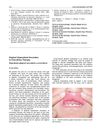 January 2010 in “Actas Dermo-Sifiliográficas”
 A woman developed thick gums from everolimus treatment after a kidney transplant.
October 2021 in “The journal of investigative dermatology/Journal of investigative dermatology” The new aptamer TAGX-0003 shows promise as an effective treatment for hair loss disorder alopecia areata.
 May 2022 in “Liver transplantation”
 The document explains how the immune system reacts to organ transplants and the treatments used to prevent rejection.
 September 2018 in “Journal of Investigative Dermatology”
 Non-white organ transplant patients have worse skin cancer outcomes due to later diagnosis and treatment.
 14 citations
,
April 2017 in “American Journal of Transplantation”
14 citations
,
April 2017 in “American Journal of Transplantation” Skin problems from transplant drugs are common and need careful management in organ transplant patients.
 3 citations
,
April 2019 in “Annals of hepatology”
3 citations
,
April 2019 in “Annals of hepatology” Peanut allergies can be transferred through organ transplants.