19 citations
,
July 1997 in “British Journal of Dermatology” LHTric-1 is a specific antibody useful for studying hair and nail formation.
May 2006 in “The Journal of Cell Biology” Keratin 17 is crucial for cell growth in wound healing by aiding protein synthesis.
January 2026 in “International Journal of Biological Macromolecules” Keratin in people with androgenetic alopecia shows specific changes that could help develop new treatments.
22 citations
,
October 1996 in “Dermatologic clinics” Understanding intermediate filaments helps explain hair health and related diseases.
 15 citations
,
December 2014 in “PLoS ONE”
15 citations
,
December 2014 in “PLoS ONE” A mutation in the iRhom2 gene causes hairless mice due to abnormal hair follicle development.
3 citations
,
March 1966 in “Archives of Dermatology” Nevoid basal cell carcinomas start in the skin's top layer and hair follicles.
124 citations
,
December 1988 in “Differentiation” Trichocytic differentiation starts in cells with epithelial cytokeratins, transitioning to trichocytic cytokeratins in hair and gradually in nails.
8 citations
,
January 2017 in “Indian dermatology online journal” Traumatic anserine folliculosis is a skin condition caused by friction, treatable with topical cream and avoiding trauma.
8 citations
,
April 2014 in “Clinical and Experimental Dermatology” Eruptive vellus hair cysts likely originate from the infrainfundibulum and sebaceous duct.
35 citations
,
April 2008 in “Journal of Biological Chemistry” Hirosaki hairless rats lack hair due to missing DNA with key keratin genes.
6 citations
,
April 2012 in “Journal of Oral Pathology and Medicine” Rushton's hyaline bodies form from hair keratin and blood substances.
15 citations
,
April 2011 in “Biological Chemistry” Cathepsin E is crucial for normal skin cell differentiation and development.
62 citations
,
October 1999 in “Journal of Investigative Dermatology” New mutations in hair keratin genes can change hair structure and cause monilethrix, with nail issues more common in certain gene mutations.
 3 citations
,
January 2022 in “Medical Mycology Journal”
3 citations
,
January 2022 in “Medical Mycology Journal” Malassezia fungi in healthy noses can form a "spaghetti-and-meatballs" structure.
15 citations
,
April 1970 in “PubMed” Netherton's syndrome may have a familial link and doesn't always include atopy.
 February 2026 in “Frontiers in Medical Technology”
 Keratinocyte stem cells are crucial for skin renewal and have potential in wound healing and tissue regeneration.
7 citations
,
December 1970 in “Biochimica et Biophysica Acta (BBA) - Protein Structure” 18 citations
,
November 2005 in “Archives of Dermatological Research” A KRT32 gene variant causes loose anagen hair syndrome.
 1 citations
,
May 2023 in “Cureus”
1 citations
,
May 2023 in “Cureus” A rare hair follicle tumor in the hand was successfully removed with no return after four years.
 March 2026 in “Dermatopathology”
 A rare skin tumor with extra hair growth was found and safely removed from a 27-year-old woman.
 30 citations
,
December 2011 in “Journal of biological chemistry/The Journal of biological chemistry”
30 citations
,
December 2011 in “Journal of biological chemistry/The Journal of biological chemistry” Keratin 17 is modified by RSK1 in response to growth and stress, affecting skin growth and stress response.
5 citations
,
January 1981 Keratin proteins in hair are complex and come from multiple gene families.

A genetic variant in the KRT71 gene may cause loose anagen hair and wooly hair, and symptoms might improve with age.
23 citations
,
January 1964 in “Archives of Dermatology” Treatment with vitamin A did not improve the child's skin condition.
 1 citations
,
August 2024 in “Transgenic Research”
1 citations
,
August 2024 in “Transgenic Research” Activated β-catenin affects hair growth and skin thickness, and changes are reversible.
 1 citations
,
January 2019 in “Acta dermato-venereologica”
1 citations
,
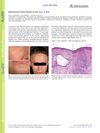
January 2019 in “Acta dermato-venereologica” The woman's skin and hair symptoms were confirmed as frontal fibrosing alopecia, and while facial papules are common in such cases, there's no effective local treatment, but systemic treatments can help.
 September 2016 in “Journal of Dermatological Science”
 A gene mutation worsens skin irritation in mice due to a lack of certain fats.
 June 2021 in “International journal of research in dermatology”
 A boy and his father with hereditary hypotrichosis simplex were treated for hair loss, but the treatment result is unknown.
97 citations
,
March 2006 in “Journal of Investigative Dermatology” Mutations in the DSG4 gene cause a severe form of brittle hair and skin issues.