November 2025 in “Advanced Healthcare Materials” Charge-conversion chemistry improves hair-rebonding by enhancing penetration and strength.
7 citations
,
April 1996 in “Archives of dermatological research” Topical tacalcitol can treat psoriasis by acting directly on skin cells.
27 citations
,
November 2007 in “Genomics” Mutations in specific keratin genes cause improper hair structure in mice due to faulty keratin protein assembly.
7 citations
,
July 2017 in “The Journal of Dermatology” Hair loss can occur when pemphigus foliaceus changes to pemphigus vulgaris.
12 citations
,
June 2016 in “Clinical and experimental dermatology” A new genetic mutation in the TRPV3 gene causes Olmsted-like syndrome in a Mongolian family.
10 citations
,
May 1994 in “Journal of Investigative Dermatology” 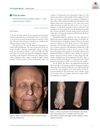 March 2019 in “Journal der Deutschen Dermatologischen Gesellschaft”
 Rothmund-Thomson syndrome type 2 can cause chronic, poorly healing wounds.
May 2010 in “Journal of Investigative Dermatology” 34 citations
,
September 2010 in “Clinical and Experimental Dermatology” A new gene mutation linked to KID syndrome was found, expanding genetic knowledge.
5 citations
,
December 2018 in “Annals of plastic surgery” Some burn patients grew extra hair in areas treated with pressure garments or silicone.
 October 2021 in “Aesthetic Plastic Surgery”
 New techniques in hair restoration surgery can lead to better hair alignment.
 August 2023 in “Dermatology Reports”
 Acne not improved by usual treatments may indicate a genetic disorder.
 7 citations
,
June 2019 in “Australasian Journal of Dermatology”
7 citations
,
June 2019 in “Australasian Journal of Dermatology” Elderly men with a scalp condition healed in about 26 days using specific creams and dressings, with no return of the condition in 6 months.
 December 2015 in “Dermatologic Surgery”
 Double trichophytic closure effectively repairs thin scalp scars, reducing financial burden.
4 citations
,
October 2021 in “Journal of Clinical Medicine” Carriers of a specific gene mutation have subtle skin changes without visible symptoms.
38 citations
,
July 1993 in “Journal of Investigative Dermatology” 94 citations
,
October 1994 in “The Journal of Cell Biology” Too much keratin 16 in mice skin causes abnormal skin thickening and structure.
2 citations
,
May 2016 in “Journal of dermatology” Tissue expansion successfully treated alopecia in a child with hypohidrotic ectodermal dysplasia.
 3 citations
,
April 2012 in “Bioinformation”
3 citations
,
April 2012 in “Bioinformation” Two specific SNPs in the TRPS1 gene cause excessive hair growth by altering the protein's structure.
 1 citations
,
December 2015 in “Dermatologic Surgery”
1 citations
,
December 2015 in “Dermatologic Surgery” Double trichophytic closure effectively treats thin scalp scars and reduces patient costs.
3 citations
,
April 2000 in “Plastic and Reconstructive Surgery”  11 citations
,
September 2012 in “The journal of investigative dermatology/Journal of investigative dermatology”
11 citations
,
September 2012 in “The journal of investigative dermatology/Journal of investigative dermatology” A mutation in the KRT71 gene causes a hair disorder by disrupting hair follicle structure and texture.
A new mutation in the TRPS1 gene caused Trichorhinophalangeal syndrome in a 17-year-old, highlighting the need for genetic testing.
 3 citations
,
February 2011 in “Journal of Biomedical Research/Journal of biomedical research”
3 citations
,
February 2011 in “Journal of Biomedical Research/Journal of biomedical research” A new mutation in the KRT86 gene was found to cause the hair disorder monilethrix in a Han family.
20 citations
,
April 2009 in “Cell Biology International” Hair follicle stem cells can become corneal-like cells with the help of pax6.
 1 citations
,
April 2017 in “Journal of Investigative Dermatology”
1 citations
,
April 2017 in “Journal of Investigative Dermatology” Topical glucocorticoids thin the skin and change collagen structure.
27 citations
,
July 2013 in “Journal of Investigative Dermatology” Revertant cell therapy shows promise for treating type XVII collagen deficiency, but better cell selection methods are needed.
18 citations
,
November 2009 in “Archives of Dermatology” Calcipotriol doesn't prevent hypertrophic scars, but keratinocyte activation is important in scar formation.
8 citations
,
June 2016 in “Journal of Investigative Dermatology” A rare genetic deletion in the KRT1 gene causes unique skin symptoms in a family.
 September 2025 in “Cureus”
 Early recognition and multidisciplinary management are crucial for improving outcomes in Parry-Romberg syndrome.