Search
for
Sort by
Research
870-900 / 1000+ results
research Efficacy and safety of a novel herbal solution for the treatment of androgenetic alopecia and comparison with 5% minoxidil: A double‐blind, randomized controlled trial study
Herbal solution improves hair diameter and density more than 5% minoxidil for androgenetic alopecia.
research Realización multicámara: el mezclador, el corazón del estudio de televisión
The spray makes hair styling easier and less greasy, improving minoxidil use.

research Tissue distribution and hypotensive effects of minoxidil in normotensive rats.
Minoxidil lowers blood pressure and spreads throughout the body in normal rats.
research Dermoscopic evaluation of the efficacy of combination of topical spironolactone 5% and minoxidil 5% solutions in the treatment of androgenetic alopecia, comparative study.
Combining 5% spironolactone and 5% minoxidil is safe and more effective for treating hair loss.
research Low-dose oral minoxidil for persistent chemotherapy and radiotherapy-induced alopecia in a pediatric female patient
research Relation between treatment efficacy and cumulative dose of 3% topical minoxidil in male pattern baldness
Using more minoxidil solution can lead to better hair growth, but people often use only half the recommended amount. Education and motivation can improve results.
research Efficacy of 2.5mg oral biotin versus 5% topical minoxidil in increasing nail growth rate.
Minoxidil is more effective than biotin for increasing nail growth rate.
research Clinical utility and validity of minoxidil response testing in androgenetic alopecia
Minoxidil response testing helps treat hair loss effectively and safely.
research Contact Dermatitis Caused by Topical Minoxidil: Case Reports and Review of the Literature
Minoxidil can cause allergic skin reactions, especially in long-term users.

research Real-World Effectiveness, Safety, and Tolerability of Cetosomal Minoxidil 5% Alone and a Fixed Drug Combination of Cetosomal Minoxidil 5% With Finasteride 0.1% in the Management of Androgenetic Alopecia (Inbilt Study)
Cetosomal minoxidil alone and with finasteride is effective and well-tolerated for hair loss treatment.

research Faculty Opinions recommendation of Topical minoxidil reported hair discoloration: a cross-sectional study.
Minoxidil users may experience hair discoloration, especially with long-term use and a family history of gray hair.

research Hair Are the Rankings—5-α Reductase Inhibitors and Minoxidil in Male Androgenetic Alopecia
Minoxidil and finasteride are FDA-approved treatments for male hair loss, but off-label use of oral minoxidil, dutasteride, and higher doses of finasteride and minoxidil is increasing.
research Contact Dermatitis Caused by Topical Minoxidil: Case Reports and Review of the Literature
Minoxidil can cause skin reactions, so testing is important for those with side effects.
research Pruritic Rash with Actinic Keratosis and Impending Exfoliation in a Patient with Hypertension Managed with Minoxidil
Minoxidil caused a severe rash in a patient, which improved after stopping the drug.

research Comparison of the efficacy of niosomal minoxidil with conventional minoxidil in the treatment of androgenetic alopecia: A randomized, controlled, double-blind clinical trial
Niosomal minoxidil was found to be more effective in increasing hair count and patient satisfaction than conventional minoxidil in treating hair loss.
research Comparison of The Efficacy and Safety of Topical 2% Minoxidil and 5% Minoxidil Solution in Fingernail Growth Rate
2% minoxidil speeds up nail growth more than 5% minoxidil and is safe.
research Minoxidil–2-hydroxypropyl-β-cyclodextrin inclusion complexes: characterization and in vivo evaluation of an aqueous solution for hair growth in rats
Minoxidil mixed with 2-hydroxypropyl-β-cyclodextrin in water can improve hair growth more than minoxidil alone.
research Activation of Cytoprotective Prostaglandin Synthase-1 by Minoxidil as a Possible Explanation for Its Hair Growth-Stimulating Effect
Minoxidil boosts hair growth by activating PGHS-1.
research Combination oral minoxidil and spironolactone for the treatment of androgenetic alopecia in adolescent females / supplemental files
research Real-World Quantification of Treatment Response to Low-Dose Oral Minoxidil in Non-Scarring Alopecia
Low-dose oral minoxidil significantly improves hair density in non-scarring alopecia.

research Transient vision loss and achromatopsia associated with use of minoxidil
Minoxidil can cause temporary vision loss and color blindness.

research Laser Assisted Delivery of Minoxidil in Androgenetic Alopecia
Using lasers to deliver minoxidil can potentially improve its effectiveness in treating male pattern hair loss.
research 棉花大丽轮枝菌(Verticillium dahliae抗原处理的比较)血清学检测
Minoxidil helped slow balding in most cases, but only a few saw significant hair growth.
research Minoxidil Induced Allergic Contact Dermatitis in a Young Woman with Subclinical Hypothyroidism and Micronutrient Deficiencies: A Case Report
Minoxidil can cause allergic skin reactions, especially in those with underlying health issues.
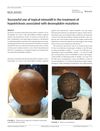
research Successful use of topical minoxidil in the treatment of hypotrichosis associated with desmoplakin mutations
Topical minoxidil helped an 8-year-old boy with a genetic hair disorder grow hair.
research Low-Dose Oral Minoxidil for Female Pattern Hair Loss: A Unicenter Descriptive Study of 148 Women
Low-dose oral minoxidil effectively treats female hair loss with good safety.

research Bicalutamide 25 mg associated with minoxidil 1 mg versus minoxidil 1 mg for female-pattern hair loss: A randomized double-blind clinical trial
Bicalutamide added no extra benefit over minoxidil alone for female-pattern hair loss.
research Efektivitas Terapi Minoksidil pada Alopesia Androgenetik: Studi in Vivo
5% minoxidil significantly increases hair follicle density.
research Comparison of a New 5% Minoxidil Foam and Rogaine® in the Treatment of Androgenetic Alopecia in Chinese Men: A Randomized, Double-Blind, Phase III, Equivalence Trial
The new 5% minoxidil foam is as effective and safe as Rogaine® for treating hair loss in Chinese men.