 1 citations
,
January 2023 in “Indian Journal of Animal Research”
1 citations
,
January 2023 in “Indian Journal of Animal Research” A new method effectively stains hair samples for study without losing hair sections.
 1 citations
,
May 2022 in “International Journal of Health Sciences (IJHS) (En línea)”
1 citations
,
May 2022 in “International Journal of Health Sciences (IJHS) (En línea)” Soybean milk and okara are nutritious, have health benefits, and make tasty, long-lasting food products.
 1 citations
,
January 2018 in “Journal of cosmetology & trichology”
1 citations
,
January 2018 in “Journal of cosmetology & trichology” Hair loss lotion with specific ingredients effectively improves hair growth and thickness safely.
 1 citations
,
August 2016 in “Journal of Buffalo Science”
1 citations
,
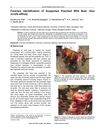
August 2016 in “Journal of Buffalo Science” The animal was likely a wild boar.
Testosterone therapy can safely and effectively treat symptoms like low libido and fatigue in women, especially after menopause.
 April 2026 in “Al-Kufa University Journal for Biology”
 Finasteride lowers cortisol and raises testosterone levels in rats.
 February 2026 in “Journal of Dermatology and Skin Science”
 Finasteride can cause serious mental health issues, so it's advised to avoid it for hair loss.

Exosomes show promise for skin treatments but need more research and regulation in India.
 November 2025 in “Stem Cell Reviews and Reports”
 The error in figures didn't affect the study's results or conclusions.
 August 2025 in “International Journal of Research Publication and Reviews”
 Quasi-drugs in Japan and South Korea are regulated to ensure safety and effectiveness, offering products with mild therapeutic effects.
 June 2024 in “British Journal of Dermatology”
 Vitamin B supplements may reverse grey hair.
A thorough diagnostic process and teamwork are crucial for managing complex hyperandrogenism in postmenopausal women.
 October 2023 in “bioRxiv (Cold Spring Harbor Laboratory)”
 Hair follicles can be kept in RNAlater® at cool or room temperature for a week without harming RNA quality.
 February 2021 in “Endocrinology, diabetes & metabolism case reports”
 A postmenopausal woman's excessive hair growth and hair loss were due to a non-cancerous ovarian condition, treated successfully with surgery.
 April 2020 in “IP Indian journal of clinical and experimental dermatology”
 Many children with alopecia areata also have other autoimmune diseases.
Some drugs may increase the risk of obstructive sleep apnea, while others like certain biologics might decrease it.
 September 1997 in “JEADV. Journal of the European Academy of Dermatology and Venereology/Journal of the European Academy of Dermatology and Venereology”
 Anti-IL-1 treatments might help with certain types of hair loss in people with high inflammation.
 September 1997 in “JEADV. Journal of the European Academy of Dermatology and Venereology/Journal of the European Academy of Dermatology and Venereology”
 Blocking IL-1 could help treat some hair loss conditions; alopecia affects liver detox systems; spironolactone is better than finasteride for female hair growth; focusing on the catagen hair phase could lead to new alopecia treatments.
 September 1997 in “JEADV. Journal of the European Academy of Dermatology and Venereology/Journal of the European Academy of Dermatology and Venereology”
 Alopecia patients have a less active liver monoxygenase system, which can be treated with photochemotherapy and system inducers.
 May 2020 in “Current developments in nutrition”
 Low dose finasteride doesn't change lipid profile or metabolic parameters in mice.
 December 2016 in “Paleontological Journal”
 Hair growth can be induced by transplanting certain cells, but these cells lose their properties during culturing. The best cell interaction happens in a liquid medium under gravity, and using collagen doesn't help. Future research could focus on using growth factors to stimulate these cells.
 4809 citations
,
January 2004 in “Fertility and Sterility”
4809 citations
,
January 2004 in “Fertility and Sterility” The 2003 consensus updated PCOS diagnosis criteria and highlighted increased risks of diabetes and heart disease for those affected.
 4025 citations
,
December 2003 in “Human Reproduction”
4025 citations
,
December 2003 in “Human Reproduction” The 2003 consensus updated PCOS diagnosis criteria and linked PCOS to higher risks of diabetes and heart problems, recommending lifestyle changes to lower these risks.
 1540 citations
,
October 2008 in “Fertility and Sterility”
1540 citations
,
October 2008 in “Fertility and Sterility” The report concludes that PCOS is mainly a condition of excess male hormones and its definition may change as new information is discovered.
 1341 citations
,
January 2014 in “Cardiology Research and Practice”
1341 citations
,
January 2014 in “Cardiology Research and Practice” Managing metabolic syndrome needs both lifestyle changes and medical treatments.
 991 citations
,
January 2011 in “Nature Reviews Endocrinology”
991 citations
,
January 2011 in “Nature Reviews Endocrinology” The document concludes that PCOS is a complex disorder caused by both genetic and environmental factors, affecting women's health in various ways, and requires personalized treatment.
 989 citations
,
August 2007 in “The Lancet”
989 citations
,
August 2007 in “The Lancet” PCOS is a complex condition with major health impacts, needing more research for better diagnosis and treatment.
 883 citations
,
August 2016 in “Nature Reviews Disease Primers”
883 citations
,
August 2016 in “Nature Reviews Disease Primers” Polycystic Ovary Syndrome (PCOS) is a common condition in women that can cause metabolic, reproductive, and psychological issues, and requires lifestyle changes and medication for management.
 815 citations
,
April 2010 in “The Journal of Clinical Endocrinology & Metabolism”
815 citations
,
April 2010 in “The Journal of Clinical Endocrinology & Metabolism” Women with PCOS should be screened for heart disease risk and manage their health to prevent it.
 767 citations
,
September 2016 in “Human Reproduction”
767 citations
,
September 2016 in “Human Reproduction” Polycystic ovary syndrome affects about 6-10% of women, with varying symptoms and the need for standardized global definitions.