Search
for
Sort by
Research
810-840 / 1000+ resultsresearch Long-lived proteins and DNA as candidate predictive biomarkers for tissue associated diseases
Long-lived proteins may predict age-related diseases.
research Hypotrichosis with juvenile macular dystrophy: a case report with molecular study
A new genetic mutation was found causing hair and eye issues in a boy.
research The occurrence of the ε-(γ-glutamyl)lysine cross-link in the medulla of hair and quill

research De novo designed bifunctional proteins for targeted protein degradation
Newly designed proteins can effectively degrade specific proteins in cells, offering a potential new therapy method.
research A homozygous missense variant in type I keratin KRT25 causes autosomal recessive woolly hair
A genetic variant in the KRT25 gene causes tightly curled hair.
research Decision letter: A counter gradient of Activin A and follistatin instructs the timing of hair cell differentiation in the murine cochlea
Activin A promotes ear hair cell development, while follistatin delays it.
research Lrig1 Expression in Human Sebaceous Gland Tumors
Lrig1 could be a marker for advanced sebaceous carcinoma.

research Allosteric interactions prime androgen receptor dimerization and activation
Certain interactions help prepare the androgen receptor for pairing and activation, which is important for its role in development and disease.
research WNT10B (wingless-type MMTV integration site family)
WNT10B is linked to cancer development and affects survival and disease progression in various cancers.
research Decision letter: Involvement of ILC1-like innate lymphocytes in human autoimmunity, lessons from alopecia areata
ILC1-like cells may contribute to hair loss in alopecia areata and could be new treatment targets.
research cDNA Cloning, Expression, and Assembly Characteristics of Mouse Keratin 16
Mouse and human keratin 16 can both form filaments, with differences likely due to the tail domain, not the helical domain.
research A novel monilethrix mutation in coil 2A of KRT86 causing autosomal dominant monilethrix with incomplete penetrance
A new mutation in the KRT86 gene causes a hair disorder with variable expression.
research Localized syringolymphoid hyperplasia with alopecia and anhidrosis
SLHA can be hard to diagnose and needs teamwork between specialists.
research Genome-wide detection and sequence conservation analysis of long non-coding RNA during hair follicle cycle of yak
The study found key long non-coding RNAs involved in yak hair growth cycles.
research Snail2: Estudios estructura-función y análisis in vivo de su papel en el desarrollo del folícullo piloso y la carcinogénesis química de la piel
Snail2 is crucial for hair growth and affects skin cancer development.
research Human Hair Growth Deficiency Is Linked to a Genetic Defect in the Phospholipase Gene LIPH
A genetic mutation in the LIPH gene causes hair loss and growth defects.
research Genetically separable determinants of hair keratin gene expression
Mutations in the Whn gene affect hair keratin gene expression differently.
research The crest phenotype in domestic chicken is caused by a 195 bp duplication in the intron of HOXC10
A 195 bp duplication in the HOXC10 gene causes crests in domestic chickens.
research A case of monilethrix caused by novel compound heterozygous mutations in the desmoglein 4 (DSG4) gene
New mutations in the DSG4 gene cause a rare hair condition.

research KRT72 wt Allele
KRT72 gene helps form hair.
research Medium-molecular weight hyaluronic acid orchestrates hair follicle regeneration via CD44/AKT-driven endogenous ROS activation of β-catenin

research Expression of androgen receptor coactivator ARA70/ELE1 in androgenic alopecia
The protein ARA70/ELE1 is involved in male pattern baldness, and lower levels of its short form may lead to hair thinning.
research Influence of Myosin Regulatory Light Chain and Myosin Light Chain Kinase on the Physiological Function of Inner Ear Hair Cells
NM2 and RLC phosphorylation are essential for normal inner ear hair cell function.
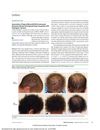
research Association of Topical Minoxidil With Autosomal Recessive Woolly Hair/Hypotrichosis Caused by LIPH Pathogenic Variants
Minoxidil solution applied twice daily improved hair growth in patients with Woolly Hair/Hypotrichosis due to LIPH gene issues, with mild side effects.
research A group of type I keratin genes on human chromosome 17: characterization and expression.
Only one K16 gene on chromosome 17 makes a functional keratin protein.
research The functions of ocu-miR-205 in regulating hair follicle development in Rex rabbits
ocu-miR-205 affects hair density in Rex rabbits by altering hair follicle growth and signaling pathways.

research TLR2 Regulates Hair Follicle Cycle and Regeneration via BMP Signaling
TLR2 helps control hair growth and regeneration, and its reduction with age or obesity can impair hair growth.
research 060 Heterogeneity and lineage development of memory CD8+ T cells after viral infection of skin