January 2022 in “Mammalian Genome” The wavy coat in NCT mice is caused by multiple genes, including a mutation in the Prss53 gene.
May 2025 in “Dermatology Reports” A genetic mutation in the LIPH gene causes a rare hair disorder with sparse, curly hair.
22 citations
,
September 2003 in “Journal of Investigative Dermatology” New mutations in the EBP gene cause CDPX2, affecting bones, skin, eyes, and hair, with females generally less affected than males.
14 citations
,
May 2017 in “Journal of Investigative Dermatology” A rare gene mutation causes skin fragility and itching without affecting hair or nails.
1 citations
,
September 2020 in “Journal of dermatology” Researchers found a new mutation in the LIPH gene of a woman with a rare hair condition.
3 citations
,
January 2013 in “Dermatology” New genetic mutations causing hair loss were found in a Chinese family.
11 citations
,
April 2012 in “Journal of Investigative Dermatology” A specific mutation in PA-PLA1α causes abnormal hair growth.
 November 2025 in “Clinical Cosmetic and Investigational Dermatology”
 LIPH mutations cause woolly hair in some Chinese people.
87 citations
,
March 2017 in “Journal of Clinical Investigation” PSENEN gene mutations can cause both Dowling-Degos disease and acne inversa.
September 2022 in “Indian Journal of Paediatric Dermatology” Clouston syndrome is inherited in an autosomal dominant pattern and caused by a specific gene mutation, with no current treatment available.
 26 citations
,
February 1998 in “Chemico-Biological Interactions”
26 citations
,
February 1998 in “Chemico-Biological Interactions” Scientists identified three genes important for processing certain brain chemicals, thyroid hormones, and medications.
4 citations
,
July 2022 in “The Journal of Clinical Endocrinology & Metabolism” A specific genetic mutation causes POMC deficiency, leading to symptoms like weight gain and red hair.
July 2025 in “Frontiers in Medicine” Mutations in the LIPH gene cause woolly hair in a child.
 11 citations
,
March 2013 in “Gene”
11 citations
,
March 2013 in “Gene” A certain genetic variation in the IL1A gene may lower the risk of a hair loss condition in Chinese people.
 5 citations
,
December 2017 in “The Journal of Dermatology”
5 citations
,
December 2017 in “The Journal of Dermatology” A new gene mutation caused a man's rare skin condition, Schöpf-Schulz-Passarge syndrome.
1 citations
,
December 2016 in “Revista română de medicină de laborator” The NIPAL4 mutation c.527C>A is common in Romanian patients with autosomal recessive congenital ichthyosis.
 February 2017 in “Cancer Causes & Control”
 Swedish men with the E213 A-allele of the androgen receptor have a lower risk of prostate cancer.
 November 2025 in “International Journal of Clinical Obstetrics and Gynaecology”
 PCOS is likely inherited in families, increasing risk for first-degree relatives.
 January 2025 in “Cellular and Molecular Biology”
 The PIP5K1A gene helps cashmere growth in goats by promoting cell proliferation, and melatonin boosts its expression.
 1 citations
,
April 2018 in “Journal of Investigative Dermatology”
1 citations
,
April 2018 in “Journal of Investigative Dermatology” PRC1 is essential for proper skin development and stem cell formation by controlling gene activity.
 1 citations
,
January 2020 in “Benha Journal of Applied Sciences”
1 citations
,
January 2020 in “Benha Journal of Applied Sciences” Certain gene variations may increase the risk and severity of alopecia areata.
 51 citations
,
November 2011 in “British Journal of Dermatology”
51 citations
,
November 2011 in “British Journal of Dermatology” A gene called HDAC9 might be a new factor in male-pattern baldness.
11 citations
,
January 2021 in “British Journal of Dermatology” Mutations in the AP1B1 gene cause a new syndrome with skin, hearing, and developmental issues.
10 citations
,
November 2021 in “PLoS ONE” The T allele of the PTPN22 gene may increase the risk of alopecia areata.
 January 1999 in “American Journal of Medical Genetics Part A”
 The report expanded knowledge of MBTPS1-related disorders by identifying new symptoms.
 24 citations
,
May 2019 in “PLOS genetics”
24 citations
,
May 2019 in “PLOS genetics” Mutations in the HEPHL1 gene cause abnormal hair and cognitive issues.
 40 citations
,
February 2005 in “Fertility and Sterility”
40 citations
,
February 2005 in “Fertility and Sterility” Some women with PCOS have CYP21 mutations and IRS1 variants, but these genetic factors are not major contributors to PCOS.
 March 2016 in “West Indian medical journal”
 There is no significant link between alopecia areata and the PON1 enzyme polymorphisms studied.
 1 citations
,
May 2011 in “Molecular Medicine Reports”
1 citations
,
May 2011 in “Molecular Medicine Reports” The -866G/A polymorphism in the UCP2 gene is not linked to polycystic ovary syndrome.
 1 citations
,
January 2018 in “Acta dermato-venereologica”
1 citations
,
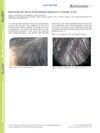
January 2018 in “Acta dermato-venereologica” A teenager's hair with alternating white and dark bands, known as Pili annulati, is a genetic condition that is usually harmless and often considered attractive.