 10 citations
,
July 2021 in “Archiv für Pathologische Anatomie und Physiologie und für Klinische Medicin”
10 citations
,
July 2021 in “Archiv für Pathologische Anatomie und Physiologie und für Klinische Medicin” LRIG1 is linked to better survival in Merkel cell carcinoma.
December 2024 in “Regenerative Therapy” Inhibiting SFRP1 may help treat hair loss.
Skin cells can naturally limit the growth of cancerous changes by balancing cell renewal and differentiation.
November 2024 in “Journal of Investigative Dermatology” Blocking the JAK/STAT pathway may help reduce skin sensitivity in Xeroderma pigmentosum.
 99 citations
,
August 2009 in “Nature Genetics”
99 citations
,
August 2009 in “Nature Genetics” Removing both Atr and Trp53 genes in adult mice causes severe tissue damage and death due to DNA damage.
 January 2023 in “Indian dermatology online journal”
 A boy with Pachyonychia congenita has a confirmed gene mutation, highlighting the need for a local genetic database in India.
4 citations
,
January 2019 in “Journal of cutaneous pathology” The mTOR pathway may be involved in the development of hair follicle tumors, with higher activity in malignant tumors.
 314 citations
,
April 2010 in “Developmental Cell”
314 citations
,
April 2010 in “Developmental Cell” β-catenin in the dermal papilla is crucial for normal hair growth and repair.
 13 citations
,
August 2020 in “Frontiers in Cell and Developmental Biology”
13 citations
,
August 2020 in “Frontiers in Cell and Developmental Biology” Twist1 helps maintain important features of cells crucial for hair growth by working with Tcf4 and β-catenin.
 July 2022 in “The journal of investigative dermatology/Journal of investigative dermatology”
 The early genes of a specific virus can cause abnormal skin cell growth and hair follicle changes.
32 citations
,
August 2020 in “American Journal Of Pathology” S100A4 promotes aggressive ovarian cancer and is a potential treatment target.
 January 2012 in “Durham e-Theses (Durham University)”
 Keratin 15 affects cell behavior and characteristics in skin cells.
27 citations
,
February 2003 in “European Journal Of Oral Sciences” SVpgC2a cells show abnormal growth and keratin changes, modeling early cancer development.
210 citations
,
February 2008 in “Nature genetics” Mutations in the P2RY5 gene cause autosomal recessive woolly hair.
10 citations
,
January 2010 in “International journal of trichology” Keratin-associated proteins are part of the developing hair fiber cuticle.
8 citations
,
December 2003 in “Experimental Dermatology” Altering the keratin 17 gene in mice hair follicles caused temporary hair issues, but changes were minimal and short-lived.
46 citations
,
May 1995 in “Proceedings of the National Academy of Sciences” A specific gene region can control targeted and responsive gene expression in mice, useful for skin disorder treatments.
1 citations
,
May 2025 in “Cell Reports Medicine” RSPO1 could help create new diabetes treatments by increasing pancreatic β cells.
80 citations
,
June 2002 in “Molecular Biology of the Cell” Type II keratins are uniquely phosphorylated during stress and mitosis, affecting their structure and function.
April 2026 in “Journal of Investigative Dermatology” ZNF750 helps keep hair follicles healthy and prevents skin inflammation.
 July 2016 in “Journal of Investigative Dermatology”
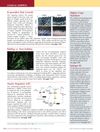
 R-spondin2 may help treat hair loss, gene differences could explain baldness, a peptide's regulation is linked to psoriasis, B-defensin gene copies may affect a skin condition's risk and severity, and potential markers and targets for alopecia areata were identified.
87 citations
,
November 2002 in “Journal of Investigative Dermatology” January 2006 in “Chieh P'ou Hsueh Pao” Beta-catenin boosts hair follicle cell growth by increasing c-myc expression.
 31 citations
,
August 2005 in “The American Journal of Dermatopathology”
31 citations
,
August 2005 in “The American Journal of Dermatopathology” The study concluded that PKP1 is essential for skin integrity and hair growth, and its dysfunction causes the symptoms of ectodermal dysplasia/skin fragility syndrome.
2 citations
,
December 2013 in “Journal of dermatology” A specific gene mutation causes a rare hair loss condition in a Chinese patient.
 9 citations
,
April 2006 in “American Journal of Pathology”
9 citations
,
April 2006 in “American Journal of Pathology” SGK3 is essential for proper hair growth and health.
48 citations
,
April 2008 in “Human Molecular Genetics” Progerin affects cell shape but not hair or skin in mice.
Glypican-1 is important for hair follicle blood vessel growth and could be a target for treating hair loss.
47 citations
,
February 2014 in “Journal of Cutaneous Pathology” Matrical tumors share a common growth mechanism involving the Wnt pathway and consistent PHLDA1 expression.
 November 2022 in “The journal of investigative dermatology/Journal of investigative dermatology”
 YAP1 is important for skin regeneration and may affect skin disorder treatments.